As we grow older, organ function gradually deteriorates, which is closely related to the increased incidence of neurodegenerative diseases. Mitochondrial dysfunction is considered a key factor in this process. With age, lung function decline, anemia and microcirculatory disorders lead to insufficient tissue oxygen supply, causing chronic hypoxia and aggravating mitochondrial dysfunction, thereby promoting the progression of neurodegenerative diseases.
As we grow older, organ function gradually deteriorates, which is closely related to the increased incidence of neurodegenerative diseases. Mitochondrial dysfunction is considered a key factor in this process. With age, lung function decline, anemia and microcirculatory disorders lead to insufficient tissue oxygen supply, causing chronic hypoxia and aggravating mitochondrial dysfunction, thereby promoting the progression of neurodegenerative diseases.
Crocetin is the colored component and main component of saffron. It is an uncommon water-soluble carotenoid (dicarboxylic acid polyene monosaccharide ester). Crocetin is a natural compound with the potential to improve mitochondrial function. Recently, the research team of Ajay Kumar of the Indian Institute of Integrated Traditional Chinese and Western Medicine published a research paper entitled Crocetin Delays Brain and Body Aging by Increasing Cellular Energy Levels in Aged C57BL/6J Mice in ACS Pharmacology & Translational Science, which found that crocetin improved mitochondrial function in aged mice by increasing oxygen diffusion, improving memory, coordination and energy levels, and extending the lifespan of mice.
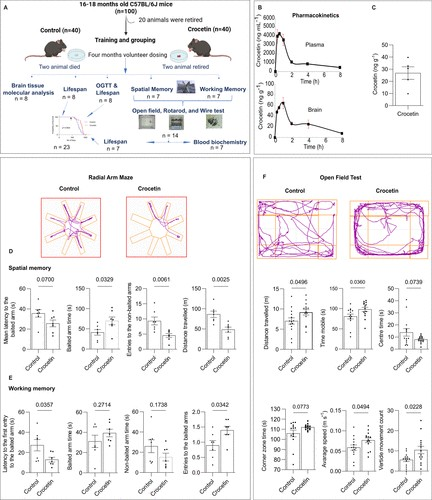
The study found that crocin effectively improved the mitochondrial function of elderly mice by increasing oxygen diffusion, improving their memory, coordination and energy levels, and extending their lifespan. After four months of crocin treatment of elderly mice, the results showed that the mice's memory behavior and motor ability were significantly improved. The treated group performed better in the spatial memory test, took less time to find food, stayed in the baited arm longer, and reduced the number of times they entered the non-baited arm by mistake.
In addition, the crocin-treated group was more active in the open field test, with increased movement distance and speed. Pharmacokinetic studies have shown that crocin has low concentrations in the brain and no accumulation. Overall, crocin effectively improved the cognitive and motor functions of elderly mice.
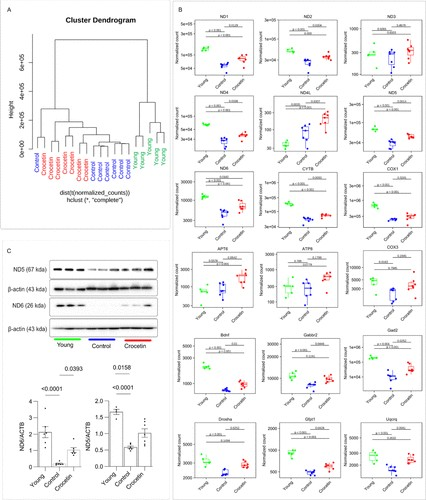
In order to explore the molecular mechanism of crocin on the memory behavior of mice, the researchers performed whole transcriptome sequencing on the mouse hippocampus. The results showed that crocin treatment caused significant changes in gene expression, including upregulation of genes related to improved brain function and behavior, such as BDNF, GBBR2, GAD2 and DROSHA, and downregulation of genes such as HCK, AMIGO3, TOP1MT and LCP1. Mitochondrial electron transport chain (ETC)-related genes were significantly upregulated, further supporting the molecular mechanism of crocin in improving brain function.
Further mitochondrial genome analysis showed that crocin did not change single nucleotide polymorphisms (SNPs) or insertions and deletions (InDels) in the mitochondrial genome of aged mice, indicating that its anti-aging effect does not depend on changes in genome stability.
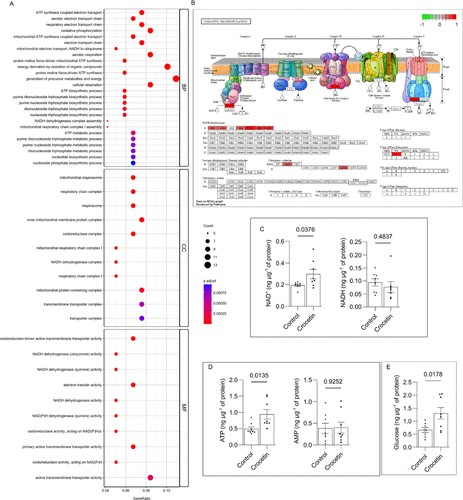
The study also found that crocin can reduce the expression of HIF1α in astrocytes under hypoxic conditions, indicating that it helps to improve the oxygen supply of cells and reduce oxidative stress. After crocin treated aged astrocytes, the mitochondrial membrane potential and the expression of mitochondrial inner membrane proteins ND5 and ND6 increased, while NAD+ and ATP levels were increased. These results suggest that crocin can enhance mitochondrial function and restore the state of cellular energy metabolism.
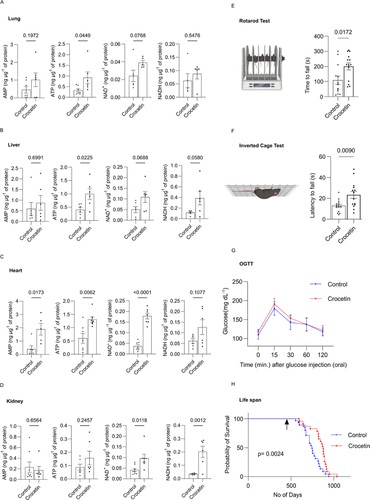
In addition, long-term treatment with crocin not only increased ATP and NAD+ levels in the heart, kidneys, lungs, and liver, but also significantly increased the metabolic rate of these organs. Although no significant biochemical and hematological changes were found (except for platelet counts), crocin treatment improved the neuromuscular coordination and grip strength of mice. And, most significantly, crocin prolonged the median survival time of mice from 744 days to 876 days, an increase of 17.7%.
 For a long time, crocin has been widely used in food, medicine, cosmetics and other fields with its unique advantages. Therefore, it is necessary to conduct toxicity evaluation of crocin to ensure food and drug safety. Wang et al. found that long-term high-dose administration of crocin (100 mg/kg) can cause reversible changes in liver pigmentation and enzyme activity, but these changes are mild and can be restored. Although crocin has a certain degree of toxicity, its toxicity is very low even when taken in large doses and will not cause organic damage to the human body. Hosseinzadeh et al. also showed that crocin did not damage organs at doses of 15, 45, 90, 180 mg/kg, and 3 g/kg. Therefore, crocin is relatively safe as a medicinal or food additive.
 In summary, crocin significantly improved the memory, coordination, and energy levels of elderly mice and prolonged their lifespan by increasing oxygen diffusion and restoring mitochondrial function. Genetic analysis showed that crocin increased brain energy by upregulating genes related to oxidative phosphorylation (OXPHOS), and long-term use did not cause oxidative stress. The above results show that crocin is expected to be used to delay aging and treat related diseases.

