The autumn wind blows and the persimmons turn red. September in the golden autumn is a good time to eat persimmons. The fragrant and sweet persimmon is loved by many people. However, in recent years, there have been frequent news reports about various problems caused by eating persimmons, so can we still eat persimmons with confidence? How should I eat it? Today I will give you a detailed introduction.
The autumn wind blows and the persimmons turn red. September in the golden autumn is a good time to eat persimmons. The fragrant and sweet persimmon is loved by many people. However, in recent years, there have been frequent news reports about various problems caused by eating persimmons, so can we still eat persimmons with confidence? How should I eat it? Today I will give you a detailed introduction.
Persimmon is a plant of the genus Assassicus in the family Assassicus, native to East Asia, and has been cultivated in my country for more than 3,000 years. Zhang Zhongshu, a poet of the Northern Song Dynasty, praised persimmons: "The taste is as good as Hualin Fangdi, the color is both Yangjing deep red, and the light and even crimson wax wraps the dough, which is no better than human dew. The processing of persimmons also has a history of nearly a thousand years, and it is mainly made into persimmons.
Eating persimmons in autumn: clears away heat, moistens the lungs and promotes fluid production
Persimmon is very rich in nutrients, so it is also known as the "holy fruit". According to research, every 100g of persimmon pulp contains 0.16mg of vitamin A, 16mg of vitamin C, 9mg of calcium, 20mg of phosphorus and 0.2mg of iron. The content of vitamin C is more than 10 times that of apples.
According to traditional Chinese medicine, persimmons are sweet, astringent, and cool in nature, and they return to the heart, lungs, and large intestine meridians. They have the effects of clearing away heat, moistening the lungs, promoting body fluid production, and detoxifying.
Fresh persimmons are sweet in taste and cool in nature. They can clear away heat and nourish yin. They are most suitable for consumption in the hot and humid autumn. The dried "persimmon" has a warming and tonic effect. It is said that it is best to eat it in autumn when diarrhea does not stop. But please note that people who are prone to constipation should not eat too many persimmons.
Li Shizhen's "Compendium of Materia Medica" of the Ming Dynasty mentioned: "Persimmon is the fruit of the spleen, lungs and blood. It tastes sweet and calms the qi, and is astringent in nature, so it can strengthen the spleen and intestines, treat coughs and stop bleeding." "
Eating persimmons, especially red soft persimmons, can replenish qi and blood, so that people affected by dryness can feel at ease and calm down. Persimmons enter the lungs and have certain moisturizing effects. They can clear away heat and moisturize the lungs.
Persimmons are rich in vitamin C, so they have beauty benefits. There are also many records about persimmon's "moisturizing" in ancient Chinese medicine books. For example, "Zheng Lei Materia Medica" says that it "eats more to remove acne." This means that eating more persimmons can improve a scorched and dark complexion. Therefore, people who want to supplement vitamins to whiten their skin will naturally like persimmons.
One persimmon and 5 herbs
-
Fresh persimmon
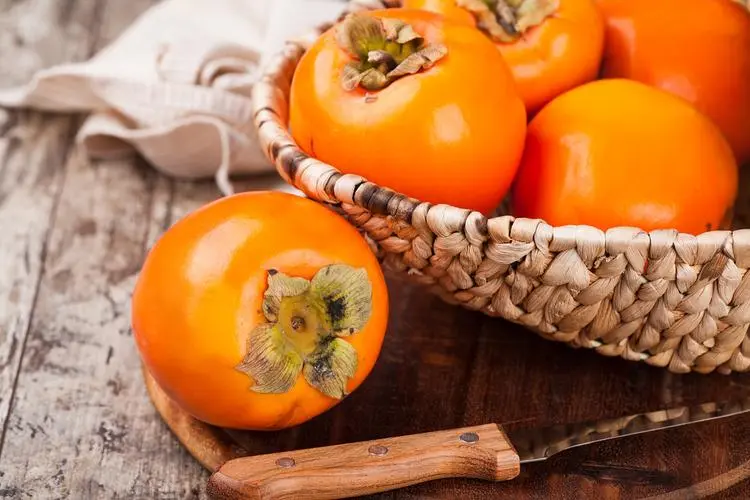
Fresh persimmon is sweet, astringent, and cool in nature. It has the functions of clearing away heat and moistening the lungs, producing body fluids and quenching thirst, strengthening the spleen and benefiting the stomach.
Take 250 grams of fresh persimmon, chop it into pieces, extract the juice, and drink it with boiling water. It can treat polydipsia and dry mouth caused by stomach heat and yin damage.
Modern research shows that persimmons are rich in sucrose, glucose, fructose, protein, carotene, vitamin C, iodine, calcium, phosphorus, iron, etc., and immature fruits contain tannins. Pharmacological studies have shown that persimmons can lower blood pressure and enhance coronary blood flow.
-
Persimmons

Persimmon cake is a snack that many people have eaten. It has neither the astringency of fresh persimmon nor the risk of eating persimmon stones in the stomach, and it tastes sweet.
Traditional Chinese medicine believes that persimmons are sweet in taste and neutral in nature, and have the effects of moistening the lungs and reducing phlegm, strengthening the spleen and astringing the intestines, and hemostasis. They can be used for dry cough and spitting, spleen deficiency, lack of food, diarrhea, bloody stools, and bleeding hemorrhoids.
60 grams of persimmons, scooped out and put into 9 grams of Sichuan clams, steamed and taken before dry cough can be cured;
50 grams each of persimmon and brown sugar, 6 grams of black fungus, decoction in water can cure hemorrhoid bleeding;
Two persimmons, two slices of tangerine peel, and 60 grams of glutinous rice can be cooked into porridge to treat chronic enteritis.
-
Persimmon frost
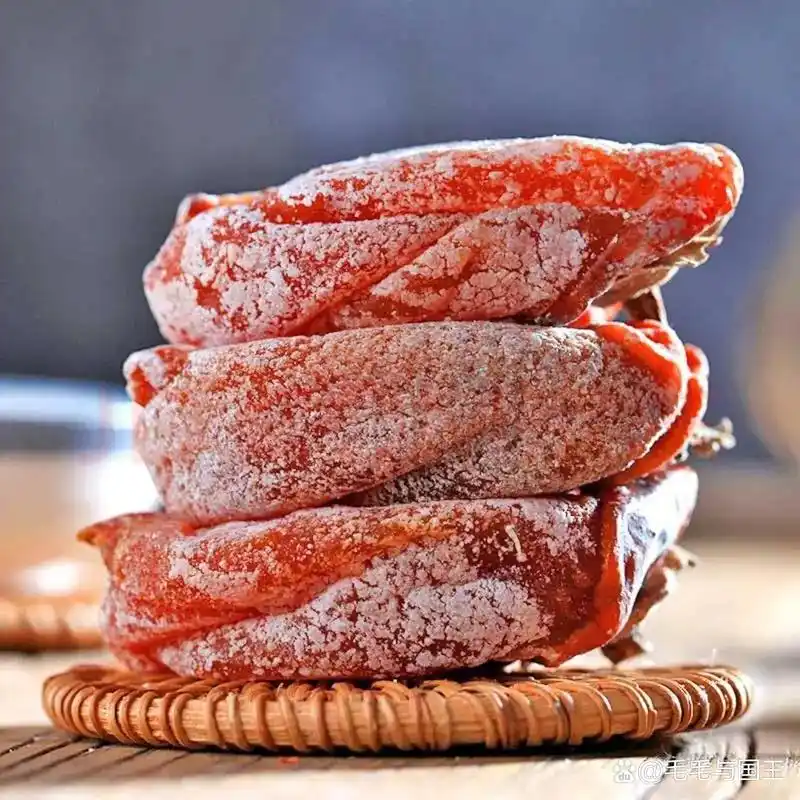
When it comes to persimmons, you cannot do without the persimmon frost on its surface. Persimmon frost is the white frost on persimmon cakes. It is sweet in taste and cool in nature. It has the functions of clearing away heat and promoting fluid production, moistening the lungs and relieving cough.
"Compendium of Materia Medica" records: "Persimmon frost is its body fluid, which can produce fluid and reduce phlegm, clear the heat of the heart and lungs, and treat sore throat, mouth and tongue sores." "Medical Zhongshen Xilu" says: "Persimmon frost is white in color and enters the lung meridian. Its smoothness can also relieve lung phlegm, and its moistening can also nourish lung dryness."
Although it is very inconspicuous, persimmon frost is a good medicine for clearing away heat, promoting fluid production, moisturizing, relieving cough and bleeding. For those who have oral ulcers, dip it with a small cotton swab and then apply it to the ulcerated area in the mouth to relieve pain and reduce the burning sensation.
Taking persimmon frost with warm water and taking it can treat chronic bronchitis, dry cough, and pharyngitis; grind 10 grams of persimmon frost, 0.5 grams of borneol, and 5 grams of mint into fine powder and rub it on the affected area to treat aphtha and angular stomatitis.
-
Persimmon stalk
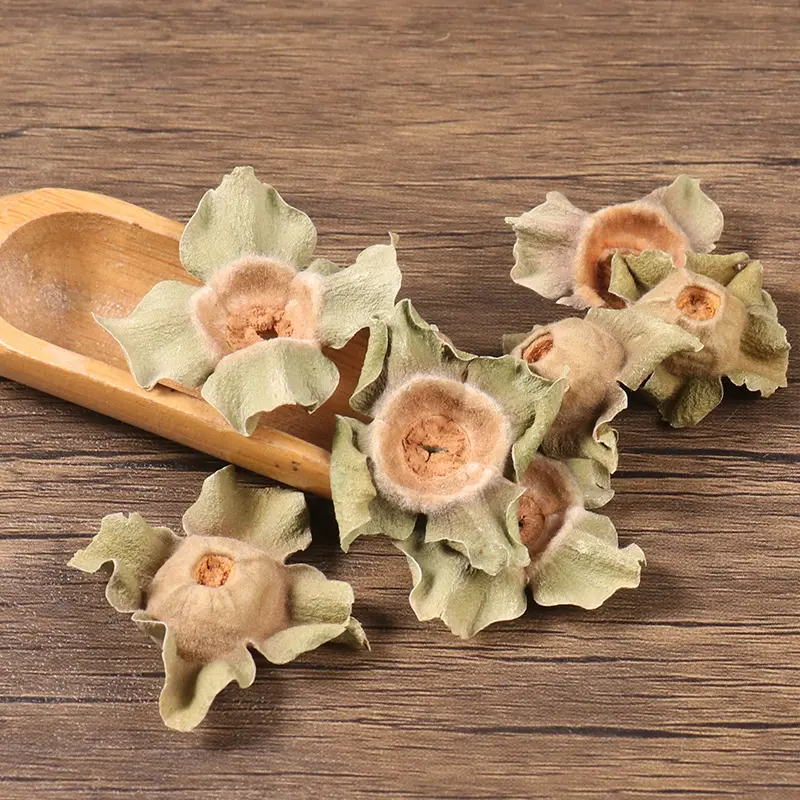
Although the persimmon stalk is inconspicuous, it is also a good medicine. It is neutral in nature, bitter and astringent in taste, and returns to the stomach meridian. It has the effects of lowering qi, clearing away heat and moistening the lungs, producing body fluids and quenching thirst, strengthening the spleen and reducing phlegm. It is an important medicine for treating hiccups in traditional Chinese medicine, and is called "the important medicine for stopping hiccups".
"Compendium of Materia Medica" mentioned that "the ancient prescription is to boil the juice of persimmon peduncle alone and drink it. The bitter temperature can reduce adverse qi."
To deal with stubborn hiccups, use 5 persimmon pedicles, 3 slices of ginger, and 2 anise (star anise), soak them in boiling water, and drink them instead of tea. The hiccups will be relieved unconsciously.
-
Persimmon leaves
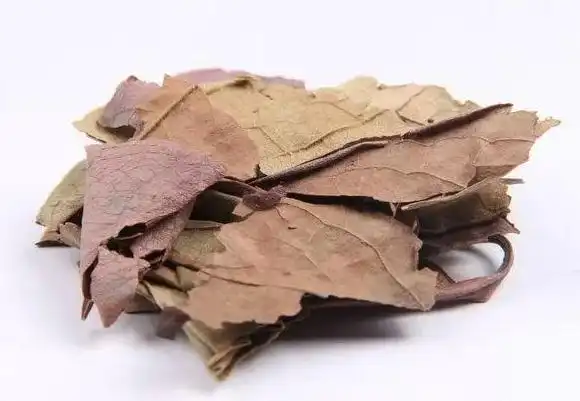
Persimmon leaves are usually difficult for us to come into contact with, but in fact, its effects are not small! Take an appropriate amount of young persimmon leaves, boil them in water, and drink them as tea. It can soften blood vessels, lower blood pressure, prevent arteriosclerosis, clear away heat, strengthen the stomach, and aid digestion.
Four porridge recipes for eating persimmons in autumn
- Ingredients for persimmon leaf porridge: 10 grams of persimmon leaves, 100 grams of rice, and an appropriate amount of sugar. Method: Clean the persimmon leaves, put them into a pot, add an appropriate amount of water, soak for 5 to 10 minutes, decoct in water to extract the juice, add rice to make porridge, when cooked, add sugar, boil again and serve, 1 serving a day agent.
Efficacy: Relieves cough and asthma, expands tubes and lowers blood pressure. It is suitable for lung distension, cough and asthma, hypertension, hyperlipidemia, etc.
- Persimmon porridge ingredients: 2 fresh persimmons, 100 grams of rice, appropriate amount of sugar. Method: Wash the fresh persimmons, squeeze the juice and set aside. Wash out the rice, put it into a pot, add an appropriate amount of water to cook the porridge, add persimmon juice and white sugar when it is cooked, cook until the porridge is cooked and take one dose per day.
Efficacy: clearing away heat and moisturizing, promoting body fluids and quenching thirst. It is suitable for cough caused by lung dryness and autumn dryness, polydipsia after drinking, yellow and short urine, etc.
- Ingredients for persimmon stem porridge: 10 grams of persimmon stems, 100 grams of rice, appropriate amount of sugar. Method: Clean the persimmon base, put it into a pot, add an appropriate amount of water, soak it for 5 to 10 minutes, decoct it to extract the juice, add rice to make porridge, when it is cooked, add sugar, and then boil it, 1 serving a day agent.
Efficacy: lowering qi and stopping phlegm. It is suitable for hiccups caused by gastric insufficiency and constipation.
- Ingredients for persimmon porridge: 2 persimmons, 100 grams of rice, appropriate amount of sugar. Method: Clean the persimmons and slice them into pieces for later use. Wash the rice and put it into a pot. Add an appropriate amount of water to cook the porridge. When it is cooked, add persimmons, sugar, etc., cook until the porridge is cooked, and take 1 dose per day.
Efficacy: Strengthen the spleen and replenish qi, reduce astringency and stop bleeding. Suitable for heat dysentery, bloody diarrhea, etc.
Several taboos on eating persimmons
Eating persimmons causes stomach stones mainly because persimmons contain tannic acid. After tannic acid enters the stomach, it will react with gastric acid to form some hard lumps that cannot be digested. Over time, stones will form. Not all persimmons contain high levels of tannic acid. Fully mature persimmons contain very little tannic acid. And as long as you pay attention to the following conditions, you can avoid the occurrence of persimmon stones.
1. Avoid producing persimmon stones
First, don’t eat persimmons on an empty stomach. There is a lot of gastric acid on an empty stomach, and persimmons react with gastric acid to easily form lumps of different sizes that remain in the stomach, forming persimmon stones in the stomach. In addition, alcohol will accelerate the reaction between gastric acid and tannic acid. So try not to eat persimmons on an empty stomach or after drinking.
The second is not to eat it with foods containing high protein. The tannic acid in persimmons reacts with foods containing high protein to form insoluble complexes, which affects the operation of the digestive system.
The third is not to eat persimmon skin. Most of the tannic acid in persimmons is concentrated in the skin. When the persimmons are deastringent, it is impossible to remove all the tannic acid. If the persimmons are eaten with the skin, it is more likely to form stomach stones. Especially when the astringency removal process is imperfect, the skin will contain more tannic acid.
2. People with spleen and stomach deficiency should not eat
Persimmons are cold and cool. People with spleen deficiency, diarrhea, loose stools, frailty, postpartum and exogenous wind and cold should not eat fresh persimmons. People with spleen and stomach deficiency can eat persimmons appropriately.
3. Diabetic patients should not eat it.
The sugar content of persimmons is relatively high, and most of them are monosaccharides and disaccharides, such as glucose, sucrose, fructose, etc., which can easily cause blood sugar to rise. Therefore, it is not recommended for diabetic patients to eat persimmons.
4. Don’t be greedy for too much
Finally, everyone must remember: persimmons are delicious, don’t be greedy for too much, just 1 to 2 per day. In addition, patients with anemia should eat less because tannic acid will have a certain impact on the absorption of iron. Especially patients with iron deficiency anemia should not be "gluttonous"! Of course, it’s okay to eat one or two occasionally.

