Ginseng fruit is the fruit of the semi-woody perennial dicotyledonous herb Solanum of the Solanaceae family. It is native to the temperate Andes region of Colombia and Chile, Peru, Ecuador and other countries. Ginseng fruit is known as the king of anti-cancer because it is rich in various trace elements. Ginseng fruit is a high-protein, low-sugar, low-fat fruit. Ginseng fruit contains a variety of trace elements, which can maintain the normal physiological functions of the body and also has
What is ginseng fruit?
Ginseng fruit is the fruit of the semi-woody perennial dicotyledonous herb Solanum of the Solanaceae family. It is native to the temperate Andes region of Colombia and Chile, Peru, Ecuador and other countries. Ginseng fruit is known as the king of anti-cancer because it is rich in various trace elements. Ginseng fruit is a high-protein, low-sugar, low-fat fruit. Ginseng fruit contains a variety of trace elements, which can maintain the normal physiological functions of the body and also has certain medicinal value.
How nutritious is ginseng fruit?
The ginseng fruit we eat is also known as cantaloupe eggplant, fragrant pear, and South American fairy peach. It is a fruit of the Solanaceae family and originated in the Andes Mountains in South America.
In the 1970s, New Zealand first introduced ginseng fruit for commercial cultivation, and later it was also planted in various parts of Europe. Since the 1980s, some parts of my country have begun to introduce ginseng fruit cultivation. Shilin County, Kunming City, Yunnan Province is currently the largest ginseng fruit planting base in the country, and is known as the "Hometown of Chinese Ginseng Fruit".
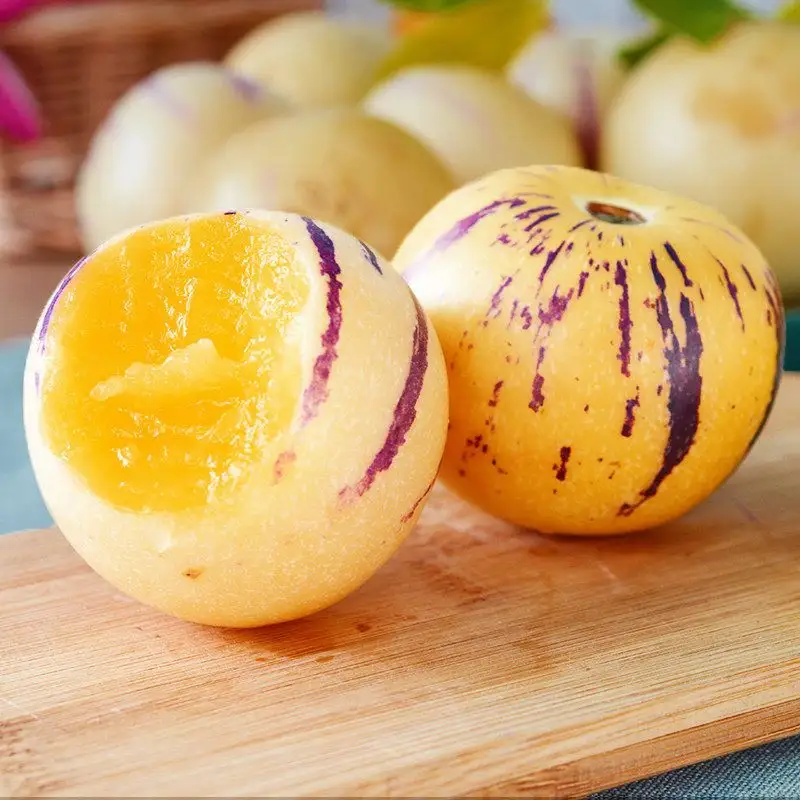
The ginseng fruit we eat usually blooms and bears fruit about 5 months after planting, and fresh and ripe ginseng fruit can be eaten around October every year. The ginseng fruit we often buy weighs about 80 grams per fruit. The ripe fruit is beige or cream with purple stripes, and is round, oval or slender. The fruit has a thin skin and thick flesh, the flesh is fragrant and juicy, and the flavor is unique. There is no seed in the fruit, and the edible rate is more than 90%.
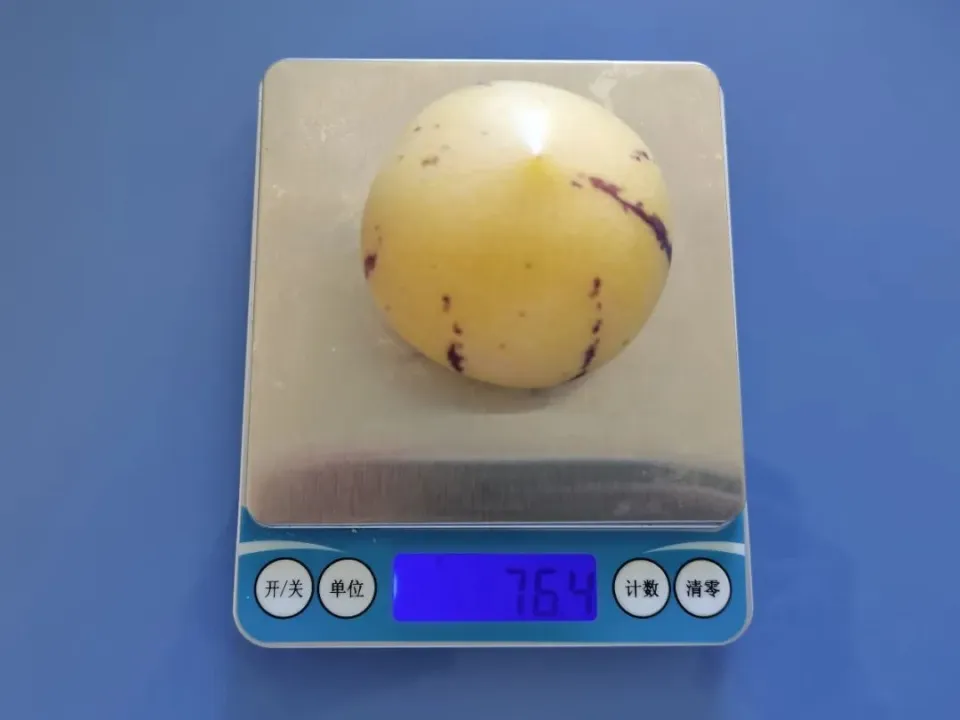
And the ginseng fruit is rich in water, especially the fresh water content can reach more than 90%, which is quite watery. Eating one or two will quench your thirst! It also contains a variety of vitamins and minerals, among which vitamin C, potassium and antioxidant components are quite good.
1. Vitamin C
Among fruits, the vitamin C content of oranges we often eat is 33 mg/100 g, and that of lemons is 22 mg/100 g. The vitamin C content of ginseng fruit varies widely, generally between 12 and 99 mg/100 g, which may be due to the difference in varieties.
A study compared the nutritional components of 8 different varieties of ginseng fruit and found that the vitamin C content of "Shiyou No. 3" was as high as 75.2 mg/100 g, which is 3 times that of lemons! This is comparable to kiwi fruit.
2. Mineral potassium
The potassium content of ginseng fruit is about 140 mg/100 g on average, and some can reach 168 mg/100 g. Although it is not as good as bananas, it is higher than peaches, apricots, apples, and pears. At the same time, the sodium content of ginseng fruit is very low, only about 3 mg/100 g. It is also a high-potassium and low-sodium fruit, which is recommended for people who need to control blood pressure.
In addition, ginseng fruit also contains phenolic substances, flavonoids, carotene and other antioxidant ingredients.
As for the calories of ginseng fruit, the data in the "Chinese Food Composition Table" shows 86 kcal/100 g, and the carbohydrate content is 21.2 g/100 g. This calorie is really not low, almost twice that of peaches, grapes, mangoes, etc.
However, according to the data in most literature, ginseng fruit is a low-calorie, low-fat, and low-sugar fruit, with a fat content of only 0.1%~0.2%, and a total sugar content of mostly only 2.58%~5.92%. Even people who are losing weight can eat it with confidence.
Effects of Ginseng Fruit
-
Enhance immunity: Since ginseng fruit is rich in nutrients and trace elements necessary for the human body, it has obvious effects on enhancing immune function, activating human cells, and removing free radicals in the body.
-
Anti-aging effect: The ratio of various amino acids contained in ginseng fruit is basically consistent with the amino acids required by the human body, and it is easily absorbed and utilized by the human body; the selenium content of ginseng fruit can be said to be the highest among all fruits, which can supplement the selenium needed by the human body. It can not only maintain the health of adults, but also has a good health care effect on the growth of children and the anti-aging of the elderly.
-
Anti-cancer effect: Since ginseng fruit is rich in a variety of trace elements, such as selenium, iron, calcium, zinc, etc., it plays an important and decisive role in activating human cells, enhancing human immunity, and inhibiting the fission of malignant tumor cells. Experiments have shown that after the experimental group of nude mice inoculated with ginseng juice, gastric cancer tumors were greatly inhibited; the development of liver cancer and lung cancer tumors was also greatly inhibited compared with the control group of nude mice that were not inoculated.
Ginseng fruit has auxiliary therapeutic effects on hypertension and diabetes, and has the effects of preventing cancer and inhibiting cardiovascular and cerebrovascular diseases. It is a health fruit for children to supplement calcium and prevent osteoporosis, bone hyperplasia, Alzheimer's disease, arteriosclerosis, etc. caused by calcium deficiency in middle-aged and elderly people.
It tastes good only when it is fully ripe
Most people who have eaten ginseng fruit think it is not delicious. It smells like melon and feels very fragrant, but it tastes like cucumber after biting it open, and the taste is bland.
In fact, the maturity of the fruit has a great influence on the flavor of ginseng fruit. Ginseng fruit with higher maturity tastes good.
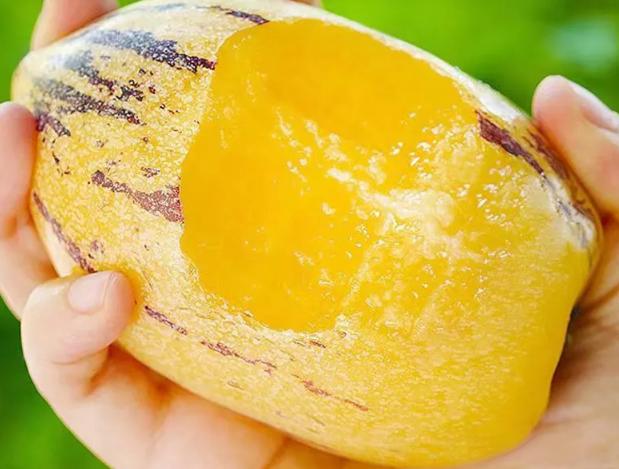
Some people have studied the aroma components of ginseng fruit and obtained a total of 87 aroma compounds such as alcohols, aldehydes, and esters. Among them, 22 main compounds constitute the sweet, melon-fruity, fresh and slightly oily aroma characteristics of ginseng fruit; the C9 compound contained in ginseng fruit (generally only found in Cucurbitaceae plants, and also found in ginseng fruit) gives it the aroma of melon and cucumber fruit.
The aroma components, flavor substances and sugar content of ginseng fruit will increase with the increase of maturity. The ginseng fruit with good maturity can be said to be fragrant, and the sugar content can reach 12%, and the taste is sweet and refreshing.
How to judge the maturity of ginseng fruit? In fact, you can make a preliminary judgment by looking at the appearance.Due to the sunlight irradiating the fruit, the anthocyanin content inside the fruit is constantly deposited on the surface to form purple stripes, and the carotenoids in the fruit are constantly synthesized, which will cause the flesh to turn yellow. If the ginseng fruit is white with slightly purple stripes, it is a symbol of seven-point ripeness, and it is not very delicious to eat at this time; fully ripe ginseng fruit is golden yellow with purple stripes, and some are overripe and feel soft.
How to store ginseng fruit?
The peel of ginseng fruit is very thin, and it is not easy to preserve after buying it home. Different storage temperatures will also affect the color of the fruit. Therefore, it is recommended to buy less ginseng fruit at a time, and it does not need to be put in the refrigerator. It can be stored in a cool and ventilated place. When eating, choose the golden and soft fruits first.

