The global beverage market is experiencing a "Gold Rush" of innovation. From functional energy drinks to sophisticated botanical teas, new brands are appearing on shelves faster than ever before. But here is the industry's best-kept secret: many of the world’s most successful beverage brands do not own a single square foot of factory space.
The global beverage market is experiencing a "Gold Rush" of innovation. From functional energy drinks to sophisticated botanical teas, new brands are appearing on shelves faster than ever before. But here is the industry's best-kept secret: many of the world’s most successful beverage brands do not own a single square foot of factory space.
Instead, they leverage the power of Beverage Contract Manufacturing.
Whether you are a startup with a visionary recipe or an established enterprise looking to diversify your product line, understanding the mechanics of this industry is crucial. In this guide, we will explore the depths of Beverage OEM, the strategic advantages of outsourcing, and the step-by-step journey from a liquid concept to a retail-ready can.
The Core Fundamentals: What Is Beverage Contract Manufacturing?
Before diving into the "how," we must establish a clear beverage contract manufacturing definition. At its simplest, it is a business model where a brand owner hires a third-party manufacturer—like LaiZhi Beverage—to handle the physical production, canning, and often the packaging of their drinks.
Beverage OEM vs. Contract Manufacturing
While the terms are often used interchangeably, there is a subtle distinction:
- Beverage OEM (Original Equipment Manufacturer): This usually refers to a factory that produces a drink based on the customer’s exact specifications and proprietary formula. The brand owns the recipe; the OEM owns the equipment.
- Beverage Contract Manufacturing: This is a broader term that can include additional services beyond just "making the liquid," such as ingredient sourcing, carbonation adjustment, and logistics.
The Rise of the Co-Packer
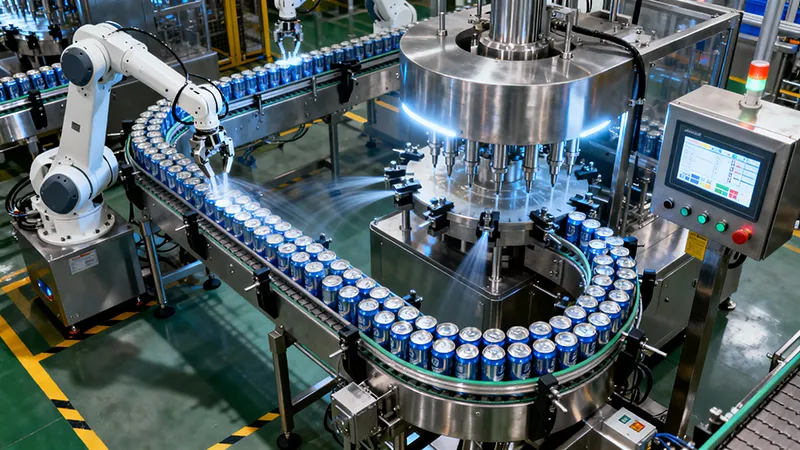
In the industry, these partners are also known as "Co-Packers." A co-packer provides the infrastructure—the blending tanks, the high-speed canning lines, and the quality control labs—allowing the brand owner to focus on what truly drives value: marketing, sales, and brand storytelling.
Why Outsource? Benefits of Contract Manufacturing for Beverages
For most brands, the decision to use beverage contract manufacturing isn't just about convenience; it’s about financial survival and competitive edge.
Capital Efficiency (Asset-Light Model)
Building a beverage plant requires millions of dollars in capital expenditure (CAPEX). You need stainless steel mixing tanks, pasteurization tunnels, water filtration systems, and specialized canning machinery. By choosing a beverage OEM partner, you convert these massive fixed costs into variable costs. You only pay for what you produce.
Unmatched Expertise and Quality Control
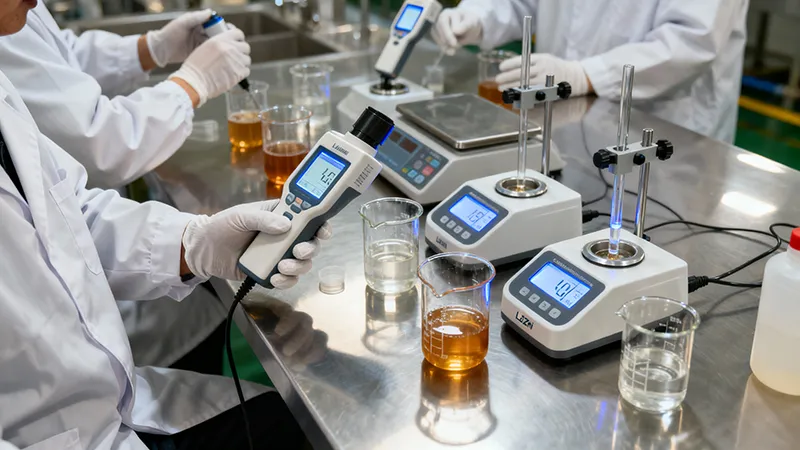
Beverage production is a science. Factors like pH balance, dissolved oxygen levels, and thermal processing (pasteurization) determine whether your drink stays fresh or spoils on the shelf. Professional co-packers have seasoned food scientists and QA technicians who ensure every batch meets international safety standards like HACCP or ISO.
Scalability and Speed to Market
Market trends shift overnight. If you own your factory, adding a new production line for a different can size could take a year. A versatile contract manufacturer can pivot quickly. This agility allows brands to launch seasonal products—such as a refreshing White Peach & Oolong Flavored Fruit Tea—in a fraction of the time.
The Beverage Product Development Process: From Concept to Shelf
Launching a drink is a multi-stage marathon. Here is how the beverage product development process typically unfolds at a professional facility.
Step 1: Formulation and Lab Prototyping
Everything starts with the "Liquid Gold." If you have a kitchen recipe, a co-packer’s R&D team will help "scale it up" for industrial production. This involves sourcing commercial-grade ingredients that maintain flavor stability after heat treatment.
Example: Creating a functional tea like our 330ml Pomegranate and Ginseng Tea requires balancing the bitter notes of ginseng with the acidity of pomegranate to ensure a premium consumer experience.
Step 2: Ingredient Sourcing and Procurement
A top-tier beverage OEM supplier has a global network of ingredient providers. From organic tea leaves to non-GMO sweeteners, they can often procure raw materials at a lower cost due to bulk purchasing power.
Step 3: Being a Ready-to-Drink Tea Co-Packer
Specialized categories like tea require specific expertise. As a Ready-to-drink tea co-packer, we understand that tea is sensitive to oxidation. Our process involves precision brewing temperatures and rapid cooling to lock in the polyphenols and natural aromas that consumers expect from a premium RTD (Ready-to-Drink) product.
Step 4: Canning and Seaming
Once the liquid is blended and carbonated (if required), it enters the filling station. In the aluminum can world, the "Double Seam" is the most critical mechanical connection. It creates a vacuum-tight seal that protects the drink from light and oxygen, extending shelf life without the need for heavy preservatives.
Calculating the Investment: Cost of Beverage Contract Manufacturing
Transparency in pricing is vital for brand planning. The cost of beverage contract manufacturing is generally broken down into four key pillars:
Raw Material Costs
This includes the liquid ingredients (concentrates, flavors, sweeteners) and the primary packaging (the aluminum cans and ends). Aluminum prices fluctuate with global markets, so long-term partnerships often help in stabilizing these costs.
The Toll Fee (Processing Fee)
The toll fee is what you pay the manufacturer for their "service." It covers electricity, labor, equipment wear-and-tear, and the use of the facility. Usually, the higher the volume of your production run, the lower the per-unit toll fee.
Packaging and Secondary Materials
Don't forget the out-of-box experience. This includes:
- Shrink sleeves or printed cans.
- Cardboard cartons or trays.
- Pallet wrap and shipping labels.
Minimum Order Quantities (MOQs)
MOQs are the "entry fee" for contract manufacturing. Because it takes several hours to clean and calibrate a production line for a specific drink, factories cannot efficiently produce only a few hundred cans. Typical MOQs for printed cans start at 300,000 to 500,000 units, though sticker-labeling options may allow for smaller test batches.
How to Choose the Right Beverage OEM Partner
Not all manufacturers are created equal. When vetting a partner for your brand, look for these three pillars of excellence:
- Certifications: Ensure they hold recognized food safety certifications (GFSI, HACCP, or BRC).
- Technical Versatility: Can they handle carbonated drinks? Can they do nitrogen dosing? Can they handle sensitive fruit juices like our White Peach & Oolong Flavored Fruit Tea?
- Transparency: A good partner should act as an extension of your company, offering clear communication regarding production timelines and quality reports.
Conclusion: Your Vision, Our Infrastructure
What is beverage contract manufacturing? It is the bridge between a great idea and a commercial reality. It is the engine that allows creative entrepreneurs to compete with global giants.
At LaiZhi Beverage, we pride ourselves on being more than just a factory. We are a strategic partner committed to your brand's growth. From the intricate science of tea brewing to the high-speed precision of aluminum canning, we provide the expertise you need to succeed in the modern market.
Ready to bring your drink to life? Whether you have a final recipe or just a concept, Contact Us today to start your journey from concept to market.
FAQ
Q1: Can I start with a small test batch before moving to full-scale production?
A: Yes! While high-speed canning lines have MOQs, we often work with brands on "Pilot Runs" or smaller batches using plain cans with shrink sleeves. This allows you to test the market before committing to a full 50,000-unit printed can run.
Q2: Who owns the rights to the formula if you help me develop it?
A: You do. When you engage in beverage OEM services with LaiZhi Beverage, any custom formulation developed specifically for your brand remains your intellectual property. We act strictly as your production partner under a Non-Disclosure Agreement (NDA).
Q3: How long does the entire process take from the first meeting to shipping the product?
A: For a completely new product, the typical timeline is 1 to 3 months. This includes formulation, stability testing, packaging design, and raw material procurement. For "repeat orders" or existing formulas, the lead time is usually 3 to 4 weeks.

