If you are entering the beverage business or planning a new line, a clear picture of the industry beats a long list of statistics. The headline is simple: this is a very large market still growing on the back of one organizing idea — health. The non-alcoholic segment alone is projected to reach about $2.55 trillion by 2030 at roughly 8% CAGR, and almost every sub-trend ladders back to wellness. This overview maps the forces that matter and what they mean for a brand or importer.
Why we wrote this: We sit between the brands launching products and the factory floor that makes them, so we see which industry trends actually translate into orders and which stay on trend slides. This overview is written for decision-makers who need to choose a direction, not a market-report buyer — it focuses on the few forces that should shape your next product, and skips the noise.
Key Takeaways
- The beverage industry is large and still growing, led by non-alcoholic and functional categories.
- Health and wellness is the central organizing force — functionality, low/no-alcohol, premiumization and sustainability all orbit it.
- For brands, the practical takeaway is positioning: a clear wellness angle plus a flexible OEM partner beats chasing every trend.
The Big Picture: A Large, Health-Led Market
Size and momentum
The scale is the first thing to internalize. Beyond the trillion-dollar non-alcoholic base, the functional-beverage niche is heading toward nearly $250 billion by 2030, with RTD functional formats leading sales. Growth is not evenly spread — it concentrates in categories that promise a benefit beyond refreshment.
Why health is the through-line
Consumer behavior explains the concentration. According to EY, millennials show a 62% willingness to pay for clean, healthy ingredients, positioning the category for continued premiumization, and 58% of US consumers now pay more attention to the ingredients in their drinks while 52% will pay more for drinks that support wellness goals. Food industry analysts summarize 2026 bluntly: "health is wealth" is the defining factor in beverage innovation.
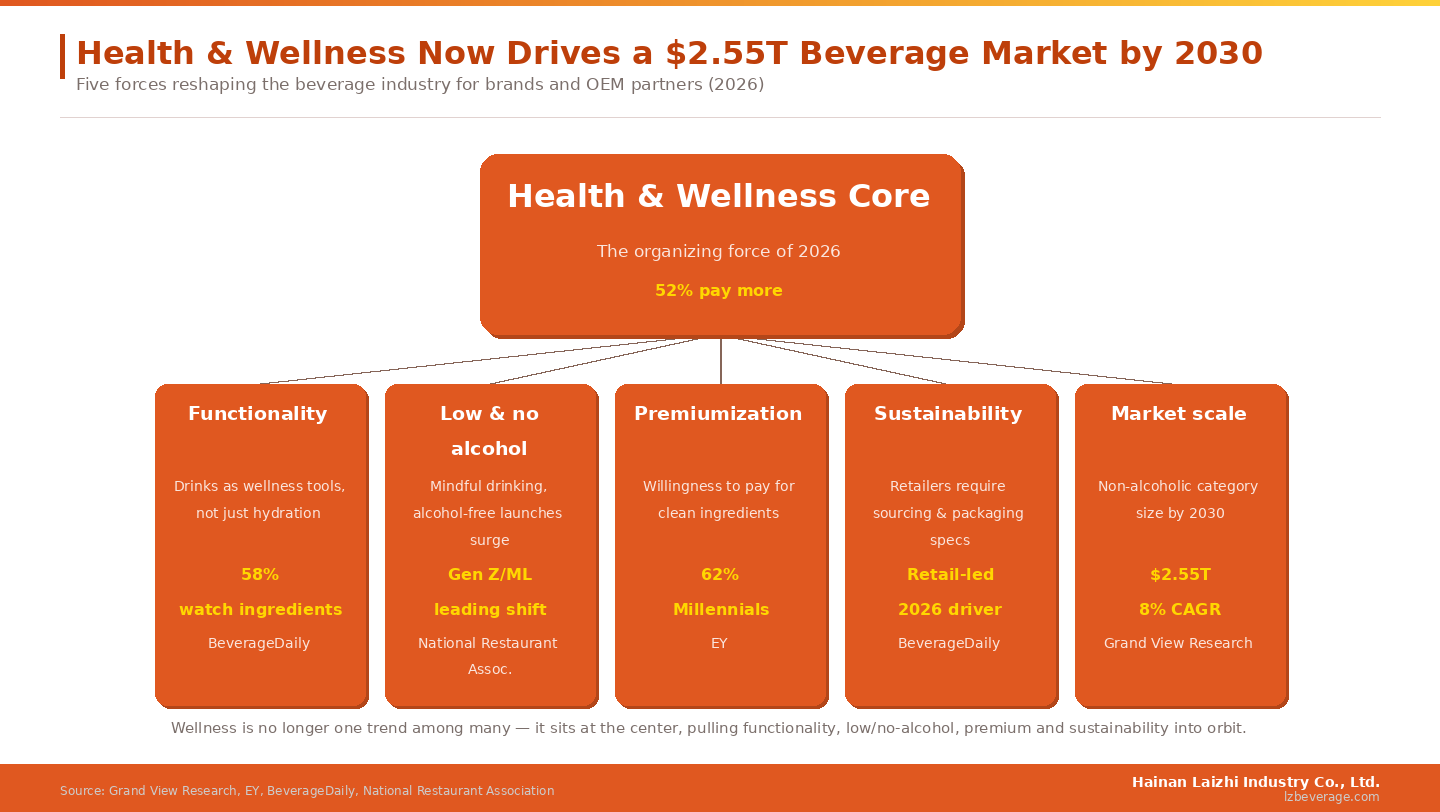
The Five Forces Shaping 2026
Underneath the wellness umbrella, five forces are doing the real reshaping. Functionality turns drinks into wellness tools across every category. Low- and no-alcohol is surging as National Restaurant Association research finds Gen Z and Millennials driving demand for alcohol-free options. Premiumization lets brands charge more for clean, intentional products. Sustainability is increasingly a retailer requirement, not just a consumer wish. And functional/fermented/no-alcohol formats are repeatedly named among the top beverage trends for 2026.
Reading the EY willingness-to-pay data alongside the market-size forecasts makes the strategic point clear: the industry is not just bigger, it is rewarding a specific kind of product. A drink that combines a credible health benefit with clean ingredients can command a premium that a commodity soda cannot. For a new brand, that means the smartest move is to pick one wellness position and execute it well, rather than launching a "me-too" product into the most crowded, price-driven lanes.
What This Means for Your Brand
Choose a position, not a trend list
The mistake we see most often is trying to ride every trend at once. The data argues for focus: a single, credible wellness angle — functional, low-sugar, or low/no-alcohol — built into a quality product. Whether that becomes an energy drink, a juice, a tea or a flavored water, the positioning should be decided before the formulation.
The role of an OEM/ODM partner
Industry forces like premiumization and sustainability raise the bar on execution — better ingredients, traceable sourcing, and compliant claims. A one-stop beverage manufacturing partner that can formulate, fill, package and document across categories lets a brand act on these trends without building a factory. You can scan the available product categories to see where your concept fits.
Next-step checklist
- 1. This week: pick one wellness position — functional, low-sugar, or low/no-alcohol.
- 2. This week: match it to one category from the five forces above.
- 3. This month: confirm sustainability and claim requirements for your target retailers.
- 4. This month: brief an OEM partner and request category samples.
FAQ
How big is the beverage industry?
It is very large and growing. The non-alcoholic segment alone is projected to reach roughly $2.55 trillion by 2030, with functional beverages among the fastest-growing niches.
What is the biggest trend in beverages right now?
Health and wellness. It is the central organizing force, with functionality, low/no-alcohol drinks, premiumization and sustainability all stemming from it.
What should a new beverage brand focus on first?
A clear positioning. Choose one credible wellness angle and one category, then work with a flexible OEM/ODM partner to prototype before committing to a full production run.


