Pear juice is often treated as a soft, "kids and grandparents" flavor — pleasant but not exciting. For a brand owner, that perception is actually an opportunity. Pear sits quietly at the intersection of gentle taste and a genuine functional story, at a moment when the global functional drinks market is heading toward nearly $250 billion by 2030, led by ready-to-drink functional juices. This guide covers what pear juice really delivers and how to turn it into a credible private-label product.
Why we wrote this: We field a steady stream of requests from importers who want a "safe" fruit base that still carries a health angle, and pear keeps coming up. The problem is that most online content treats pear as a home remedy rather than a formulation decision. This guide reframes the benefits for people who actually have to put a pear drink in a can and sell it across markets.
Key Takeaways
- Pear's functional pillars are fiber, potassium and a gentle low-calorie profile — all easy to communicate honestly.
- There is real clinical signal: a controlled trial linked daily pear intake to improved blood-pressure markers in at-risk adults.
- The juice format keeps soluble fiber (pectin), which carries a digestive and prebiotic story even after juicing.
What Pear Juice Actually Delivers
Fiber, potassium and a light profile
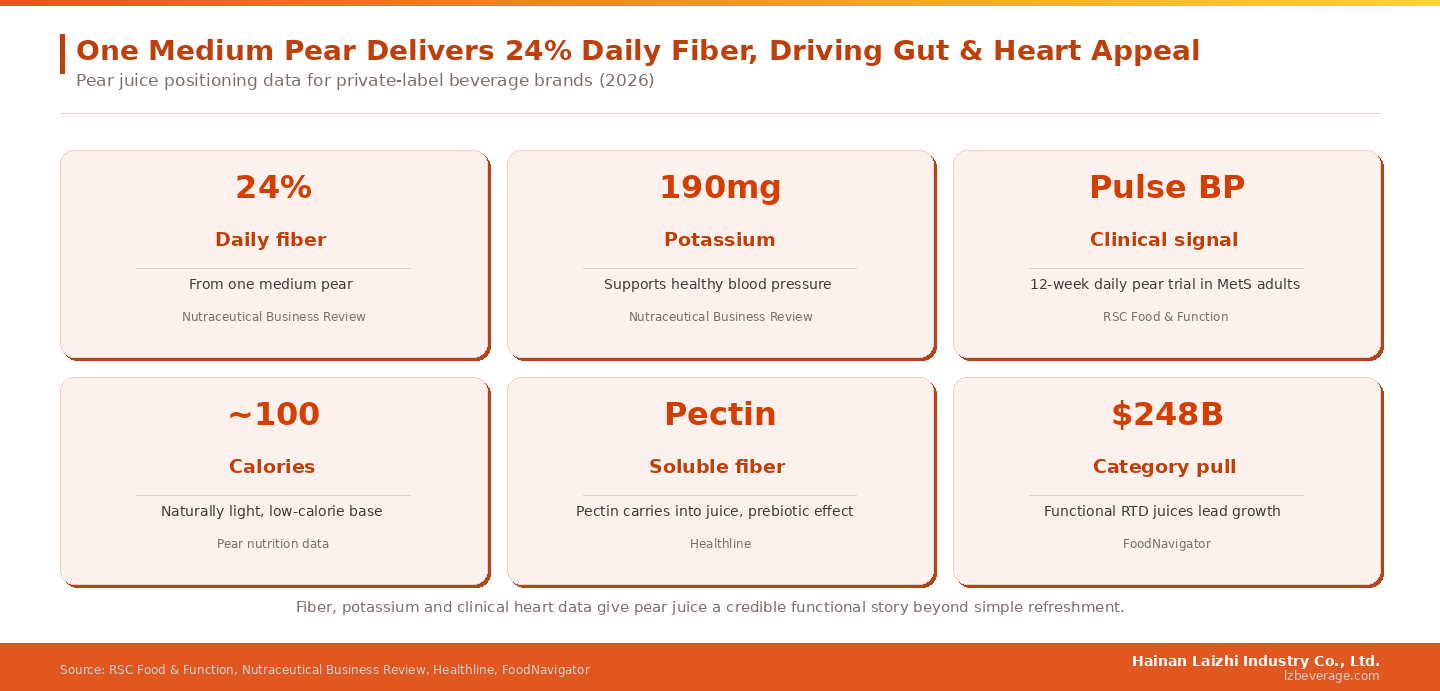
Start with the basics that hold up. A single medium pear supplies roughly 24% of daily fiber needs and about 190 mg of potassium for only around 100 calories. Potassium is well established as a counterweight to sodium for blood pressure, and the low-calorie base makes pear an easy fit for "better-for-you" positioning. Even after juicing, the soluble fiber pectin carries over and brings a digestive and prebiotic angle along with flavonoid antioxidants concentrated in the fruit.
Clinical evidence worth citing
What sets pear apart from many fruit-juice flavors is published human research. A randomized, placebo-controlled crossover trial found that after 12 weeks of daily fresh pear consumption, pulse pressure dropped significantly and waist-to-hip ratio improved in middle-aged adults with metabolic syndrome. That is a defensible, named-study foundation for a heart- or wellness-oriented pear product — far stronger than generic "healthy fruit" claims.
Reading the RSC pear trial alongside the NIH guidance on essential nutrients makes the positioning obvious: pear's value is not one hero compound but a balanced fiber-potassium-low-calorie package backed by a real clinical signal. For a brand, that means the smart play is an everyday wellness drink — hydrating, gentle, honestly labeled — rather than an over-claimed "superfruit" pitch the evidence can't support.
Why Pear Fits a Modern Functional Portfolio
The category context strengthens the case. Functional-beverage demand is growing at a healthy single-digit CAGR, driven by consumers seeking drinks enriched with health-supporting nutrients, and vitamin- and mineral-led positioning is exactly where pear lives. Vitamin C — present in pears and central to immune and collagen function according to the NIH Office of Dietary Supplements — adds another honest talking point.
In practice, pear works as a standalone juice line, as a soft base that mellows tart fruits, or as a lightly sparkling RTD. Its mild sweetness also makes it forgiving in low-sugar formulations, where harsher fruits can taste thin.
From Benefit to Bottle: The OEM View
Protecting the nutrition through processing
Juicing trades away some insoluble fiber, so the formulation goal is to preserve soluble fiber and vitamins while keeping a clean, fresh taste. Gentle pasteurization and oxygen-limiting packaging matter, and unfiltered or pulp-retaining formats keep more of the digestive benefit intact. A capable beverage manufacturing partner will help you trade off clarity, mouthfeel and nutrition deliberately rather than by accident.
Labeling and market readiness
Because pear has a real study behind it, claim wording is both an opportunity and a responsibility. Reference the nutrient or the named research rather than promising outcomes, and confirm permitted claims for each export market. Certificates of analysis, microbial and contaminant testing, and accurate nutrition panels turn a nice recipe into an export-ready SKU.
Next-step checklist
- This week: choose your pear angle — gut health, heart, or low-sugar refreshment.
- This week: decide filtered vs. pulp-retaining to protect the fiber story.
- This month: request a pear juice sample and full spec sheet from an OEM partner.
- This month: verify which health claims are allowed in your target market.
FAQ
Is pear juice good for digestion?
It can help. Pears contain pectin and sorbitol, and even juiced products retain soluble fiber that supports regularity and feeds beneficial gut bacteria. Pulp-retaining formats keep more of this benefit.
Does pear juice have proven health benefits?
There is supporting human research. A 12-week controlled trial linked daily fresh pear intake to improved blood-pressure markers in adults with metabolic syndrome, which is a stronger evidence base than most fruit flavors have.
Can pear juice be made low in sugar?
Yes. Pear's natural mild sweetness makes it well suited to reduced-sugar formulations. A flexible OEM/ODM partner can tune sweetness and format; you can review ready-to-drink options here to start.


