Tea is the oldest and most culturally embedded beverage in Asia. Beer is the fastest-growing alcoholic category across the region. The intersection of these two truths has created one of the most compelling OEM product opportunities in the global craft beverage industry: tea-infused canned beer.
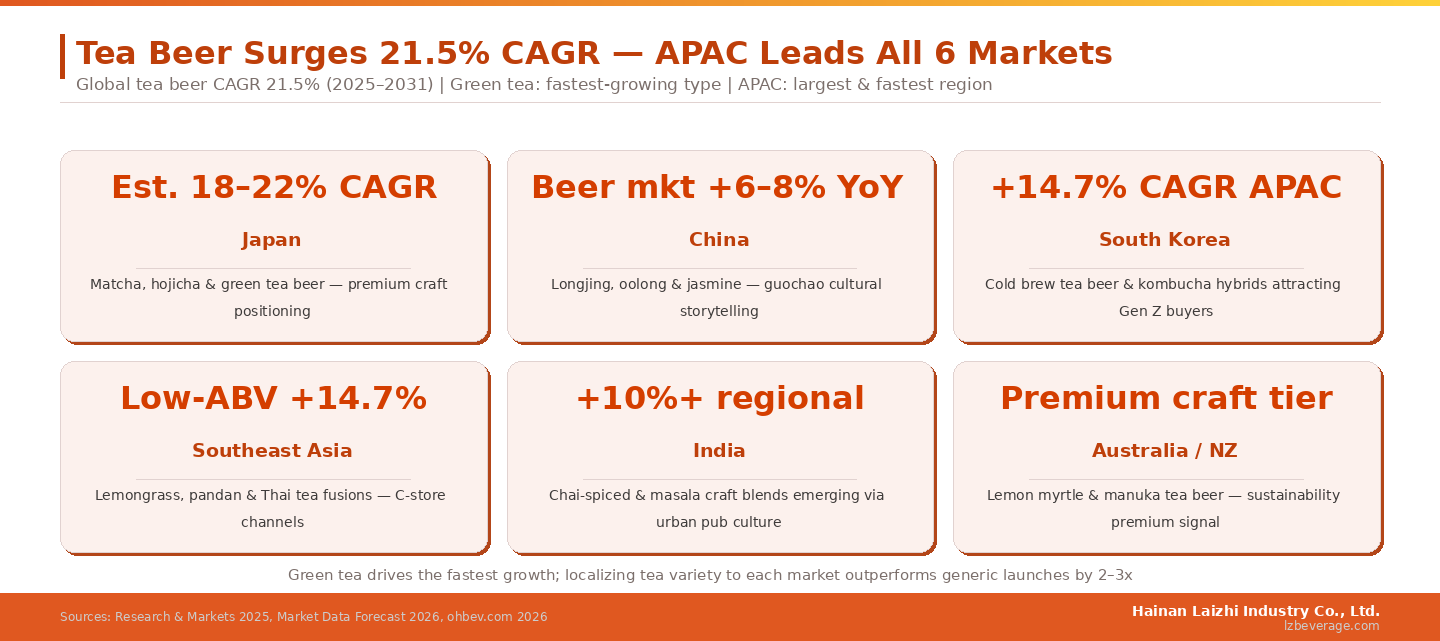
Tea is the oldest and most culturally embedded beverage in Asia. Beer is the fastest-growing alcoholic category across the region. The intersection of these two truths has created one of the most compelling OEM product opportunities in the global craft beverage industry: tea-infused canned beer. According to data from Research & Markets, the global tea beer market is forecast to grow at a compound annual growth rate of 21.5% from 2025 to 2031, with Asia Pacific holding both the largest regional market share and the highest growth trajectory. For OEM beverage brands targeting Japanese specialty retail, Chinese convenience channels, Southeast Asian craft beer bars, or South Korean premium off-trade, the question is no longer whether tea beer belongs in your portfolio — it is how to develop it correctly.
Key Takeaways
- The global tea beer market is growing at 21.5% CAGR through 2031, with green tea identified as the fastest-growing tea type within the category.
- Asia Pacific is simultaneously the largest and fastest-growing regional market — making it the logical starting point for any serious tea beer OEM strategy.
- Tea variety selection is more critical than beer style selection in Asian markets — the wrong tea type creates cultural dissonance that marketing cannot overcome.
- Laizhi Beverage's Chinese manufacturing base offers a strategic advantage for tea beer OEM production — direct access to authentic Chinese tea supply chains (Longjing, oolong, Pu'er) reduces ingredient cost and ensures provenance authenticity.
- Low-ABV positioning amplifies tea beer's health appeal in markets where the "sober curious" trend intersects with Asian tea culture — particularly effective in Japan, South Korea, and premium Thai channels.
Why Tea Beer Works in Asian Markets: The Cultural Logic
Tea as the Cultural Common Ground
In most Western markets, tea beer is a craft curiosity — an interesting hybrid for adventurous drinkers. In Asian markets, it is a culturally coherent product concept. Tea is not just a beverage in Japan, China, South Korea, or India; it is a sensory reference point that every consumer shares. When a beer brand signals "green tea," "longjing," or "hojicha" on the label, it is not introducing an unfamiliar concept — it is connecting a new product format to the most familiar taste memory the consumer has. This is why tea beer brand positioning in Asian markets requires significantly less consumer education than it does in European or North American channels. The challenge is not explaining what it is — it is delivering on the sensory promise authentically.
The Health Signal Is Amplified
Tea carries a powerful health perception globally, but in Asian markets this perception is particularly strong and culturally specific. Green tea is associated with antioxidant benefits, clarity, and moderation in Japanese health culture. Pu'er tea is associated with digestive health and traditional medicine in southern Chinese food culture. Lemongrass and pandan — common additions in Southeast Asian tea preparations — carry associations with digestion and natural wellness. When these ingredients appear in a beer formulation, they signal moderation and natural character in a way that resonates deeply with the health-conscious segment of Asian premium consumers. According to Market Data Forecast, the flavored beer segment in Asia Pacific is forecast at a 14.7% CAGR — the highest of any product category in the region's beverage market.
Market-by-Market OEM Positioning Guide
Japan: The Premium Craft Standard
Japan's tea beer market is defined by sophistication. Consumers in Japan expect nuanced flavor — not the aggressive sweetness of a flavored malt beverage, but the subtle integration of tea character into a well-crafted beer base. Japanese craft brewers are experimenting with matcha, hojicha, and sencha in wheat ale and lager bases, emphasizing the interplay between tea's grassy or roasted notes and the malt character of the base beer. For OEM brands entering Japan, the brand story matters as much as the liquid: provenance of the tea, brewing philosophy, and packaging quality all factor into premium channel acceptance. A Chinese manufacturer with authentic access to premium Japanese-style tea varieties — or well-executed Chinese alternatives — can develop credible Japan-market tea beer formulations that would be difficult to source from a Western OEM partner.
China: Longjing, Oolong, and National Tea Heritage
China presents a unique OEM opportunity for tea beer because the cultural storytelling possibilities are unmatched anywhere in the world. Longjing (Dragon Well) tea from Hangzhou, oolong from Fujian and Taiwan, white tea from Fujian, and Pu'er from Yunnan each carry specific regional identities and consumer associations that translate into premium brand narratives. A canned craft beer built around a specific tea origin — "Dragon Well Lager, brewed with single-origin Longjing from West Lake" — has a genuine cultural anchor that resonates with premium urban Chinese consumers who are increasingly interested in national heritage products (the guochao trend). Explore Laizhi Beverage's tea product line for context on how Chinese tea heritage translates into beverage manufacturing — the same ingredient sourcing knowledge applies directly to tea beer formulation.
Southeast Asia: Tropical Tea Fusions for Convenience Channels
In Southeast Asian markets — Thailand, Vietnam, the Philippines, Indonesia, Malaysia — the tea beer opportunity is different in character from Japan or China. Here, the winning formulation typically involves tropical tea fusions: Thai milk tea beer, pandan-lemongrass light ale, ginger tea pale lager. These products work best in convenience store channels (7-Eleven Thailand has over 14,000 locations; Circle K Vietnam is one of the dominant modern retail formats) where low ABV, refreshing profile, and bold flavor identity are the purchase drivers. The low-ABV positioning is particularly important: markets like Thailand have regulatory restrictions around alcohol advertising, and low-ABV tea beer can be positioned more freely in health-adjacent messaging.
Formulation Strategy: How Tea and Beer Interact
Choosing the Right Beer Base for Your Tea Variety
The most common formulation error in tea beer development is selecting a beer base that fights the tea rather than complementing it. The general principle is: lighter, more neutral beer bases allow delicate tea varieties to express themselves, while more robust beer styles work with stronger, more assertive teas. Specific guidance:
| Tea Type |
Flavor Character |
Recommended Beer Base |
Target Market |
| Matcha / Sencha |
Grassy, vegetal, slightly bitter |
Light wheat ale, pale lager |
Japan, South Korea, premium China |
| Longjing (Dragon Well) |
Nutty, floral, delicate |
Light lager, golden ale |
China (premium guochao) |
| Hojicha (roasted green) |
Caramel, roasted, smoky |
Amber ale, brown ale, mild stout |
Japan craft premium |
| Thai milk tea spice blend |
Sweet, spiced, creamy |
Wheat beer, low-ABV ale |
Thailand, Vietnam C-stores |
| Oolong |
Floral, complex, semi-oxidized |
Pale ale, golden lager |
China, Taiwan, SE Asia premium |
| Lemongrass / Pandan |
Citrus-floral, tropical, aromatic |
Light lager, pilsner |
SE Asia (Indonesia, Philippines) |
Integration Method: Dry-Hopping vs. Brew-Addition vs. Post-Fermentation
Tea can be introduced at multiple points in the brewing process, each producing a different flavor profile in the final product. Adding tea during the mash or boil creates deeply integrated, sometimes astringent tea character — useful for strong teas like black tea or chai-spiced blends where assertive integration is desired. Adding tea post-fermentation (similar to the dry-hopping technique used for hops) preserves more of the tea's delicate aromatic compounds — preferred for green tea, matcha, and oolong where floral and grassy notes should be prominent. Cold-brew tea concentrate added at packaging provides the cleanest, most controllable integration and is the method most compatible with large-scale OEM production, where batch consistency is a priority. For most Asian-market tea beers aimed at canned OEM production, the post-fermentation or cold-brew concentrate method is recommended. Learn more about Laizhi's R&D and formulation capabilities for tea-forward beverage production.
Packaging and Label Strategy for Asian Tea Beer
Visual Language That Signals Authenticity
Tea beer packaging in Asian markets needs to make two simultaneous signals: premium craft quality and cultural authenticity. The design language that works best typically draws from the specific tea's cultural heritage — Longjing beer benefits from subtle visual nods to West Lake and Hangzhou's ink-wash aesthetic; matcha beer works well with clean minimalism and muted green color palettes; Southeast Asian tea beer can lean into more vibrant tropical botanical imagery. The can format itself matters: the slim/sleek 330ml can carries premium signal in Japanese and South Korean markets, while standard 330ml works well in Southeast Asian convenience channels. Visit Laizhi Beverage's resource library for guidance on export-ready packaging for Asian markets.
Frequently Asked Questions
What is the minimum order quantity for a custom tea-infused beer OEM formulation?
MOQ for custom tea beer formulation depends on the manufacturer and the complexity of the formulation. Simpler formulations using tea concentrates typically qualify for lower MOQs since they require less specialized equipment configuration. More complex formulations — particularly those using rare tea varieties or requiring post-fermentation dry-addition — may need larger minimum runs to justify the setup. Request sample formulation capability before committing to volume: a manufacturer willing to produce pilot samples demonstrates genuine OEM capability rather than a template-product reseller.
Does tea content in beer affect alcohol content or shelf life?
Tea additions — particularly tannin-rich teas like black tea or oolong — can slightly affect fermentation dynamics if introduced pre-fermentation, as tea polyphenols can interact with yeast. When tea is added post-fermentation, the impact on ABV is minimal. Shelf life can be positively affected by tea's antioxidant properties, which may slow some oxidative flavor degradation processes. In practice, carefully executed tea beer at commercial production quality has shelf life comparable to standard craft lager — typically 9–12 months from fill date when stored cool and out of direct light.
Can I register "tea beer" as a specific product category for customs purposes?
Yes — tea beer is classified under different HS codes depending on its alcohol content and primary ingredient. For alcoholic tea beer (above 0.5% ABV), the applicable HS code in most markets falls under the beer and malt beverages category (HS 2203). Verify with a customs broker in your target import market before the first shipment to ensure correct classification and applicable import duties. Some markets may apply different duty rates for flavored malt beverages versus straight beer, which affects your landed cost calculation.

