Bamboo forests are a very common herb in the south, and there are even bamboo forests near many villages. Especially in winter, the bamboo forest is very lively, because December is a good season for digging winter bamboo shoots. Villagers who are busy will go to the bamboo forest to dig some winter bamboo shoots to eat. Some people with good skills can even make a living from this. I remember when I was a child, when my grandfather was still alive, he would go to the bamboo forest behind the ho
Bamboo forests are a very common herb in the south, and there are even bamboo forests near many villages. Especially in winter, the bamboo forest is very lively, because December is a good season for digging winter bamboo shoots. Villagers who are busy will go to the bamboo forest to dig some winter bamboo shoots to eat. Some people with good skills can even make a living from this. I remember when I was a child, when my grandfather was still alive, he would go to the bamboo forest behind the house to dig winter bamboo shoots every winter to exchange for pocket money.
And the ones that are dug up are eaten by themselves, and they are especially fragrant when fried with bacon. In fact, there are not only winter bamboo shoots in the bamboo forest, but also many other treasures. For example, the golden cicada flower, known as the "cordyceps" of the south, likes to grow in bamboo forests, as well as bamboo fungus, morel, boletus, etc. The plant that I want to share with you today likes to grow in the cool bamboo forest.
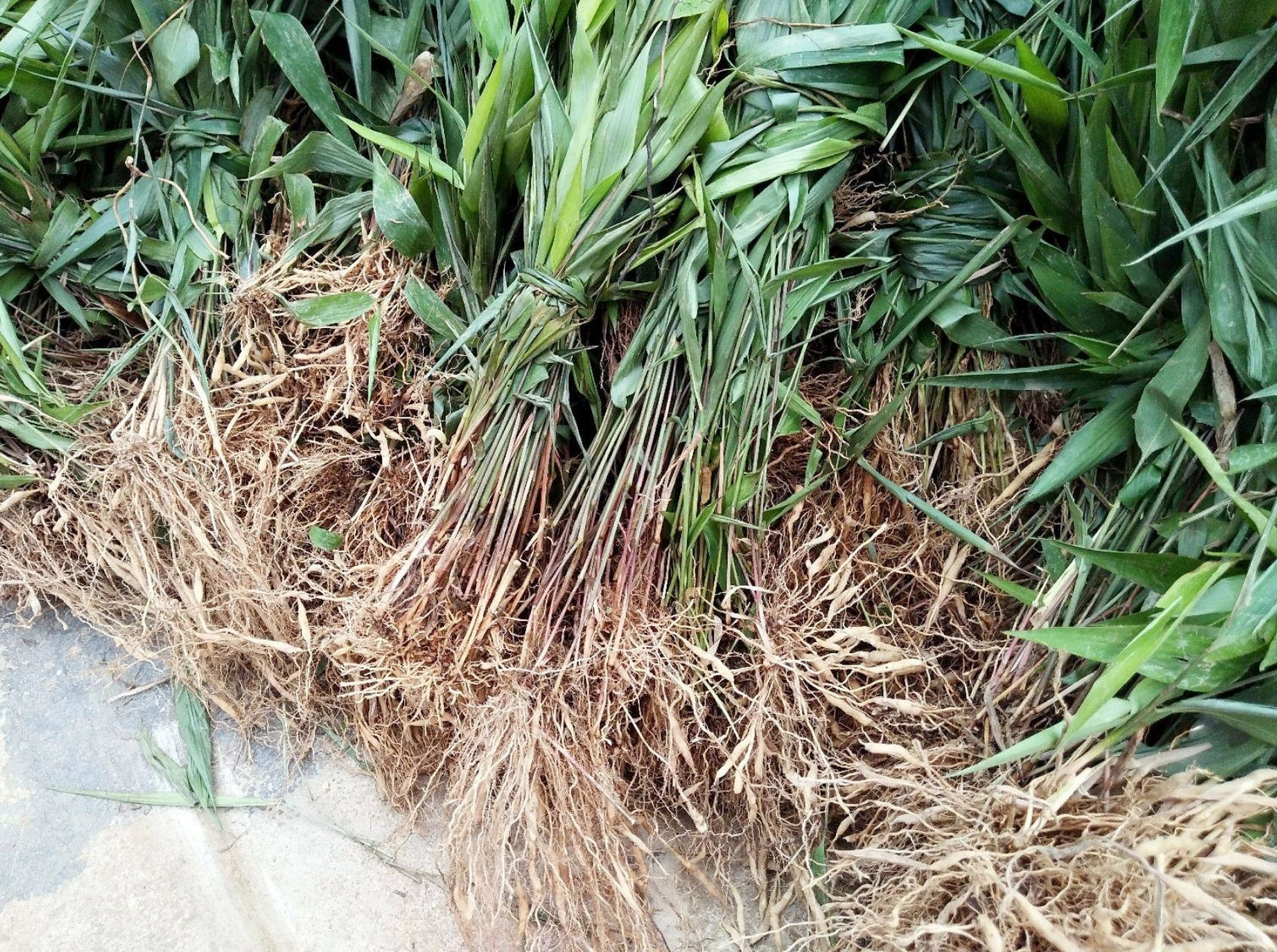
Old farmers who understand its value often dig it home to boil water and drink as herbal tea. Especially in the dog days of summer, a bowl of cool and refreshing food is the Common Lophatherum. Today, I will take you to know and understand this plant.
Know about Common Lophatherum and understand Common Lophatherum
Common Lophatherum are named because of their sweet and light nature and leaves that look like bamboo leaves. Common Lophatherum are also called bamboo leaf ophiopogon, wild ophiopogon, and earth ophiopogon, because the roots of Common Lophatherum have small tubers similar to ophiopogon, one by one. It tastes sweet when chewed, and is very similar to ophiopogon, so it is named. Some people also call it the grass of confusion, because there are thorns on its seeds, and it likes to stick to people's clothes, so it is named the grass of confusion.
Some people also call it pheasant rice, ground bamboo, and forest bamboo. It is a perennial herbaceous plant of the Poaceae family and the genus of Common Lophatherum. It is a close relative of the bamboo we are familiar with, and belongs to the same family of plants. Don't look at bamboos that grow very tall, but strictly speaking, bamboo is also a herbaceous plant, and it is essentially the same as Common Lophatherum. The plant of the Common Lophatherum is not high. It usually does not exceed 40 cm when it is not flowering, and will not exceed 1 meter after flowering.
Its rhizome is very short, slightly woody, with many fibrous roots, and there are small swollen tubers in the middle or at the end of the fibrous roots, which are very similar to Ophiopogon japonicus. The stems of the Common Lophatherum are clustered, upright, and the leaves are alternate. The leaves are lanceolate, very similar to bamboo leaves. It is recorded in the "Compendium of Materia Medica": "Common Lophatherum grow seedlings in spring, several inches high, with thin stems and green leaves, a nest of roots with dozens of whiskers, and fruits on the whiskers, which are very similar to Ophiopogon japonicus", which is consistent with our current Common Lophatherum.
Common Lophatherum are a very common herb in my country, distributed all over the country. They especially like to grow in cool places, not only in bamboo forests, but also under forests and in some cool places.
The value of Common Lophatherum
Common Lophatherum are a very valuable herb, which has a long history of application in my country.
-
First of all, the roots and whole grass of bamboo leaves can be crushed and mixed with rice to make wine yeast. It is said that the wine yeast made with bamboo leaves has a very strong aroma, and the brewed rice wine has a more unique taste. Li Shizhen recorded this value in "Compendium of Materia Medica", saying: "The mountain people picked its roots and shoots, crushed the juice and mixed it with rice to make wine yeast, which is very fragrant and strong."
-
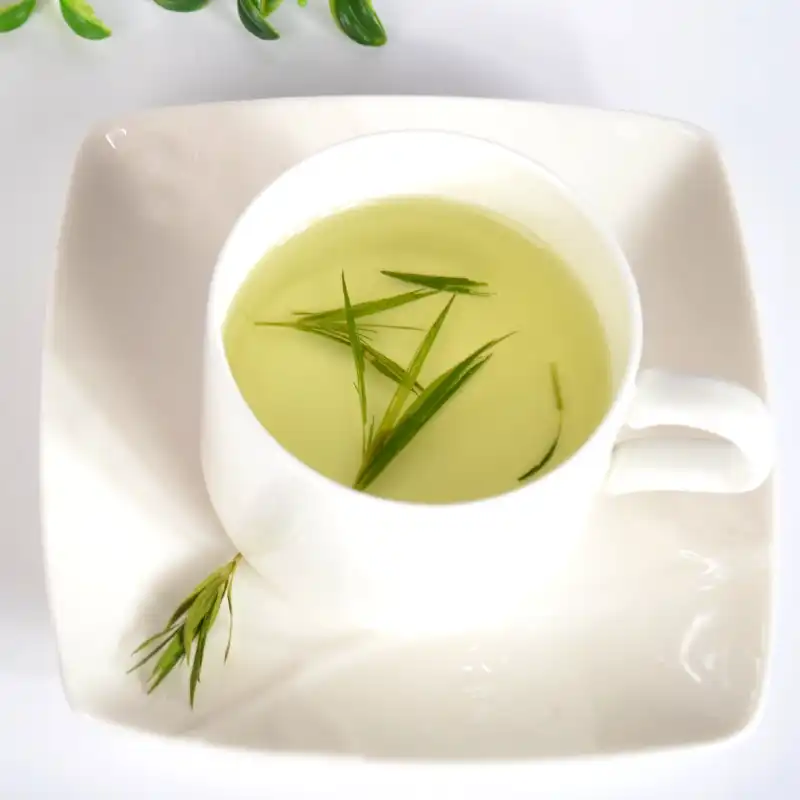
Second, bamboo leaves are very good herbal teas. You can pick its leaves, dry them, boil them in water and make tea. If you are dry and get angry in autumn or the hot summer days in summer, we can use bamboo leaves. It has a very good effect of reducing fire and cooling down. In fact, many of the herbal teas we drink contain bamboo leaves.
-
Third, bamboo leaves are still a very traditional medicinal plant. Its whole grass can be used as medicine, which has the effect of clearing heart fire and removing irritability. If you are upset, stomatitis, thirsty due to fever, swollen and painful gums, and sores in the mouth and tongue, you can use it to boil water to drink, especially with rush. The effect is better.
Here, there is a little story about the Common Lophatherum. It is said that during the Three Kingdoms period, Zhang Fei led his troops to fight. Once, he could not conquer the city for a long time. Zhang Fei was so anxious that he was furious and had sores in his mouth. Zhuge Liang, the military advisor at that time, found the Common Lophatherum in the bamboo forest and boiled water with it to relieve Zhang Fei's anger. In addition, the Common Lophatherum has diuretic and stranguria-relieving effects. If you have difficulty urinating or painful urination, you can also use the Common Lophatherum. It can be said that the Common Lophatherum is a treasure all over.
So if you encounter this plant in the bamboo forest, you must cherish it. You can dig it back, wash it, dry it and set it aside. When it is hot in the summer next year, you can take it out and boil water as a cold tea to easily spend the dog days. Do farmers understand?

