In the beverage industry, thousands of technical details separate a brilliant recipe idea from the final product on the shelf. For brand owners, choosing a beverage OEM partner is akin to choosing a "co-founder." To ensure the safety of your investment and achieve long-term business growth, conducting thorough beverage factory due diligence is an indispensable step.
In the beverage industry, thousands of technical details separate a brilliant recipe idea from the final product on the shelf. For brand owners, choosing a beverage OEM partner is akin to choosing a "co-founder." To ensure the safety of your investment and achieve long-term business growth, conducting thorough beverage factory due diligence is an indispensable step.
Qualifications and Compliance: What core certifications do you possess, and can they support your brand's entry into the global retail system?
This is the most basic and crucial step when vetting a beverage co-packer.
-
What was your most recent external quality audit score, and are you willing to provide a detailed rectification report? Excellent factories not only need HACCP or ISO 22000 certifications, but also practical experience in handling unannounced inspections by large retailers or third-party agencies. Inquiring about audit scores reflects the rigor of the factory's daily management. If a factory can transparently demonstrate its continuous improvement plan in compliance, it indicates a high level of resilience, ensuring that your products will not face market entry obstacles or brand reputation damage due to qualification loopholes when entering high-end supermarkets or exporting to stringent European and American markets.
-
For specific export markets (such as US FDA or EU standards), what practical experience do you have in ingredient compliance and label review? Different countries have vastly different standards for sweeteners, colorings, and additives. A contract manufacturer with a global perspective, such as Laizhi Industrial, should be familiar with the food regulations of major trading regions. Ask them how they assist clients with pre-approval of formulas to effectively avoid customs clearance and return risks due to the misuse of prohibited ingredients. Professional factories provide comprehensive regulatory consultation and support, ensuring that your products, from packaging design to liquid contents, accurately meet the regulatory requirements of the target market, thereby clearing legal obstacles for the brand's global expansion.
R&D Capabilities: How do you assist brands in achieving "industrial-scale formula optimization"?
Regarding R&D capabilities questions for the beverage factory, you need to understand if they can handle complex stability issues.
-
Do you offer formula commercialization optimization services to maximize product shelf life without relying on excessive preservatives? Laboratory formulas often overlook the impact of large-scale heat treatment on flavor. When developing our White Peach & Oolong Flavored Fruit Tea, the R&D team had to use precise color and flavor protection techniques to counteract the aroma loss caused by pasteurization. Asking the factory how they improve product stability by adjusting pH, conductivity, or antioxidant systems demonstrates their technical depth. A good R&D partner can ensure that the product maintains its refreshing taste and natural color for up to 12 months on the shelf.
-
Regarding functional ingredients (such as ginseng, herbal extracts, or natural caffeine), what mature bitterness masking or flavor balancing technologies do you have? Functional beverages often face taste challenges, such as the earthy or medicinal taste inherent in some active ingredients. Asking the factory if they have mastered microencapsulation technology or advanced flavoring blending solutions is crucial for increasing consumer repurchase rates. For example, in processing our 330ml Pomegranate and Ginseng Tea, the synergistic effect of fruit acids and plant extracts successfully neutralized the bitterness of ginseng. Confirming that the factory possesses this ability to manage complex flavors is a core prerequisite for ensuring that functional beverages are both "effective" and "delicious."
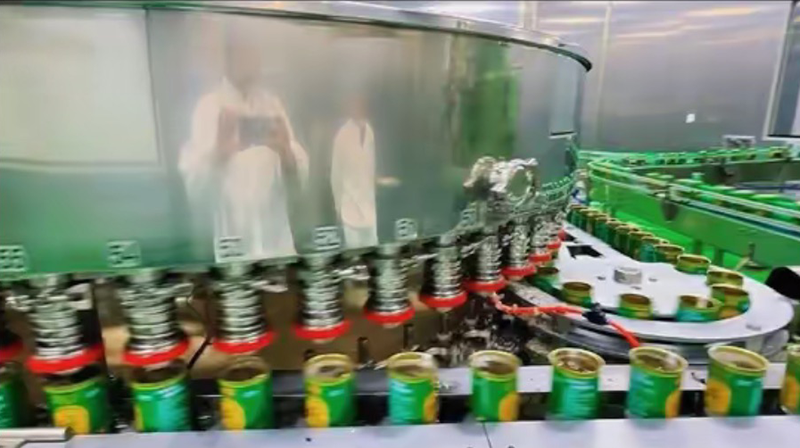
Production Flexibility: What are your minimum order quantities (MOQs) and capacity expansion plans?
This is a financial pain point when evaluating a beverage contract manufacturer.
-
What are your minimum order thresholds and tiered pricing strategies for printed aluminum cans, labeled cans, and shrink-wrapped packaging? The minimum order logic varies significantly for different packaging formats. Printed cans typically require a minimum order of 30,000 to 50,000 units, which can be a significant inventory burden for startup brands. Asking whether the factory supports small-batch labeling production for market testing can effectively assess their support for growing businesses. Laizhi Industry offers flexible minimum order solutions, allowing clients to launch projects at a lower cost during the initial stages of their brand. Clearly understanding these tiered thresholds will help you develop more precise capital allocation plans and inventory turnover strategies at different stages of your brand's development.
-
During peak business periods or when experiencing a surge in orders, what is your average delivery time, and what emergency capacity redundancy plans do you have in place? The beverage industry is highly susceptible to seasonal fluctuations. You need to confirm whether the factory prioritizes large clients during the summer peak season and whether they have the capacity to increase shifts and activate backup production lines. Asking about the factory's average production lead time can help you plan your marketing schedule accordingly. A reliable contract manufacturing partner should possess strong supply chain coordination capabilities, enabling them to quickly allocate raw materials and production capacity reserves when your demand suddenly increases, ensuring that your products do not run out of stock during periods of peak market demand.
Quality Control Process: How do you monitor the "critical control points" in the production process?
Red flags in beverage manufacturing partners are often hidden in unseen production stages.
-
Do you perform hourly seam tests, and how do you monitor dissolved oxygen (DO) and carbon dioxide saturation in real time? For aluminum-canned beverages, the micron-level precision of the seal directly determines the risk of leakage and oxidation. Ask the factory if they use professional microscopic seam testing equipment and archive the data for traceability. Simultaneously, controlling dissolved oxygen levels is crucial for maintaining the natural flavor of fruit tea products. A rigorous factory should establish a multi-point online monitoring system to monitor various physical and chemical indicators during the filling process in real time. Through these detailed questions, you can determine whether the factory possesses a meticulous approach, thus ensuring that every can of beverage reaching consumers has impeccable quality consistency.
-
How do you manage batch sample retention and traceability systems? Can you quickly provide complete production data records in the event of a quality dispute? A robust traceability system is the brand's "safety net." Ask the factory if they can use the production code on the bottom of the can to link to raw material suppliers, the operators on duty, and specific laboratory test data within a few hours. Clearly defining the sample retention period (usually more than 3 months beyond the shelf life) and the delivery standards for Certificates of Analysis (COA) in the contract is standard practice for professional brands. This not only enhances consumer trust but also provides strong technical evidence in the face of regulatory inspections or malicious complaints, minimizing compliance losses for the brand.
Raw Material Traceability and Transparency: How do you manage supply chain risks?
Before signing with a beverage manufacturer, it's crucial to understand the true origin of the raw materials. An opaque supply chain is the biggest hidden danger for a brand, potentially leading to uncontrolled costs or flavor inconsistencies. You need to ask the factory: If there is a shortage of core fruit juice ingredients during the harvest season, do they have reliable alternative suppliers? Do they conduct rigorous testing for pesticide residues, heavy metals, and allergens on every batch of incoming materials and reject any substandard products? Laizhi Industry has established a complete traceability system, ensuring that every drop of water and every tea leaf can be traced back to a compliant origin. This deep level of transparent management not only stabilizes product quality but also provides your brand with a more robust supply guarantee than your competitors during global supply chain disruptions, preventing market share loss due to raw material shortages.
Cost Structure: Besides processing fees, what are the potential "hidden costs"?
In the list of questions to avoid bad beverage partnerships, pricing transparency ranks high.
-
How is the loss/waste allowance calculated? Is there a protected upper limit and compensation clause for excess losses? In beverage filling, natural losses of raw materials and packaging materials (such as during machine testing and filling errors) are unavoidable. Industry standard losses are typically between 2% and 5%. You need to confirm: if the loss rate exceeds 10% due to factory operational errors, who will bear the additional raw material costs? Clarifying the loss write-off logic prevents the factory from shifting the costs of poor production management to the brand owner. This transparent loss agreement is the foundation for building a trusting partnership and effectively avoids financial disputes caused by significant cost fluctuations during project settlement.
-
Are customized laboratory testing fees, formula sampling fees, third-party compliance audit fees, and short-term warehousing costs during peak and off-peak seasons included in the basic quotation? Many contract manufacturers offer seemingly low "processing unit prices," but later add various miscellaneous fees. Asking about these details helps you calculate the true cost per can (Full Cost Per Can). For example, additional laboratory testing for specific export standards or temporary warehousing before finished product shipment may incur extra expenses. Laizhi Industry insists on full cost transparency, listing all possible potential expenses at the beginning of the cooperation to help brand owners establish a robust financial budget system and ensure that your marketing plan is not disrupted by unexpected overspending.
Packaging and Design Support: What special processes can you handle?
Beverage packaging is the primary medium for brand-consumer communication. You need to conduct an on-site inspection of the factory's capabilities in handling different aluminum can sizes (such as Slim, Sleek, and Standard). Besides basic 8-color high-speed printing, does the factory support temperature-sensitive inks, localized matte finishes, or complex shrink-wrap labeling processes? With the rise of environmental trends, does the factory have the capability for automated packaging without secondary packaging and using eco-friendly corrugated cardboard boxes? LaiZhi Industry continuously updates its packaging equipment and can handle a variety of visual expressions, from minimalist to luxurious, helping your brand instantly stand out on crowded supermarket shelves and attract consumers' attention.
Cross-Contamination Control: How do you handle allergens and switching between different flavors?
If a factory produces dairy products, sugary carbonated drinks, and pure tea products simultaneously, the risk of cross-contamination increases exponentially. This is a matter of consumer safety, especially regarding the management of allergens (such as nuts, soy, or dairy products). You need to ask if the factory's CIP (Clean-in-Place) system meets pharmaceutical-grade standards and how they verify that residues in the pipelines are completely removed when switching between flavors (e.g., through ATP fluorescence detection or final rinse water testing). LaiZhi Industry uses high-pressure rotary spraying and chemical conductivity monitoring technology to ensure that every cleaning process is rigorously verified. This rigorous hygiene control not only prevents flavor mixing but also ensures that your products meet "clean label" or "allergen-friendly" promises, thus avoiding costly and reputation-damaging product recalls.
Warehouse and Logistics Integration: How compatible are your receiving and shipping processes and systems?
Beverage contract manufacturing is not just about "making the product," but also about "getting it delivered." In today's digital age, the boundaries between manufacturing and logistics are blurring. You need to ask if the factory has an advanced WMS (Warehouse Management System) and if it supports direct integration with third-party logistics (3PL) providers. Does the factory's loading platform meet international standard pallet specifications and can it accommodate rapid container loading and unloading? Can they provide real-time inventory tracking, allowing your operations team to monitor finished product status at all times? Lezhi Industrial understands the importance of efficiency. Through our integrated ERP system, we can provide real-time updates on production progress and finished product inventory status. Whether you use traditional offline distribution channels or handle high-frequency e-commerce fulfillment, our powerful logistics integration capabilities can significantly reduce your turnaround time and improve overall supply chain cash flow efficiency.
Long-term Vision: Are you willing to grow together with the brand?
The best beverage OEM is not just an executor, but also a technical consultant and industry trendsetter for the brand. Through communication, you need to assess whether the factory's management team pays attention to industry trends, such as their unique insights into the application of natural sweeteners (such as erythritol and stevia) and the inclusion of functional ingredients (such as brain health nootropics and adaptogenic herbs). Ask about their future equipment upgrade plans (such as whether they plan to introduce more environmentally friendly packaging lines) and expansion blueprints. A factory that is constantly striving for improvement and willing to invest in the future can drive the continuous upgrading of your brand. Laizhi Industry is committed to building a long-term symbiotic relationship with brands. We proactively share the latest process improvement solutions and assist clients in product iteration. This deep strategic alignment will ensure that your brand always has a solid technical foundation in the fierce market competition.
Conclusion
Choosing a contract manufacturer is a long-term investment. Through in-depth discussions based on these 10 questions, you can identify which companies are true manufacturing experts and which are merely "amateurs" with equipment. At LzBeverage, we always maintain transparency and welcome every customer to visit our factory with these questions in mind. If you are ready to start your beverage project or need a detailed contract manufacturing due diligence checklist, please feel free to contact us.
FAQ
Q1: In OEM partnerships, who owns the formula?
A: This is a core legal issue. At LaiZhi Industry, the ownership of the original formula provided by the client, or the industrialized formula we help optimize, clearly belongs to the client. We will sign strict intellectual property protection clauses and NDAs (Non-Disclosure Agreements) in the contract to ensure that your core assets are 100% legally protected.
Q2: If there are quality complaints about the product in the market, how will the factory cooperate with the investigation?
A: We implement a "one can, one code" full traceability system. Through the batch number, we can retrieve the water quality report, raw material COA, production parameters for that shift, and retained samples within 4 hours for review. We will cooperate with the brand owner to provide a detailed technical investigation report to help you quickly develop response strategies and maintain your brand image.
Q3: Can you assist with the legal compliance review of product labels?
A: Yes. As a professional OEM manufacturer, we are familiar with food regulations in multiple regions worldwide. We can assist clients in reviewing the ingredient list order, nutritional information calculations, and claims (such as "low sugar," "high vitamin C," etc.) to ensure compliance with regulatory requirements, thus reducing the risk of violations caused by labeling errors.

