In the hyper-competitive beverage landscape, a brilliant brand concept is merely the ante to enter the game. The bridge between a laboratory prototype and a global retail presence is built entirely on the strength of your manufacturing partnership. For brand owners, the search for a partner often converges on a single, decisive word: Reliability.
In the hyper-competitive beverage landscape, a brilliant brand concept is merely the ante to enter the game. The bridge between a laboratory prototype and a global retail presence is built entirely on the strength of your manufacturing partnership. For brand owners, the search for a partner often converges on a single, decisive word: Reliability.
But what does "reliable" actually look like in the context of industrial-scale canning and bottling? Is it a vague promise made during a sales pitch, or is it a measurable set of technical and operational benchmarks? This article provides a comprehensive, data-driven framework to help you evaluate beverage contract manufacturers and secure the foundation of your supply chain.
Introduction: Why “Reliable” Is the Most Important Word in Your Supply Chain
In supply chain management, the cost of an OEM selection error is catastrophic. According to industry data, supply chain disruptions—ranging from production delays to quality failures—can cause a brand to lose up to 20% to 30% of its annual potential sales. Beyond the immediate financial hit, a single quality recall can permanently erode consumer trust that took years to build.
An "unreliable" partner often manifests as a "black box" operation: lead times are unpredictable, flavor profiles drift between batches, and regulatory compliance is an afterthought. Conversely, a reliable Beverage Contract Manufacturer acts as a strategic fortress, absorbing market volatility and ensuring every can that leaves the line is a perfect representation of your brand's promise. In an era of omnichannel retail, where out-of-stock events lead to immediate algorithm penalties on platforms like Amazon or Walmart, reliability is no longer a luxury—it is a survival requirement.
The Five Pillars of Supplier Reliability
Evaluating a co-packer requires looking past the shiny stainless steel tanks. You must audit the five core pillars that sustain long-term operational excellence.
Pillar 1 – Quality Systems and Certifications
Quality systems are the "nervous system" of a factory. A reliable partner must hold internationally recognized certifications such as HACCP, ISO 22000, or FSSC 22000. However, the hallmark of a truly elite manufacturer is how these systems are implemented on the floor.
Continuous In-Line Monitoring: A reliable factory integrates automated sensors at critical control points (CCPs). For instance, during the production of a delicate White Peach & Oolong Flavored Fruit Tea, the system must monitor the water's conductivity, the tea's Brix (sugar content), and the pH levels every 30 minutes with micro-precision. This level of oversight ensures that the flavor profile remains consistent over a 12-month shelf life, preventing the "flavor fade" or sedimentation that plagues lesser manufacturers.
Microbiological Integrity: Reliability is born in the lab. Elite facilities utilize Grade 10,000 cleanrooms and conduct mandatory "incubation tests" for 7 to 14 days on every batch. Only after a batch is cleared of pathogens and physical instability is it released for distribution. This obsessive attention to detail is the only way to prevent the nightmare scenario of a mid-market spoilage crisis.
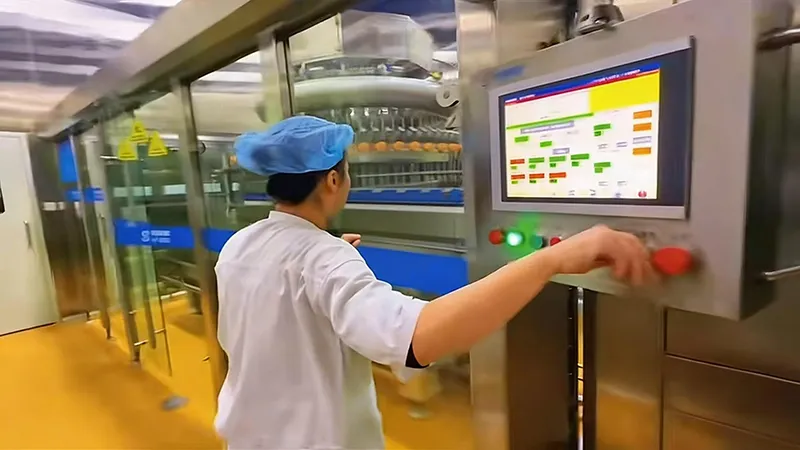
Pillar 2 – Operational Performance Metrics (OTIF and Beyond)
Data is the ultimate arbiter of truth. In the beverage world, the most critical metric is OTIF (On-Time In-Full) delivery.
OTIF Benchmarks: For a brand to thrive, a manufacturer's OTIF rate should ideally be 98% or higher. This requires more than just fast machines; it requires sophisticated ERP integration and a robust raw material supply chain. If a co-packer cannot guarantee that your 30,000-can run will be ready for the summer promotion window, they are a liability to your marketing budget.
Response Agility and Reorder Rates: A reliable partner typically responds to technical inquiries or order adjustments within 4 to 8 hours. Furthermore, a high Reorder Rate (above 90%) from existing clients is the ultimate endorsement. It indicates that the manufacturer has survived the "Trial by Fire" of multiple production cycles and has consistently met the exacting standards of professional beverage buyers.
Pillar 3 – Technical and R&D Capabilities
Modern beverage innovation has evolved from simple mixing to "Liquid Engineering." A reliable OEM must bridge the gap between a chef's kitchen and an industrial plant.
Mastering Functional Complexity: Formulating products like 330ml Pomegranate and Ginseng Tea involves managing the solubility and thermal stability of active compounds like ginsenosides. A reliable R&D team utilizes advanced techniques like micro-encapsulation or specific pasteurization curves to ensure active ingredients remain potent after heat treatment while successfully masking the natural bitterness of botanical extracts.
Proactive Value Engineering: A technical leader doesn't just follow a recipe; they improve it. They might suggest a natural sweetener blend that mimics the mouthfeel of sugar without the caloric load, or propose a sequence change in ingredient addition to reduce mixing energy and costs. This "Value-Added R&D" allows brands to maintain premium quality while optimizing their COGS (Cost of Goods Sold).

Pillar 4 – Regulatory Compliance and Traceability
In an increasingly regulated global market, compliance is your brand's shield against administrative fines and consumer lawsuits.
Digital Traceability Ecosystems: A reliable factory should offer "One-Can Traceability." By scanning a lot code, the system should instantaneously retrieve the entire history of that can—from the source of the water and the COA (Certificate of Analysis) of the concentrate to the specific technician on duty. In the event of an inquiry, the ability to isolate a problem to a specific two-hour window—rather than recalling a whole year's production—can save a brand millions.
Global Market Intelligence: If you plan to export to North America, Europe, or the ASEAN region, your manufacturer must be an expert in the "Forbidden List" of additives for those regions. Reliable partners like LzBeverage provide pre-emptive label reviews, ensuring your "Zero Sugar" or "All Natural" claims are legally defensible under the specific jurisdictional laws of your target market.
Pillar 5 – Financial Stability and Long-Term Viability
Finally, never overlook the manufacturer's balance sheet. You do not want your supply chain to evaporate because your partner hit a liquidity crisis.
CapEx Investment and Modernization: A factory that consistently reinvests in high-speed visual inspection systems or energy-efficient pasteurization tunnels signals long-term stability. This financial health ensures they can withstand raw material price shocks (like surges in aluminum or sugar prices) and can offer strategic credit terms to partners they believe in, creating a true "Risk-Sharing" relationship.
Industry Longevity: Experience counts. A manufacturer with a multi-decade track record has weathered economic downturns and global supply chain shocks (such as the 2020-2022 logistics crisis). Their established SOPs and contingency plans for energy shortages or raw material scarcity provide a level of "Sleep-at-Night" security that a newly opened, unproven facility simply cannot match.
The Numbers That Tell the Truth: Key Reliability Benchmarks
When performing your beverage factory due diligence, use the following table to benchmark potential partners against industry leaders.
| Evaluation Metric | Elite Partner (The Gold Standard) | High-Risk Partner (Red Flag Territory) |
| OTIF Delivery Rate | ≥ 98% | < 90% |
| First-Pass Yield (Quality) | ≥ 99.5% | < 97% |
| Critical Quality Incidents | 0 per Year | ≥ 1 per Year |
| Urgent Inquiry Response | < 8 Hours | > 24 Hours |
| Client Retention Rate | ≥ 85% | < 50% |
| Traceability Retrieval | < 2 Hours | > 24 Hours |
Red Flags: Warning Signs of an Unreliable Partner
During your site visit or initial negotiations, be alert to these "supply chain toxins":
Erratic Delivery History: A history of missed dates often blamed on "unforeseen material shortages"—this usually indicates a lack of foresight in procurement.
Communication Black Holes: If it takes 48 hours to get a response during the honeymoon phase of a contract, imagine how long it will take during a production crisis.
Compliance Vagueness: Being unable to produce the latest third-party audit reports (like BRC or SQF) or holding certificates that have expired.
Sample Inconsistency: If the R&D samples drift significantly in color or flavor between rounds, the factory lacks the fundamental process controls required for industrial consistency.
Case Study: What 100% On-Time Delivery Looks Like in Practice
Consider a recent scenario involving LzBeverage and a fast-growing energy drink brand. Just weeks before a major national holiday promotion, the brand faced an unexpected 200% surge in demand from its primary retail partner.
Utilizing a synchronized supply chain system, LzBeverage was able to secure 200,000 additional aluminum cans within 4 hours and re-allocate production schedules across two high-speed lines. The entire shipment was ready for pickup 24 hours ahead of the revised deadline. This reliability didn't just prevent a stock-out; it allowed the brand to capture the seasonal peak and secure a permanent shelf-space expansion with the retailer. Reliability is the catalyst for growth.
Your Action Plan: How to Vet and Select a Reliable Manufacturer
To lock in a partner that will grow with you, follow this professional vetting sequence:
Digital Screening: Scrutinize the factory’s technical depth. Do they produce complex products like fruit teas, or do they only do simple water bottling?
Document Deep-Dive: Request the last two years of OTIF data and a summary of their most recent FSSC 22000 audit findings.
Stress-Test the Sampling: Conduct at least two rounds of sampling to verify flavor replication and conduct accelerated stability testing in a lab.
On-Site Technical Audit: Visit the facility. Inspect the CIP (Clean-In-Place) systems and the raw material warehouse. Look for cleanliness, organization, and a disciplined workforce.
The Pilot Run: Before signing a three-year exclusivity deal, run a 30,000-can pilot. This is the ultimate "litmus test" for the chemistry between your team and theirs.
A reliable manufacturer should be more than a vendor; they should be your "External Technical Department." At LzBeverage, we understand that we don't just manufacture liquid; we manufacture your brand's reputation.
Ready to secure your brand's future with a partner who values reliability as much as you do?
Contact Us today to discuss your project and see our data-driven excellence in action.
FAQ
Q1: Should I always choose the manufacturer with the lowest price per unit?
A: Rarely. The "lowest price" usually involves hidden compromises in ingredient quality, QC frequency, or regulatory compliance. A reliable partner offers "Optimal Value"—the best total cost of ownership when you factor in the absence of recalls, delays, and lost sales.
Q2: Why do some large-scale factories struggle with reliability?
A: Size does not guarantee agility. Reliability is a function of Software (Systems): how smart the scheduling is, how responsive the team is, and how integrated the ERP is. A mid-sized, technologically advanced facility often outperforms a massive, rigid conglomerate.
Q3: What reliability clauses should I insist on in my contract?
A: Ensure your contract includes clearly defined OTIF penalties, quality rejection criteria, shrinkage/loss caps, and a "Priority Capacity" clause during seasonal peaks. These legal frameworks align the manufacturer's incentives with your brand's success.

