In today’s hyper-segmented beverage market, the era of a single flagship product is over. To capture the diverse "Flow" of consumer interest—ranging from sugar-free functional waters to adaptogen-infused teas—brands must often manage dozens of SKUs (Stock Keeping Units) simultaneously. For the manufacturing back-end, however, balancing multi-SKU proliferation with bespoke formulation is a high-stakes technical performance.
In today’s hyper-segmented beverage market, the era of a single flagship product is over. To capture the diverse "Flow" of consumer interest—ranging from sugar-free functional waters to adaptogen-infused teas—brands must often manage dozens of SKUs (Stock Keeping Units) simultaneously. For the manufacturing back-end, however, balancing multi-SKU proliferation with bespoke formulation is a high-stakes technical performance.
As a brand owner, understanding how your OEM (Original Equipment Manufacturer) handles these complexities is not just about production efficiency—it is about protecting your most valuable asset: your Formulation Intellectual Property (IP). This article explores the operational logic of top-tier beverage factories and provides a blueprint for managing a diverse product line.
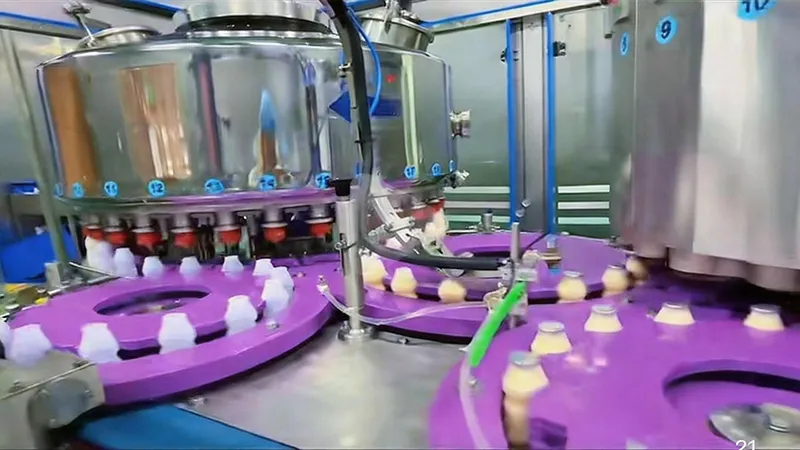
The Multi-SKU Challenge: Why Variety Strains Manufacturing
What is Product Proliferation?
Product Proliferation refers to the strategic expansion of a brand’s portfolio by launching various flavors, formulations, and packaging sizes to meet granular consumer demands.
-
Driven by Health and Functional Trends: Consumers no longer want just "soda"; they want specific benefits like keto-friendly sweeteners (Erythritol), immunity boosters (Vitamin C), or stress-relief botanicals (Ginseng). This shift forces brands to pivot from mass-market consistency to niche-market variety, requiring factories to handle multiple raw material streams and complex blending procedures for every single production run.
-
Regional and Seasonal Preferences: Global brands must adapt to local palates—such as the popularity of White Peach in Asia or Hibiscus in Latin America—while also launching seasonal "Limited Editions." These short-run products create immense pressure on the supply chain, as factories must procure small batches of unique ingredients and manage shorter shelf-life inventories without disrupting the flow of high-volume core products.
The Hidden Costs of Multi-SKU Production
Manufacturing is not as simple as "flipping a switch" between flavors. Multiple SKUs introduce significant overhead:
-
Line Changeover Inefficiency: Every changeover involves downtime for physical machine adjustments and rigorous sanitation. For example, switching from a dairy-based latte to a clear White Peach & Oolong Flavored Fruit Tea requires a full Clean-In-Place (CIP) cycle to prevent allergen cross-contamination and flavor carryover. This non-productive time directly impacts the unit cost and requires a factory with high mechanical agility.
-
Warehouse and Inventory Strain: Each new SKU requires its own set of labels, cans, and specific raw materials, which often have different lead times. "Slow-moving" SKUs can sit in the warehouse for months, tying up capital and increasing the risk of expiration. A reliable OEM must have a sophisticated Warehouse Management System (WMS) to track "First-In, First-Out" (FIFO) protocols for hundreds of unique components simultaneously.
How Top OEMs Optimize Multi-SKU Operations
Leading manufacturers, such as LzBeverage, mitigate these costs through technological innovation:
-
Automated Changeover Technology: By utilizing modular packaging lines with automated height and width sensors, factories can reduce mechanical downtime by up to 75%. Instead of manual tool changes, operators can select a pre-saved recipe on the HMI (Human-Machine Interface), and the conveyor rails and filling heads adjust automatically to the new SKU specifications within minutes.
-
Digital Printing and Flexible Labeling: Traditional printed cans require massive minimum orders (MOQs) and months of lead time. Modern OEMs offer digital printing or high-speed shrink-sleeve labeling, allowing brands to test five different flavor designs in a single small-batch run. This flexibility empowers brands to be "fast followers" of trends without being buried under a mountain of unused, pre-printed packaging inventory.
Traditional vs. Automated Changeover Comparison
| Metric |
Manual Changeover |
Automated Modular Line |
Efficiency Gain |
| Average Downtime |
4 - 6 Hours |
45 - 90 Minutes |
≈ 75% |
| Labor Requirement |
5 - 8 Technicians |
1 - 2 Operators |
Lower Labor Cost |
| CIP Water Loss |
High (Open Manual Flush) |
Low (Closed-Loop CIP) |
30% Savings |
| Error Risk |
High (Manual Torque Errors) |
Low (Programmed Precision) |
Significant Reduction |
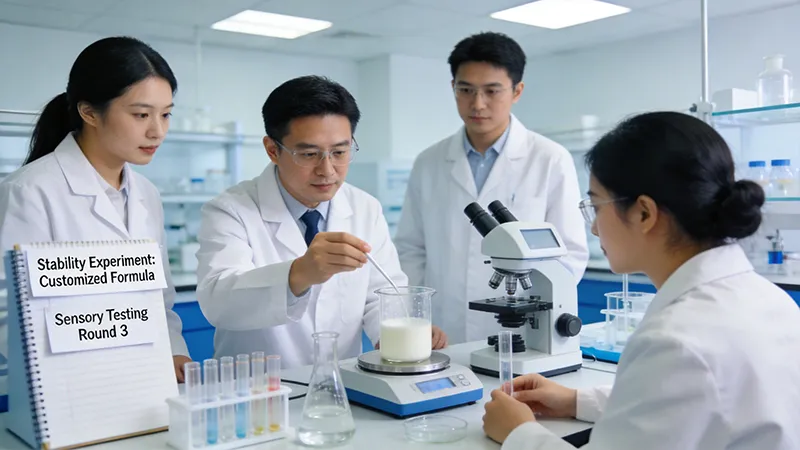
Understanding Custom Formulation: From Semi-Custom to Full Development
The Spectrum of Customization
Customization is not a one-size-fits-all approach. Depending on your brand's R&D maturity, you will likely fall into one of three categories:
What You Can Actually Customize
A sophisticated OEM platform allows you to fine-tune every sensory and nutritional dimension:
-
Sensory and Mouthfeel Dimensions: You can adjust the pH level to control the "aftertaste" or use specific pectin blends to give a fruit juice a heavier, more premium mouthfeel. Modern labs also allow for "flavor masking" techniques, which are essential when using high-intensity sweeteners or botanical extracts that might otherwise carry a medicinal or bitter note.
-
Functional and Nutritional Targets: Customization includes the fortification of beverages with vitamins, minerals, adaptogens, or probiotics. Crucially, a reliable OEM must ensure these ingredients remain stable during the pasteurization process. For example, maintaining the potency of Ginseng in a shelf-stable tea requires precise temperature control at 121℃ to ensure safety without destroying the active ginsenosides.
The Development Process: From Concept to Shelf
-
Market-Driven Co-Creation: The OEM shares insights on regional trends—such as the rising demand for "Clean Label" products in the EU or "High-Protein" teas in the US—to help position your product.
-
Laboratory Prototyping: Multiple "bench-top" samples are prepared, allowing the brand to perform sensory evaluations and initial stability tests (e.g., color decay under UV light).
-
Pilot Testing: Before full-scale production, a "Pilot Run" is conducted on actual manufacturing equipment to verify that the liquid's viscosity and foaming characteristics are compatible with high-speed filling valves.
-
Finalization and Costing: This stage locks in the final recipe, cost-of-goods-sold (COGS), MOQ requirements, and the specific production lead times for the first commercial batch.
The Critical Layer: Protecting Your Formula IP
A Real-World Cautionary Tale
A European energy drink brand partnered with a local co-packer but failed to define who owned the "Process Optimizations." When the brand tried to switch factories, the co-packer refused to release the batch records, claiming the manufacturing specs were their proprietary trade secrets. The brand was forced to spend six months re-developing the recipe, losing its market lead.
Ownership Scenarios: Who Owns the Liquid?
| Scenario |
IP Ownership |
Risk Level |
| Brand provides full recipe and SOPs. |
Brand |
Low |
| Joint development without a written IP clause. |
Shared / Disputed |
Very High |
| Brand pays R&D fees; contract specifies IP. |
Brand |
Most Secure |
How to Protect Your Recipe
-
Sign an NDA Before Discussion: Never reveal a single ingredient or concentration level until a robust Non-Disclosure Agreement (NDA) is in place. A professional OEM will expect this and will have their own legal templates ready to ensure that your "secret sauce" remains confidential throughout the entire development lifecycle.
-
Maintain a Formulation Traceability File: Demand that the OEM document every minor process adjustment—such as specific heating ramps or mixing speeds—and archive these as the brand's property. This ensures that if you ever need to move production, you have a "Blueprint" that any other high-quality factory can follow to replicate the exact same taste and quality.
-
Limit Disclosed Information: Provide the factory only with the "Manufacturing Specifications" (e.g., target pH, Brix, and shelf-life requirements) rather than the underlying scientific rationale or proprietary blending secrets. This "need-to-know" approach minimizes the risk of your core technology leaking to competitors.
Sourcing and Quality for Complex Programs
Ingredient Sourcing Complexity
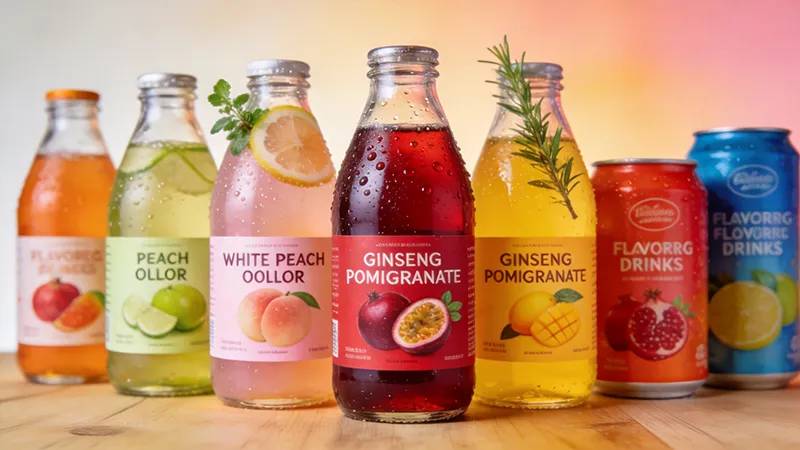
Multi-SKU portfolios mean a massive bill of materials. Special ingredients, like the premium extracts in our 330ml Pomegranate and Ginseng Tea, often have long lead times and high MOQs. An OEM must have a global sourcing network and be able to provide "alternate supplier" lists to ensure production doesn't stop if a specific fruit crop fails or a shipping lane is blocked.
Quality Control Across Variants
-
Batch-Specific COA (Certificate of Analysis): Every single run must produce a COA that verifies pH levels, Brix, viscosity, and microbiological safety. This is even more critical for custom formulas where the chemical interactions of new ingredients are not yet historically proven.
-
Packaging Compatibility Testing: Especially for pH-sensitive or carbonated products, the OEM must ensure the internal liner of the aluminum can is compatible with the custom liquid to prevent corrosion or "off-notes" over time.
-
Accelerated Shelf-Life Testing: For multi-SKU brands, the OEM should perform heat-stress and humidity testing to simulate the harsh conditions of international shipping, ensuring that the last can on the shelf in a tropical market tastes as good as the first can in the lab.
Choosing the Right OEM Partner
Key Questions to Ask Before Signing
-
Customization Depth: "Can you support full custom development with functional ingredients, or are you limited to semi-custom tweaks?"
-
Multi-SKU Management: "What is your average changeover time, and how do you prevent flavor carryover between highly different SKUs?"
-
IP and Data Ownership: "Will I own 100% of the process specifications developed during our partnership, and how is this reflected in the contract?"
-
Certifications: "Are you FSSC 22000 or ISO 22000 certified, and can you provide compliance support for my target markets (FDA, Halal, EU)?"
Red Flags to Watch For
-
Vagueness regarding formula ownership or the "release" of batch records.
-
Refusal to allow a factory tour or a "Virtual Audit" of the production floor.
-
Lack of automated equipment on the line, suggesting that flavor consistency across multiple SKUs might rely on manual (and error-prone) labor.
Conclusion and Action Plan
A multi-SKU strategy is a brand’s sharpest weapon for capturing market share, but it requires a manufacturing partner with the technical "DNA" to handle complexity without chaos.
Next Steps for Your Brand:
-
Define your customization depth: Are you looking for a quick "White Label" win or a long-term "Fully Custom" barrier to entry?
-
Audit your IP protection: Ensure your NDAs and manufacturing agreements are ironclad before sharing any proprietary data.
-
Assess OEM Agility: Use our checklist to interview potential partners on their changeover times and sourcing networks.
If you are struggling with the inefficiencies of managing multiple SKUs or need a technical partner to develop a world-class custom formula, Contact Us today. At LzBeverage, we turn manufacturing complexity into your brand's competitive advantage.
FAQ
Q1: Does a custom formulation always require a massive MOQ?
A: Not necessarily. While custom ingredients have their own MOQs, LzBeverage utilizes "Swing Lines" and modular scheduling to allow brands to start with smaller test batches (as low as 1,000 - 3,000 units) before scaling to millions.
Q2: What happens if the OEM improves my formula during production?
A: In our partnership model, any process optimizations—such as improving stability or reducing mixing time—are considered "Work for Hire" and remain the exclusive property of the brand owner, as documented in our standard contracts.
Q3: How do you handle allergen cross-contamination in a multi-SKU environment?
A: We use a multi-stage, high-pressure CIP (Clean-In-Place) system that utilizes chemical and heat sterilization. Every line changeover is followed by a swab test to ensure that 0% of previous residues remain before the new SKU begins its run.

