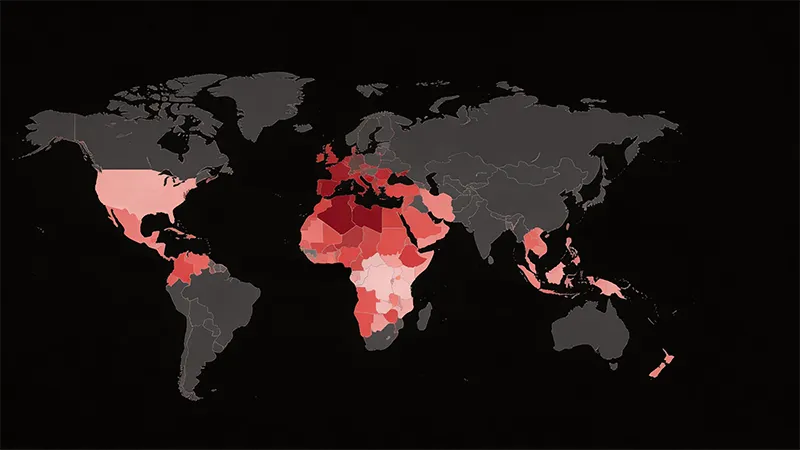
The global beverage landscape has reached a definitive tipping point. As of early 2026, at least 116 countries have implemented some form of Sugar-Sweetened Beverage (SSB) tax, signaling a permanent shift in regulatory and consumer behavior. The sugar-reduction market is currently accelerating at a compound annual growth rate (CAGR) of 8.54%, on track to reach a staggering $134.1 billion by 2035.
The global beverage landscape has reached a definitive tipping point. As of early 2026, at least 116 countries have implemented some form of Sugar-Sweetened Beverage (SSB) tax, signaling a permanent shift in regulatory and consumer behavior. The sugar-reduction market is currently accelerating at a compound annual growth rate (CAGR) of 8.54%, on track to reach a staggering $134.1 billion by 2035.
For brand owners, "going sugar-free" is no longer a simple matter of swapping sucrose for a high-intensity sweetener. It is a complex engineering challenge involving sweetness intensity, temporal profiles, off-taste masking, flavor delivery, and mouthfeel texture. At Lz Beverage, we provide the technical roadmap to navigate these hurdles, ensuring your product doesn't just meet health standards but exceeds sensory expectations.
Global Market Trends Driving the Sugar-Free Explosion
1. The Global Sugar Tax Momentum and Regulatory Shift
The implementation of sugar taxes across 116 nations has moved from a "narrow-scope" experiment to a global standard. Most of these jurisdictions utilize a "tiered" or "volume-based" levy system, where the tax burden increases significantly once sugar content exceeds specific thresholds (typically 5g per 100ml). This has forced global leaders to reformulate their flagship products to avoid price hikes. For emerging brands, launching a sugar-free variant from the outset is no longer just a health choice—it is a fiscal necessity to maintain competitive pricing and protect profit margins in tax-heavy regions like the UK, Mexico, and much of Southeast Asia.
2. China’s "Healthy China 2030" and Strategic Policy Anticipation
Domestically, the National Food and Nutrition Development Outline (2025–2030) has set ambitious targets for sugar reduction. While a nationwide sugar tax in China is still under discussion, the regulatory trend points toward a more restricted environment for high-sugar products. For OEMs and brand owners, this creates an "early-mover" advantage. Brands that master sugar-free formulations now are better positioned to survive the upcoming industry consolidation. This policy shift is clearing out long-tail, low-tech manufacturers, favoring advanced partners like Lz Beverage who can provide the technical compliance needed for a "sugar-free" label that meets the rigorous GB 2760 standards.
The Five Core Sensory Challenges in Sugar-Free Formulation
Removing sugar creates a "functional void" in a beverage. Sugar provides weight, masks bitterness, and stabilizes flavors. Without it, five major sensory gaps appear:
-
Sweetness Intensity and Quality (Avoiding the "Artificial" Note):
High-intensity sweeteners often suffer from a "metallic" or "chemical" taste that consumers immediately reject. The challenge lies in achieving a sweetness that mimics the clean, rounded profile of sucrose. Unlike simple saccharin or aspartame, modern formulations require a blend of natural extracts to hit the right notes. Consumers today associate health with "naturalness," meaning any hint of an artificial chemical aftertaste can destroy a brand’s premium positioning. Achieving that perfect, clean sweetness is the first hurdle in any high-end sugar-free project.
-
Temporal Profile (The "Onset and Linger" Problem):
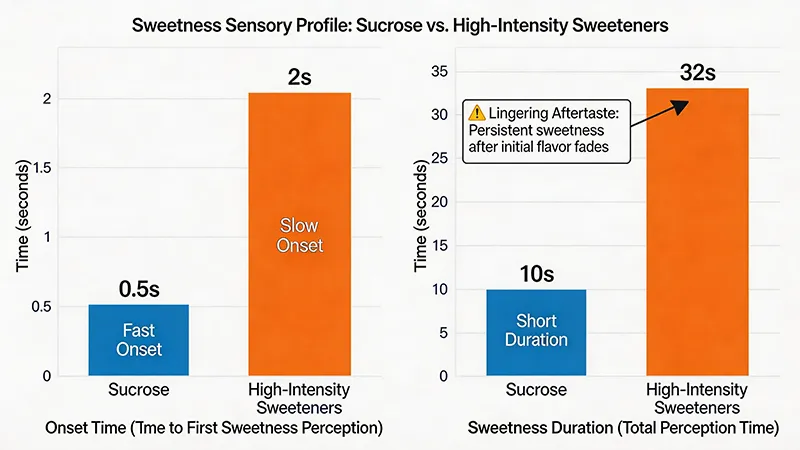
Sucrose has a "fast-on, fast-off" sweetness curve that satisfies the palate immediately and clears away quickly. In contrast, artificial sweeteners like sucralose often have a delayed onset and a persistent, cloying linger that interferes with the beverage's intended flavor profile. This "lingering" effect is a primary reason why many sugar-free drinks taste "unbalanced." At Lz Beverage, we use advanced blending techniques to recalibrate the temporal curve, ensuring the sweetness hits the tongue at exactly the right moment and disappears without leaving an unwanted coating.
-
Off-Taste Masking (Neutralizing Botanical Bitterness):
Natural sweeteners like Steviol glycosides (Stevia) often carry a distinct licorice-like bitterness, while Monk Fruit (Luo Han Guo) can introduce an unwanted earthy or herbal undertone. These off-notes are caused by the sweetener molecules interacting with bitter receptors on the tongue. Overcoming this requires more than just adding more flavor; it requires "masking agents" that physically block those receptors or "flavor modifiers" that rebalance the perception of the liquid. Without expert masking, a functional tea or juice can quickly become unpalatable to the mainstream consumer.
-
Flavor Delivery (The Loss of Volatile Aroma):
Sugar acts as a vehicle for flavor, helping to release volatile aromatic compounds that we perceive as "fruitiness" or "freshness." When sugar is removed, the overall flavor intensity often drops by 30% to 40%, leaving the drink tasting "thin" or "diluted." This is particularly noticeable in delicate products like our White Peach & Oolong Flavored Fruit Tea. We solve this by using Flavors with Modifying Properties (FMPs) to "boost" the perceived intensity of the fruit notes without adding calories.
-
Mouthfeel and Texture (Solving the "Watery" Sensation):
Sugar provides Brix—the dissolved solids that give a beverage its "body," "viscosity," and "mouthfeel." Removing sugar makes the liquid feel as thin as plain water, which consumers subconsciously link to low quality. To restore this "premium weight," we integrate natural hydrocolloids like pectin, cellulose gum, or erythritol. These ingredients add the necessary density and "silky" texture back into the drink. This is a critical step for products like our , where a substantial mouthfeel is expected from a high-performance functional beverage.
Ingredient Solutions: The Next Generation of "Super-Sweeteners"
To bridge the sensory gap, Lz Beverage utilizes a "Cocktail Strategy" of next-generation ingredients:
- Reb M & Reb D (The New Gold Standard): These rare steviol glycosides are the closest natural molecules to the taste of sucrose. They lack the bitterness of traditional Stevia and are the cornerstone of our "Clean Label" premium formulas.
- Allulose (The "Rare Sugar" Revolution): Allulose is a game-changer because it provides the bulk and pH stability of sugar with nearly zero calories. In the US, it is not counted as "Added Sugar," making it a high-demand ingredient for export-focused brands.
- Positive Allosteric Modulators (PAMs): These are the hidden heroes of modern formulation. They don't provide sweetness themselves; instead, they make your tongue’s sweet receptors more sensitive, allowing you to use 50% less sweetener while achieving the same perceived sweetness.
- Hydrocolloids for Texture: We integrate specialized blends of pectin and cellulose gum to solve the "watery" mouthfeel issue, ensuring that functional products like our 330ml Pomegranate and Ginseng Tea feel as premium as they look.
Manufacturing Excellence: Aseptic Cold Fill & Aluminum Protection
The manufacturing process is where a sugar-free formula is either preserved or destroyed.
Aseptic Cold Fill Technology
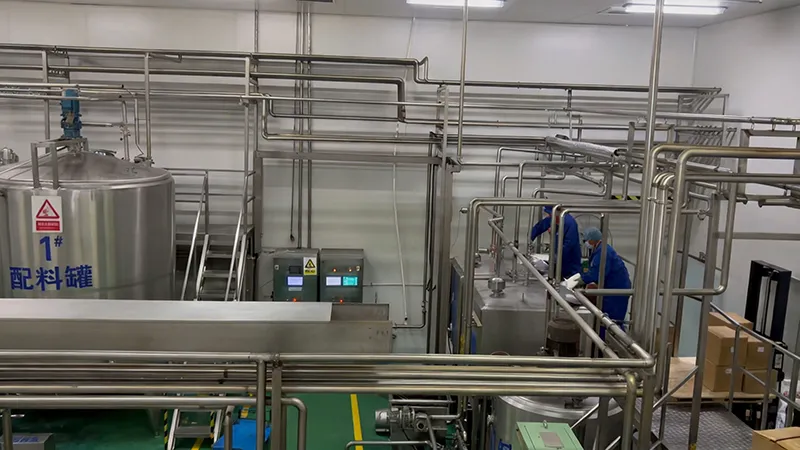
Sugar-free beverages are highly susceptible to microbial spoilage because they lack the preservative effect of high sugar concentrations. Traditional "Hot Fill" can degrade delicate natural sweeteners like Reb M and destroy the fresh aroma of fruit.
The Power of Aluminum Cans
For sugar-free functional drinks, Aluminum Cans are the superior choice. They provide 100% protection against UV light, which is the primary cause of color fading in natural pigments and flavor degradation in sensitive botanical extracts. Cans also allow for a premium, eco-friendly positioning that aligns with the "Natural + Sustainable" values of today's sugar-free consumer.
How to Choose the Right Sugar-Free OEM Partner
Vetting an OEM for sugar-free production requires a deep dive into their R&D lab, not just their assembly line.
Key Evaluation Criteria:
-
Sweetener Mastery: Does the factory have a proven portfolio of Reb M or Allulose products? Ask for samples to test for "aftertaste" and "lingering."
-
Sensory Optimization: Do they offer FMP (Flavor with Modifying Properties) solutions to fix the "watery" mouthfeel and flavor loss common in zero-sugar drinks?
-
MOQ Flexibility: For a new sugar-free launch, you need to test the market. Look for partners that offer Pilot Runs of 1,000–5,000 cans before committing to massive production.
-
Compliance Support: Can they provide the specific regulatory documentation for your target market (FDA, EU, Halal, or GB 2760)?
Red Flags: * No Aseptic Cold Fill capability.
Conclusion & Action Plan
The sugar-free era is not a passing trend—it is the new global baseline. With 116 countries taxing sugar and consumers demanding "naturalness" without the calories, your manufacturing strategy must be data-driven and technically superior.
Your Immediate Action Plan:
-
Define your sweetener strategy: Will you prioritize "Lowest Cost" or "Best Sensory Quality" (Reb M/Allulose)?
-
Audit your target market: Identify the sugar tax thresholds to ensure your formula falls into the zero-tax bracket.
-
Validate via Pilot Run: Test your formula's stability on an Aseptic Cold Fill line before scaling.
Ready to launch your sugar-free beverage with confidence? Contact Us toda for a free formulation consultation—from sweetener selection to high-speed production in premium aluminum cans tailored to your brand’s vision.
FAQ
Q1: Why does my sugar-free drink taste "watery" compared to the original version?
This is due to the loss of Brix (solids). Sugar provides viscosity and "body." To fix this, we use natural texturizers like pectin or fiber to mimic the density of sugar, ensuring the mouthfeel remains premium and satisfying.
Q2: Is Stevia the best choice for a natural sugar-free beverage?
While Stevia is popular, traditional Stevia can have a bitter aftertaste. We recommend using Reb M or Reb D, which are specific steviol glycosides that provide a much cleaner, sucrose-like sweetness without the herbal off-notes.
Q3: Can I produce a sugar-free juice that still qualifies as "100% Juice"?
Yes, by using emerging "Selective Sugar Removal" technologies, we can physically remove sucrose from the juice while retaining all the natural nutrients. This allows you to maintain a "100% Juice" label while significantly reducing the calorie count.


