You have a vision for a beverage brand—a unique flavor profile, a groundbreaking functional benefit, or a compelling story to tell. But as you step into the world of manufacturing, you are immediately met with an "acronym soup": OEM and ODM.
You have a vision for a beverage brand—a unique flavor profile, a groundbreaking functional benefit, or a compelling story to tell. But as you step into the world of manufacturing, you are immediately met with an "acronym soup": OEM and ODM.
What do they actually mean for your bottom line? More importantly, which one will prevent your brand from becoming a "one-hit-wonder" in an increasingly crowded market?
In 2026, the global beverage contract manufacturing market is projected to exceed $120 billion. Interestingly, the ODM model is growing at 15%, significantly outpacing the 8% growth of traditional OEM. At Laizhi Industry, we’ve seen this shift firsthand: our ODM business grew by 42% in 2025, with a 40% client retention rate. Brands are no longer just looking for a "filler"; they are looking for a co-creator.
This guide breaks down the fundamental differences between OEM and ODM, the strategic implications for your business, and how to choose the right partner to turn your liquid dream into a shelf-ready reality.
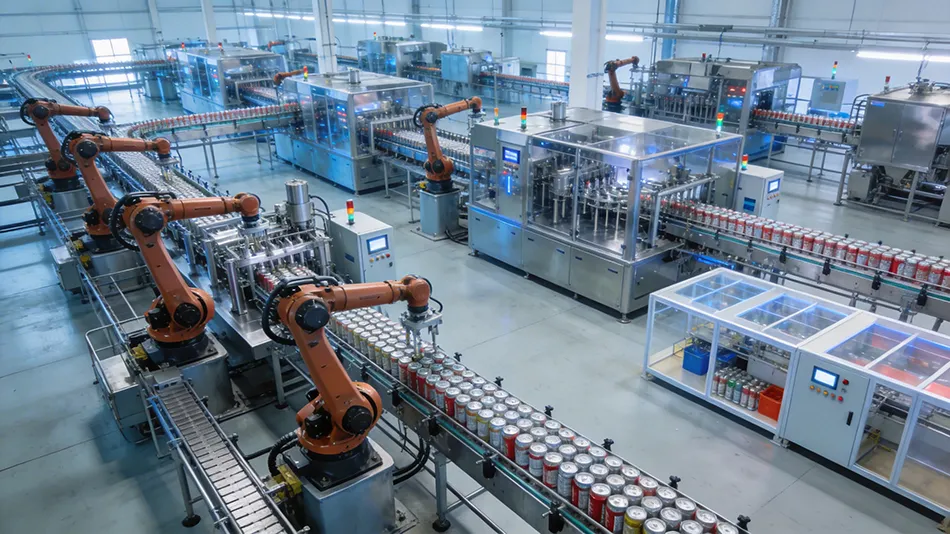
Defining the Terms: What Are OEM and ODM?
To the uninitiated, they might look the same—trucks leaving a factory filled with cans. But the engine driving those trucks is fundamentally different.
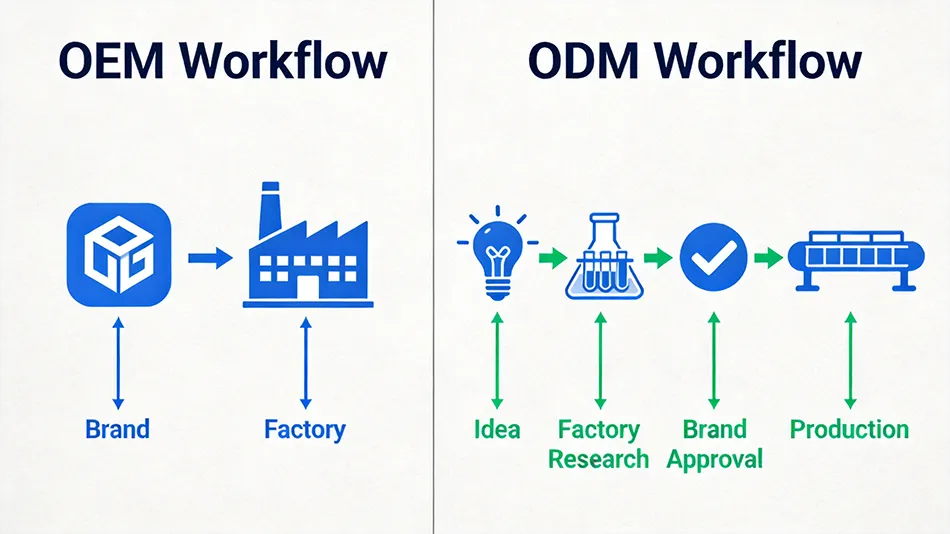
OEM (Original Equipment Manufacturer) – Your Specs, Their Production
In the OEM model, the brand owner is the "Chef." You provide the exact recipe, the packaging design, the raw material specifications, and the quality standards. The factory is simply the "Kitchen" that executes your vision.
-
Proprietary Formulation: The brand owner provides a fully finished, lab-tested recipe. This includes exact ingredient percentages, sourcing requirements for raw materials, and specific blending sequences.
-
Design & Identity: The brand handles 100% of the creative process, including label design, structural packaging (bottle/can shapes), and secondary packaging (cartons/shrink-wraps).
-
R&D Responsibility: All upfront costs for flavor chemists, stability testing, and shelf-life verification are paid for by the brand prior to approaching the manufacturer.
-
Scale Requirements: Because the factory must re-calibrate its lines for a unique, one-off spec, the Minimum Order Quantities (MOQs) are typically high—often exceeding 300,000 units per production run.
| Feature |
OEM Breakdown |
| Formula Ownership |
Brand-owned from day one. |
| Design Responsibility |
Fully completed by the brand. |
| R&D Investment |
Borne entirely by the brand. |
| Best Scenario |
Established brands with a "secret sauce" or proprietary tech. |
| Typical MOQ |
Usually high (e.g., 300,000+ units). |
ODM (Original Design Manufacturer) – Their Expertise, Your Brand
In the ODM model, the factory is both the "Chef" and the "Kitchen." They provide a "Turnkey" solution, covering everything from formulation chemistry and stability testing to packaging design and regulatory compliance.
-
Formula Selection & Customization: The brand chooses from a library of pre-validated "Base Formulas." You can then customize these by adjusting sweetness, acidity, or adding "hero" functional ingredients like those in our 330ml Pomegranate and Ginseng Tea.
-
Full-Service Design: The manufacturer often has an in-house creative team that understands the technical limits of printing on aluminum or PET, ensuring the brand's aesthetic is actually "manufacturable."
-
Cost Efficiency: R&D costs are largely absorbed by the factory and amortized into the per-unit price. This allows brands to launch without a $50,000 upfront lab bill.
-
Agile MOQs: Because the factory is using a base process they already "know," they can offer much lower entry barriers—often as low as one shipping container (approx. 50,000 cans).
| Feature |
ODM Breakdown |
| Formula Ownership |
Negotiable (At Laizhi, it defaults to the client). |
| Design Responsibility |
Led by the OEM, approved by the brand. |
| R&D Investment |
Borne by the factory (amortized into product cost). |
| Best Scenario |
Startups, line extensions, or brands needing rapid launch. |
| Typical MOQ |
More flexible (e.g., starting from 1 container). |
The Strategic Implications: What Your Choice Means
Choosing between OEM and ODM isn't just a logistics decision; it’s a legal and financial one.
Intellectual Property – Who Owns the "Liquid Gold"?
This is the single most important legal distinction. In a poorly drafted ODM contract, the factory owns the recipe, meaning you cannot move production to a different facility without losing your product’s taste profile.
-
The Laizhi Standard: At Laizhi Industry, we employ an "IP-Transfer" Policy. While we use our R&D expertise to build your product, our contracts explicitly state that once a custom formula is finalized for your brand, the Intellectual Property belongs to you.
-
Batch Record Transparency: We provide brands with full manufacturing batch records. This ensures that if you decide to scale to a different continent later, you have the "Master Recipe" ready to go.
Speed-to-Market – The "Fast-Follower" Advantage
If you discover a trend today, you need it on the shelf in months, not years. A traditional White Peach & Oolong Flavored Fruit Tea takes months of independent R&D in an OEM model.
-
OEM Timeline: 8–14 months (Accounting for independent lab sourcing, stability failures, and line-test scheduling).
-
ODM Timeline: 2–4 months (Leveraging pre-existing stability data and proven ingredient supply chains).
| Phase |
OEM Timeline |
ODM Timeline (Laizhi) |
| Formulation |
4–8 Months (Independent R&D) |
2–4 Weeks (From Library) |
| Prototyping |
2–3 Months (External Lab) |
2–3 Weeks (In-house) |
| Design/Compliance |
2–3 Months |
2–4 Weeks |
| Total Lead Time |
8–16 Months |
2–4 Months |
The Laizhi Advantage: We maintain a library of 50+ standardized, market-tested formulas (electrolytes, adaptogens, herbal sparkling waters). Brands can tweak sweetness, acidity, or functional levels, compressing development into weeks rather than years.
Cost Structure – Capex vs. Variable Cost
OEM requires heavy upfront investment (CapEx) in R&D and specialized raw materials. ODM shifts these costs into the "Variable" column. You pay a slightly higher per-unit price, but you save tens of thousands of dollars in upfront lab fees. This allows you to spend your precious capital on marketing and distribution—the things that actually sell the drink.
Which Model Is Right for Your Brand Stage?
Stage 1 – Concept & Market Testing (0 - 50,000 units)
Recommended Model: ODM
-
Validate the "Hook": Use the factory’s pre-existing formula library to get a high-quality product into the hands of influencers and early adopters quickly.
-
Preserve Capital: Keep your cash for digital marketing and SEO rather than sinking it into expensive custom R&D and massive inventory.
-
Low-Risk Pivot: If the market wants a different flavor, an ODM partner can adjust the next batch in weeks.
Stage 2 – Regional Launch (50,000 - 500,000 units)
Recommended Model: Hybrid/ODM
-
Differentiate the Formula: Add unique botanical extracts or "Signature" flavor notes that separate you from the generic "White Label" products.
-
Logistics Optimization: Use the manufacturer's established supply chain to source raw materials at bulk prices you couldn't get on your own.
-
Packaging Variety: Experiment with different can sizes or finishes (matte vs. gloss) to increase shelf appeal.
Stage 3 – National/International Scale (500,000+ units)
Recommended Model: OEM or Exclusive ODM
-
Cost Leadership: At high volumes, the slightly higher per-unit "service fee" of an ODM can add up. Switching to a pure OEM model where you buy the raw materials directly can improve margins by 3–5%.
-
Global Standardization: Ensure the exact same flavor is produced in your Asian, European, and American co-packing facilities by owning the proprietary SOPs.
-
Supply Chain Redundancy: By owning your IP, you are no longer "locked in" to a single factory, reducing the risk of a single-point-of-failure in your production.
Case Study: The "Adaptogen" Success Story
Background: A UK-based startup wanted to launch a line of adaptogen-infused sparkling waters (Ashwagandha and Lion’s Mane). They had a great brand name but zero formulation experience and a major retail buyer presentation in 4 months.
The Challenge:
-
No in-house R&D.
-
Impossible timeline for traditional OEM.
-
Limited budget for upfront ingredient sourcing.
The Laizhi ODM Solution:
-
Rapid Prototyping: We provided 3 base herbal formulas from our library. They selected a botanical base, and we added their custom Ashwagandha and Lion's Mane blend.
-
Design Support: Our team optimized their minimalist art for high-speed aluminum printing to prevent "color bleed" on the production line.
-
The Result: A 14-week turnaround from signature to shipping.
The Win: The brand launched into 50 independent retailers in London. Because they saved on R&D, they had the budget for a viral TikTok campaign that led to a complete sell-out of the first container.
How to Choose the Right Partner
Not all factories are created equal. Use this framework to vet your potential partners.
Questions to Ask Potential Partners
-
Formulation Library: "Can you show me 3–5 pre-existing formulas you’ve already successfully scaled for other brands?"
-
Flavor Masking Ability: "How do you mask the bitterness of functional ingredients like Ginseng or Vitamins without adding sugar?" (Essential for products like our 330ml Pomegranate and Ginseng Tea).
-
MOQ Flexibility: "If this container sells out in a month, how quickly can you replenish my stock, and what is the re-order MOQ?"
-
Regulatory Documentation: "Can you provide the COA (Certificate of Analysis) and ingredient breakdown required for US FDA or EU market entry?"
Red Flags to Watch For
-
The "Secret Recipe" Trap: If they refuse to provide a written IP-ownership clause, they are planning to keep your brand hostage.
-
Vague Timelines: If they cannot give you a hard date for a "Pilot Run," they are likely overbooked or lack organized scheduling.
-
Lack of Certification: In 2026, FSSC 22000 and ISO 22000 are non-negotiable for food safety.
-
No Stability Testing: If they offer to "just mix and fill" without a 14-day oven-stress test, your cans may explode or lose flavor on the shelf.
The Future of Beverage Manufacturing
The Rise of "ODM-to-OEM" Models
The future is hybrid. Brands start as ODM to launch fast, then transition to a "Strategic OEM" partnership with the same factory once volumes cross the 1 million unit threshold.
Technology Enablers
-
Digital Printing: Allows for even smaller ODM batches (as low as 1,000 cans) for seasonal tests.
-
AI-Assisted Formulation: Shortening the flavor-matching phase from weeks to days.
-
Blockchain Sourcing: Providing 100% transparency on the origin of every tea leaf or fruit extract.
Laizhi’s Flexible Model supports this lifecycle. We provide the R&D "muscles" of an ODM with the industrial "scale" of an OEM. This ensures that as you grow, your formula remains consistent, and you never have to switch suppliers—saving you from the nightmare of "flavor drift."
Conclusion & Action Plan
The choice between OEM and ODM is a choice between total control and total speed.
Immediate Steps:
-
Audit your IP: Do you have a finalized, stable recipe? If not, look for an ODM partner.
-
Define your budget: If you have less than $50,000 for your first run, ODM is your most viable path.
-
Contact Laizhi Industry for a free consultation. Whether you need a sophisticated ODM launchpad or a massive OEM powerhouse, our team is ready to turn your vision into a shelf-ready reality.
FAQ
Q1: Is ODM quality lower than OEM?
Absolutely not. In many cases, ODM quality is higher because the factory is using a "tried and tested" formula that has already passed stability and shelf-life tests on their specific equipment.
Q2: Can I switch from ODM to OEM later?
Yes, provided you work with a partner like Laizhi who grants you IP ownership. Once your volume reaches a certain threshold, we can transition your contract to an OEM model to optimize costs.
Q3: How do I know if a formula is "stable"?
Stability is the biggest risk in beverage manufacturing. At Laizhi, every ODM formula undergoes accelerated shelf-life testing to ensure it won't change color, taste, or sediment while sitting on a retail shelf.

