Choosing the right beverage OEM (Original Equipment Manufacturer) can be the single most defining factor in your brand's trajectory. A strategic partner helps you launch faster, optimize margins, and maintain "gold-standard" quality. Conversely, a poor choice leads to delayed shipments, quality disasters, and the potential loss of your most valuable asset: your formula.
Choosing the right beverage OEM (Original Equipment Manufacturer) can be the single most defining factor in your brand's trajectory. A strategic partner helps you launch faster, optimize margins, and maintain "gold-standard" quality. Conversely, a poor choice leads to delayed shipments, quality disasters, and the potential loss of your most valuable asset: your formula.
Despite the stakes, brands—especially startups—repeatedly stumble into the same costly pitfalls. Industry data indicates that approximately 30% of beverage brands encounter major supply chain disruptions within their first year of partnership. The leading causes? Misjudged MOQs, ambiguous IP ownership, and misaligned quality expectations.
This guide reveals the 10 most common mistakes beverage brands make when selecting an OEM. Based on real-world case studies and insights from Laizhi Industry, a manufacturer that has scaled over 50 brands globally, we provide the roadmap to a successful, high-growth partnership.
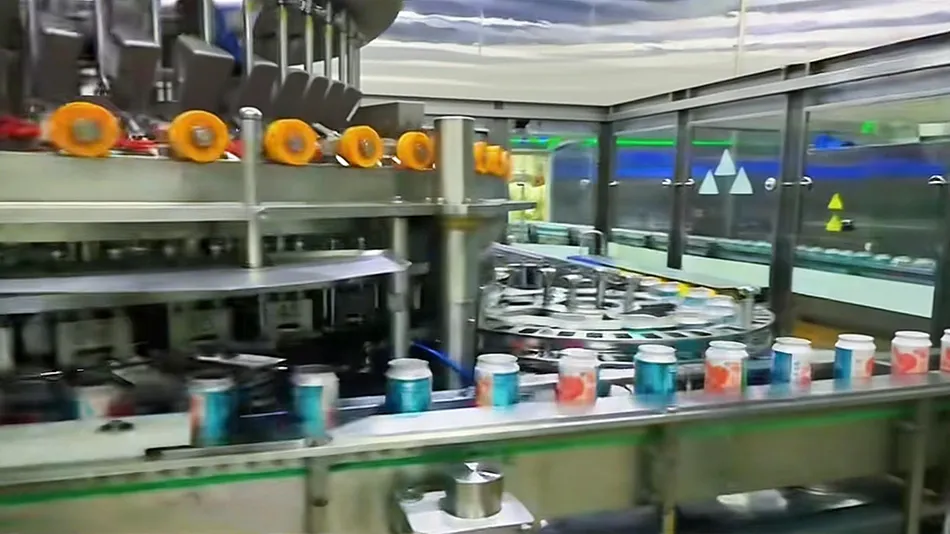
Mistake #1: Focusing Solely on Unit Price
What Brands Do
Founders often compare spreadsheet quotes and choose the lowest number per can, believing they have maximized their profit margin from day one.
The Hidden Cost Reality
A low unit price is often a "loss leader" that hides systemic risks:
-
Massive Minimum Order Quantities (MOQs): To reach that low price, factories may demand 300,000+ units, trapping your capital in slow-moving inventory.
-
Substitution of Premium Ingredients: Lower costs often mean using "industry-standard" stabilizers or cheaper sweeteners rather than the high-purity extracts used in premium products like our White Peach & Oolong Flavored Fruit Tea.
-
Unbundled Service Fees: The "low price" frequently excludes tooling, sample runs, or export documentation fees, which appear later as "surprises" on your invoice.
-
Lower Priority Ranking: In peak seasons, low-margin orders are the first to be bumped from the production schedule in favor of higher-paying clients.
The True Cost Calculation
Instead of unit price, focus on Total Landed Cost (TLC):
Total Cost = (Unit Price \times Volume) + Tooling/Setup + Shipping + Quality Control + Compliance Fees + Cost of Capital (Inventory)
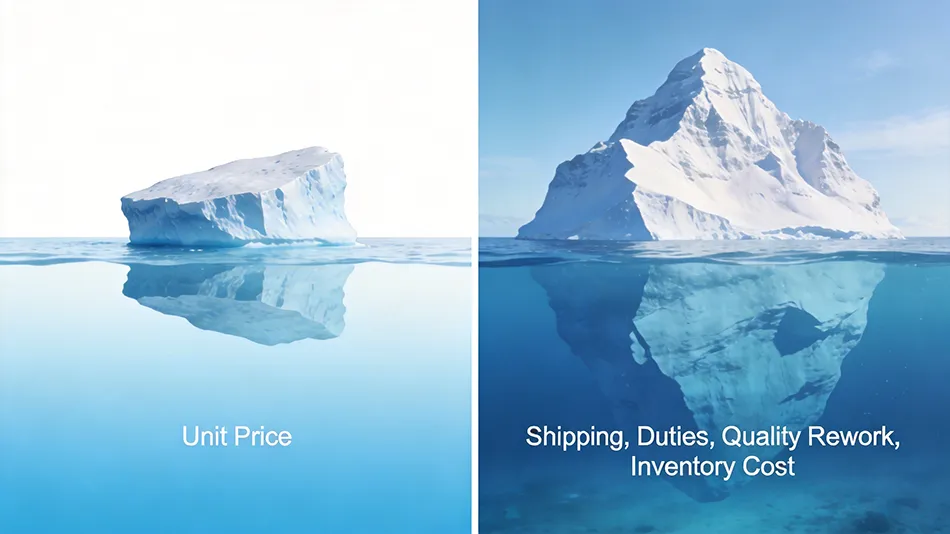
The Laizhi Practice: We provide transparent, "all-in" quotes. Our 1-container strategy allows brands to launch with manageable stock levels, preserving cash for marketing and SEO.
Mistake #2: Ignoring MOQ Realities vs. Market Speed
What Brands Do
Startups frequently demand "garage-level" MOQs (1,000 cans) while expecting "industrial-level" pricing. Conversely, established brands sometimes over-order to save $0.02 per can, only to have the product expire in a warehouse.
The 2026 MOQ Spectrum
-
1 - 5,000 Cans (Digital Printing): Best for concept validation, influencer kits, or limited-run event marketing. Expect a very high unit cost.
-
1 Container (50k–70k Cans): The "Sweet Spot." This is where professional OEM begins. It allows for a regional launch or a "Proof of Concept" on Amazon without breaking the bank.
-
300,000+ Cans (Traditional Industrial): Best for national distribution where cost-leadership is the primary competitive advantage.
The MOQ Trap
Brands often fail to realize that MOQs are a function of the factory's cleaning cycles (CIP). Choosing an OEM like Laizhi that specializes in High-Mix, Low-Volume (HMLV) production gives you the flexibility to pivot flavors quickly based on consumer feedback.
Mistake #3: Ambiguous Formula Ownership (The IP Trap)
What Brands Do
Brands assume that because they paid for the production, they own the recipe. They realize their mistake only when they try to move production to another facility.
Common IP Scenarios
-
Brand-Provided Recipe: You own it, but ensure the OEM signs a non-compete regarding your specific ingredient ratios.
-
Co-Developed Formula: Without a written agreement, the OEM may claim "process improvements" as their own IP, effectively locking you into their facility.
-
Factory "Base" Formulas: The factory owns the core. If you don't secure an Exclusive Use Clause, they can sell a nearly identical product to your competitors.
The Laizhi Guarantee: We include explicit IP ownership clauses in our contracts. Whether it’s a bespoke functional blend like our 330ml Pomegranate and Ginseng Tea or a classic tea, the formula belongs to you.
Mistake #4: Skipping the On-Site Quality Audit
What Brands Do
Founders rely on a glossy PDF of an ISO certificate or a pre-recorded video tour.
Critical Verification Points
-
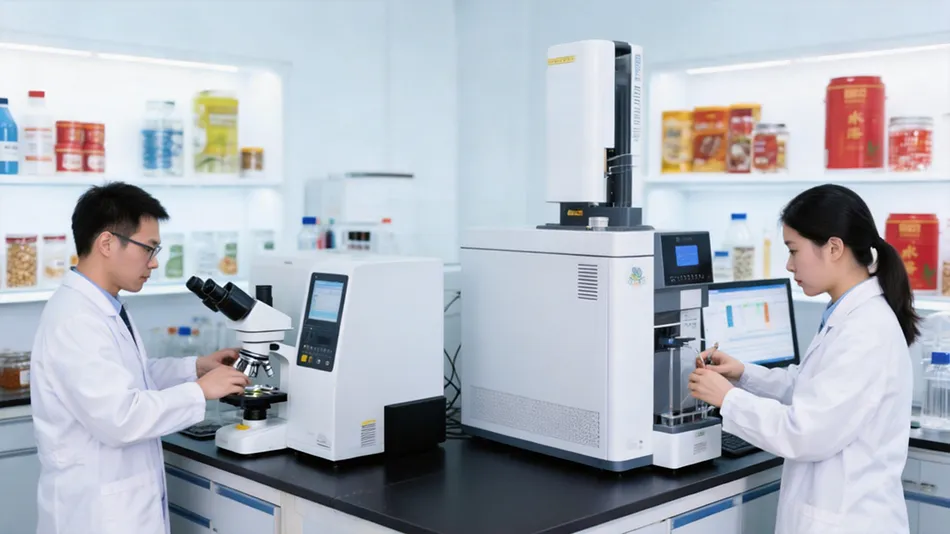
Lab Equipment: Does the factory have in-house HPLC (High-Performance Liquid Chromatography) to verify active ingredients?
-
Hygiene Barriers: Are there strict physical separations between the raw material warehouse, the mixing room, and the sterile filling line?
-
Batch Record Integrity: Ask to see a random production log from six months ago. If they can’t produce it in 10 minutes, their traceability is flawed.
-
Water Treatment: The secret to great beverage flavor is the water. Audit their multi-stage filtration and RO (Reverse Osmosis) systems.
Mistake #5: Language and Technical Communication Gaps
The Cost of Misunderstanding
A "matte finish" to a brand might mean a soft-touch texture; to a factory, it might just mean "non-glossy ink."
-
Specification Mismatches: Differences in measuring sweetness (Brix) vs. perceived sweetness (sensory testing).
-
Timeline Confusion: Does "delivery in 30 days" mean "leaving the factory" or "arriving at your port"?
-
Quality Tolerances: Failure to define what percentage of dented cans per pallet is "acceptable."
Laizhi Solution: We utilize a bilingual technical team (English/Mandarin). Every specification is confirmed via dual-language documentation and high-resolution video samples before the "Go" button is pressed.
Mistake #6: Proceeding Without a Pilot Production Run
What Brands Do
Brands approve a "Golden Sample" hand-made in a lab and then order 100,000 units, assuming the industrial line will produce the exact same result.
What Must Be Tested in a Pilot Run:
-
Heat Stability: Does the flavor change when subjected to the industrial pasteurization or UHT tunnel?
-
Seam Integrity: Ensuring the specific can-end and body combination holds pressure over 14 days of stress testing.
-
Fill Precision: Verifying that the high-speed valves are calibrated correctly for the specific viscosity of your liquid.
Mistake #7: Underestimating Global Lead Times and "The Rush Trap"
What Brands Do
Most brands plan their marketing launch based on the day they sign the contract, assuming a linear and rapid production cycle. They often forget that a factory is a complex ecosystem of raw materials, labor schedules, and machine maintenance.
The Realistic Breakdown of 2026 Timelines
A professional delivery cycle is rarely shorter than 12–16 weeks for a first-time international order. Here is where the time actually goes:
-
Phase 1: Lab-to-Line Validation (2–4 Weeks): Even if you have a formula, it must be "translated" for industrial equipment. This involves bench-top sampling, pilot testing for thermal stability, and final organoleptic approval.
-
Phase 2: Raw Material & Packaging Procurement (3–5 Weeks): Custom aluminum cans or specialized functional ingredients like those in our 330ml Pomegranate and Ginseng Tea often have their own lead times. In 2026, global aluminum demand remains high, and "Just-in-Time" delivery is no longer guaranteed.
-
Phase 3: Production Slotting & Quality Clearance (2 Weeks): Once materials arrive, you enter the "queue." After filling, products often undergo a 7–14 day incubation period to ensure zero microbial growth before they are legally cleared for export.
-
Phase 4: International Logistics & Customs (4–8 Weeks): Depending on whether you are shipping to the US, EU, or Middle East, port congestion and customs clearance for "Functional Foods" can add significant delays.
The Financial Cost of "The Rush"
When brands realize they are behind schedule, they fall into the "Air Freight Trap." Shipping a single container of beverages by air can cost upwards of $40,000, effectively turning your potential profit into a massive loss just to meet a retail deadline.
Laizhi Practice: We implement a Rolling Forecast System. For our long-term partners, we pre-order long-lead items (like printed cans) based on 3-month projections, allowing us to hit a 20–25 day production-to-shipment window for repeat orders.
Mistake #8: Ignoring Destination Market Regulatory Compliance
What Brands Do
Brands often assume that if a factory is "Certified," the product is automatically legal everywhere. This is a dangerous misconception. An OEM's facility certification (like ISO) is not the same as your specific product's Regulatory Compliance.
Critical Compliance Pillars for 2026
-
The BPA-NI Mandate (EU/USA): As of July 2026, the European Union has moved toward even stricter enforcement of BPA-NI (Non-Intent) coatings for aluminum cans (Regulation 2024/3190). If your OEM uses older coating technologies, your entire shipment could be seized and destroyed at the border.
-
Ingredient "Red Lists": What is legal in Asia may be banned in Europe. For example, certain synthetic dyes or high-intensity sweeteners allowed in some regions are strictly prohibited in the EU or require "Warning Labels" in California (Prop 65).
-
FSVP & FDA Readiness: For brands entering the U.S. market, your OEM must comply with the Foreign Supplier Verification Program (FSVP). You need a partner who can provide "Audit-Ready" documentation, including Hazard Analysis and Risk-Based Preventive Controls (PCQI).
-
Claims Substantiation: If you label your drink as "Immunity Boosting" or "Stress Relieving," you must have the lab data to back it up. An OEM that doesn't understand these nuances puts your brand at risk of "False Advertising" lawsuits.
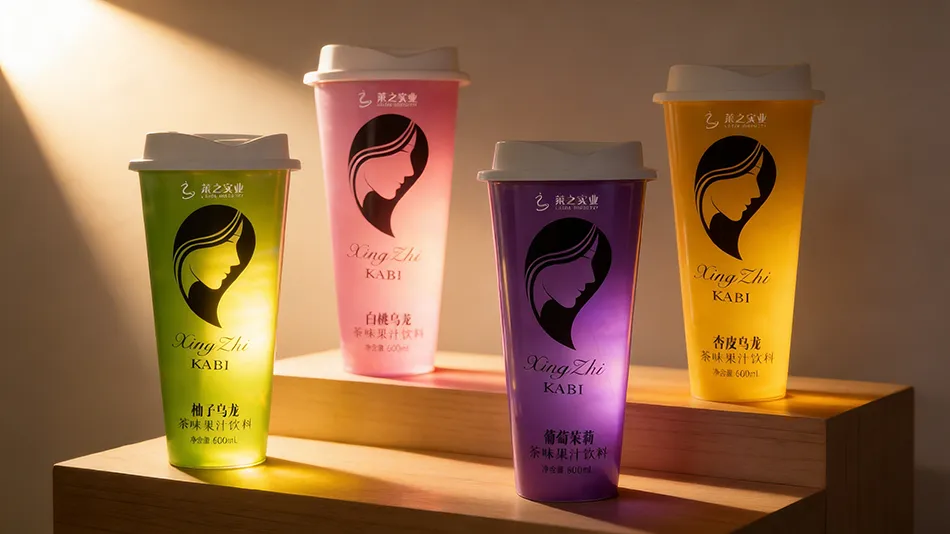
Laizhi Practice: We maintain a dedicated Global Compliance Desk. We ensure that every product, such as our White Peach & Oolong Flavored Fruit Tea, meets the specific heavy metal, pesticide, and coating migration limits of the destination country, providing you with a "Compliance Passport" for every batch.
Mistake #9: Not Planning for "The Scaling Chasm"
What Brands Do
Brands choose an OEM based on their current needs—typically small batches. However, as soon as a major retailer (like Walmart, Tesco, or Carrefour) places a nationwide order, the small OEM collapses under the pressure, leaving the brand with a "Stock-Out" during their most critical growth phase.
The Scaling Hierarchy:
| Phase |
Annual Volume |
Critical Requirement |
| Market Testing |
<100,000 cans |
Flexibility & Low MOQ |
| Regional Growth |
100k - 1M cans |
Quality Consistency & Stable Pricing |
| National Scale |
5M+ cans |
High-Speed Automation & Redundancy |
The Danger of "Single-Point Failure"
If your OEM has only one production line or one facility, a simple mechanical failure or a local power outage can halt your entire business. Switching OEMs during a growth surge is a nightmare—it takes 3–6 months to validate a new facility, leading to lost shelf space that your competitors will quickly fill.
Laizhi Practice: With 12 production bases and 55 automated lines, Laizhi offers "Built-in Redundancy." We can start with a 1-container pilot run and seamlessly scale to 10 million units without you ever needing to change your "Master Formula" or re-validate a new supplier.
Mistake #10: Treating the OEM as a Vendor, Not a Strategic Partner
What Brands Do
Many brands treat their OEM like a vending machine: they put a PO in and expect a product out. They keep the OEM "in the dark" about their marketing plans, sales data, and future R&D directions.
The Partnership Value-Add
A true Strategic Partner provides value that goes far beyond the liquid in the can:
-
Co-Innovation: A partner will share "Confidential Beta" access to new technologies, such as advanced natural sugar-blockers or sustainable, plastic-free packaging solutions before they hit the general market.
-
Cost Engineering: Instead of just taking your money, a partner will suggest Formula Optimization. For example, they might identify a slightly different extract that achieves the same flavor profile but reduces your COGS (Cost of Goods Sold) by 15%.
-
Crisis Resilience: When global logistics are in chaos, a factory will prioritize the brands they view as "Partners." If you are just a "Transactional Vendor," you are the first to be deprioritized during a capacity crunch.
Laizhi Practice: We act as an extension of your R&D and Supply Chain teams. We share monthly market trend reports and regulatory updates with our long-term partners, ensuring you stay ahead of the curve. Whether you are developing a new concept or scaling an existing one, we are invested in your brand's longevity.
How to Choose the Right OEM: The 2026 Checklist
Before signing a contract, ask these non-negotiable questions:
-
"Can you provide a BPA-NI migration test report for your current aluminum stock?"
-
"Who owns the Intellectual Property (IP) if we optimize the formula together?" (At Laizhi, the brand always owns the IP).
-
"What is your backup plan if your primary production line experiences a 7-day downtime?"
-
"Can you handle the FDA/EU/Halal documentation filing on our behalf?"
Conclusion & Action Plan
The beverage industry in 2026 is faster, more regulated, and more competitive than ever. Avoiding these 10 mistakes isn't just about saving money; it's about protecting your brand's reputation and its future.
Ready to build a secure, scalable, and compliant supply chain?
Contact Us for a comprehensive manufacturing audit. Whether you are launching a new 330ml Pomegranate and Ginseng Tea or scaling an international tea brand, the Laizhi team is here to ensure your journey from concept to shelf is flawless.
FAQ
Q1: Why is a "cheap" quote often more expensive in the long run?
Cheap quotes often ignore QC rejects, hidden setup fees, and the high cost of holding excessive inventory due to high MOQs. Always ask for an "All-In" landed cost.
Q2: How can I protect my formula if I don't have a patent?
In the beverage industry, trade secrets are more common than patents. Protect your brand with a strong Contract Manufacturing Agreement (CMA) that specifies IP ownership and non-disclosure of your specific blending ratios.
Q3: Is a virtual factory tour enough?
In 2026, technology is great, but it can be curated. If you can't visit in person, hire a third-party auditor (like SGS or Intertek) to perform an unannounced inspection of the facility.

