Kale, celery, cucumber... In recent years, vegetables have entered beverage stores from the vegetable market.Various companies have launched new fruit and vegetable beverages focusing on the concepts of health, health and weight loss. Kale, which originally tasted bitter, has also become a new favorite in beverage stores.
Kale, celery, cucumber... In recent years, vegetables have entered beverage stores from the vegetable market.Various companies have launched new fruit and vegetable beverages focusing on the concepts of health, health and weight loss. Kale, which originally tasted bitter, has also become a new favorite in beverage stores.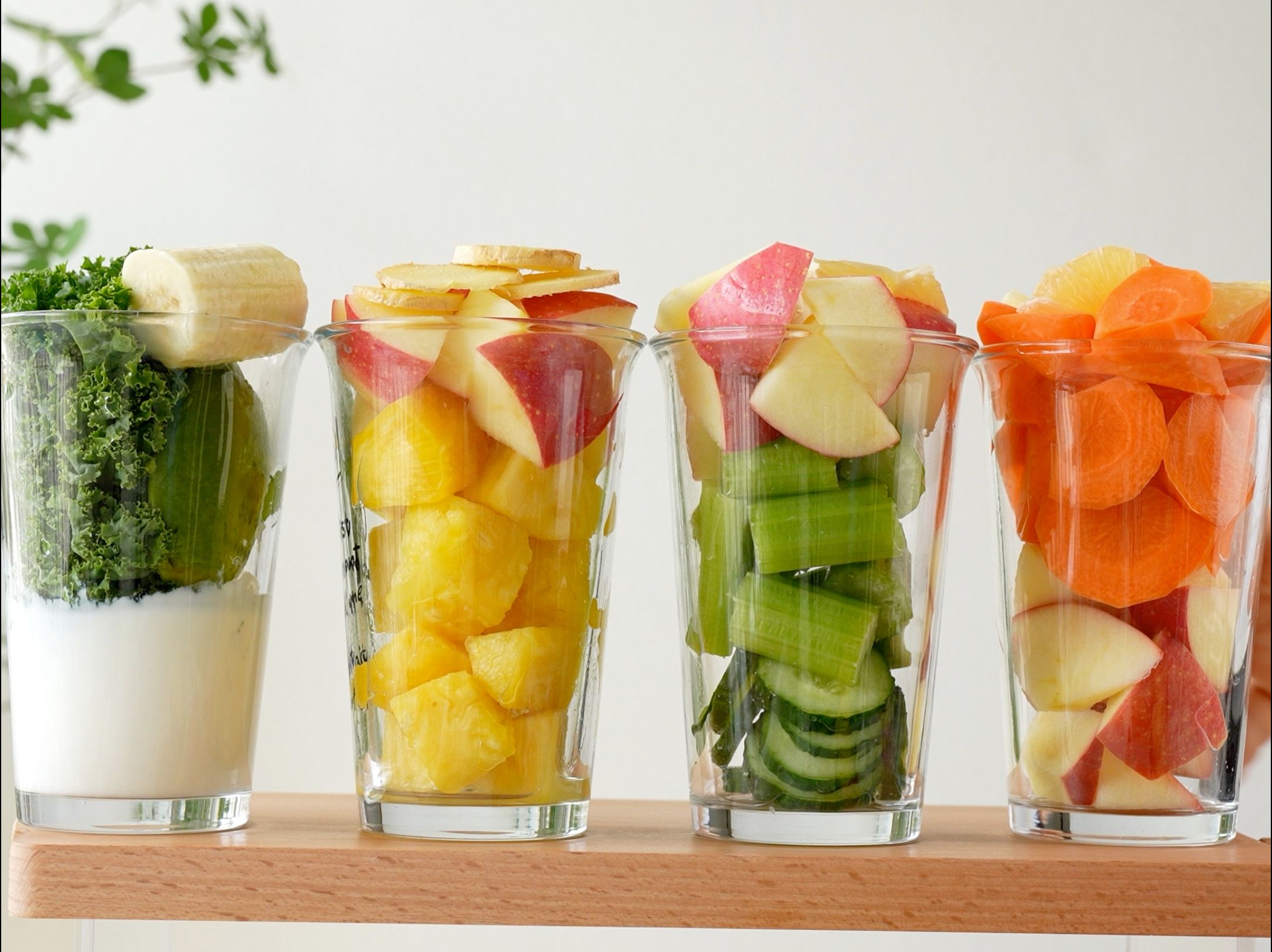
Is fruit and vegetable juice healthier?
1. The nutritional value of fruit and vegetable juice ≠ the nutritional value of fruits and vegetables
Eating a moderate amount of fruits and vegetables has many benefits for health. The Chinese Dietary Guidelines recommend that we "have vegetables at every meal and eat fruits every day." However, drinking fruit and vegetable juice does not show the same health benefits as eating fruits and vegetables directly.
In 2024, a systematic review and meta-analysis analyzed the relationship between 100% fruit and vegetable juice and health, including anthropometric parameters, body composition, blood pressure and vascular function, blood lipids, blood glucose homeostasis, inflammation and oxidative stress markers, cognitive function, exercise performance, intestinal microbiome composition and bacterial infection. The final result shows that the impact of 100% fruit and vegetable juice on human health is very limited and further research is needed.
In general, eating fruits and vegetables is healthy, but drinking fruit and vegetable juice is not healthier.
2. There is nutritional loss in the process of fruit and vegetable juice production
During the production process, fruit and vegetable juice will lose some nutrients, such as dietary fiber, vitamin C, polyphenol antioxidants, etc.
When juicing, most of the water-soluble nutrients go into the juice, while insoluble dietary fiber will remain in the residue. Data shows that 100 grams of carrots contain 2.8 grams of fiber, but only 0.8 grams remains after juicing. If the residue is filtered out, a large amount of dietary fiber will be lost.
And polyantioxidants are sensitive to oxygen, and will be fully released and oxidized during the juicing process; high-speed rotation during pulping produces bubbles, which accelerates the contact between vitamin C and oxygen, and may lead to a loss of more than 80% of vitamin C.
Is fruit and vegetable juice reliable for weight loss?
1. Fruit and vegetable juice reduces satiety or overeating
The calories in fruit and vegetable juice depend on the types of fruits and vegetables selected. High-sugar fruits, such as mangoes and grapes, have higher calories after juicing; in comparison, low-sugar vegetables, such as cucumbers, celery, kale, etc., have lower calories.
Fruit and vegetable juice is liquid, does not need to be chewed, and empties quickly in the stomach. In addition, dietary fiber is damaged during the juicing process, and satiety is reduced. Therefore, it is difficult to relieve hunger after drinking fruit and vegetable juice, and it is impossible to maintain blood sugar stability. Many people may drink fruit and vegetable juice excessively or eat more other things to solve the problem of hunger.
2. More sugar may be added to vegetable juice
Compared with fruit juice, vegetable juice usually does not taste that good. In order to be "delicious", beverage shops may add sugar and other flavoring ingredients, or sweeter fruits, thereby increasing the intake of sugar.
The sugar content of fruit and vegetable juice sold in many milk tea shops and fresh fruit and vegetable juice shops on the market is usually 8% to 10%, which is not much different from fruit juice and sweet drinks, which is not very beneficial to health.
Therefore, drinking too much pure fruit juice or vegetable juice may also cause a rapid rise in blood sugar, which is not very healthy for patients with high blood sugar or diabetes.
3. Drinks with added sugar substitutes cannot be consumed for a long time
Some "0 sugar" drinks do not add sugar, but they taste sweet because sugar substitutes (also called sweeteners) are used in the drinks to replace sucrose, white sugar, etc.
Many nutrition experts say that sweeteners can disrupt the appetite regulation mechanism and taste. Long-term consumption of high-sweetness sweeteners will make people dependent on high sweetness and may eat more sugar. This is not only not conducive to weight loss, but also not conducive to physical health, so long-term drinking of sugar-free drinks is not advisable. Some sugar-free drinks also contain caffeine, which can easily lead to addiction if consumed excessively.
Is Chinese "health water" more suitable for Chinese babies?
Have you ever drunk Chinese "health water" such as mung bean water, red bean and barley water, tangerine peel water, and longan water in supermarkets?
These drinks do contain ingredients that are both medicinal and edible in traditional Chinese medicine, but it should be noted that these "health waters" are also drinks, not health products or medicines, and do not have therapeutic effects.
However, compared with sugary drinks and carbonated drinks, the ingredients in these "health waters" are indeed healthier.
How to drink more healthily?
It is recommended that friends who need to control blood sugar and weight should still pay attention to the intake of fruit and vegetable juice drinks, or directly choose sugar-free drinks such as tea, lemonade, and warm water.
-
Choose natural and healthy drinks:It is recommended that you develop the habit of drinking light tea, warm water, lemonade, and scented tea. These natural drinks are sugar-free and contain a small amount of tea polyphenols, vitamin C and other nutrients that are beneficial to health.People's taste can be developed. For heavy lovers of sweet drinks, if you are not used to quitting sweet drinks at the beginning, you can start by diluting sweet drinks with warm water and gradually transition to the above-mentioned healthy drinks.
-
Learn to read the ingredient list: Identify "invisible sugar":When choosing a beverage, take half a minute to look at the ingredient list. If it contains sucrose, white sugar, fructose syrup, corn syrup, maltose syrup, etc., you should choose it carefully. You should also pay attention to beverages marked with "0 sucrose" and "sugar-free".
-
Learn to read the nutritional information table: estimate the intake of added sugar:For beverages, carbohydrates in the nutritional information table generally represent the added sugar content. By observing the carbohydrate content in 100 ml of beverage, you can calculate the actual intake of added sugar by drinking the beverage. Then, we can compare it with the daily intake of added sugar of 25 grams to determine whether to choose this beverage.
-
Learn to make homemade healthy drinks:Homemade drinks can better control the sugar content. If you make fruit and vegetable juice at home, fresh seasonal fruits and vegetables are preferred, control the proportion of fruits, and match more vegetables to prevent excessive sugar. Try not to filter and retain fruit and vegetable fiber. You can also add mint leaves, fresh lemon slices, green tea and other auxiliary seasonings to make the taste richer while reducing the dependence on sweetness. In addition, drink the juice as soon as possible after squeezing it to be careful of bacterial growth.


