The beverage landscape has undergone a seismic shift. Walk down any supermarket aisle or browse an e-commerce platform, and you will see that "store brands" or "private labels" are no longer just the budget-friendly alternatives—they are often the market leaders in innovation and premium quality.
The beverage landscape has undergone a seismic shift. Walk down any supermarket aisle or browse an e-commerce platform, and you will see that "store brands" or "private labels" are no longer just the budget-friendly alternatives—they are often the market leaders in innovation and premium quality.
For entrepreneurs and established retailers, the question is no longer whether to enter the drink market, but how to do it efficiently. This is where private label beverage manufacturing comes into play. By partnering with a specialized beverage contract manufacturer, brands can launch high-quality products without the staggering costs of building a factory.
In this guide, we will break down everything you need to know about the industry, from the initial concept to the final aluminum can.
What is Private Label Manufacturing for Drinks?
At its core, private label beverage manufacturing is a process where a manufacturer produces a drink according to a retailer’s or brand owner's specifications, which is then sold under the brand owner's name.
The Difference Between Private Label and Traditional OEM
While often used interchangeably, there is a nuance:
-
Private Label Beverage: Often involves a manufacturer providing a pre-developed "house formula" that you can slightly tweak and put your label on. It is the fastest way to get to market.
-
Custom OEM (Original Equipment Manufacturer): Usually involves developing a completely unique formula from scratch.
As a versatile beverage contract manufacturer, LzBeverage offers both paths, allowing you to choose the level of customization that fits your business model.
Why Choose Private Label?
For many, a private label beverage is the perfect entry point. It allows you to leverage the proven R&D (Research and Development) of a factory like LzBeverage, ensuring that the taste profile and shelf-stability are already optimized for consumer success.
The Strategic Benefits of Private Label Beverage Manufacturing
Why are global giants and nimble startups alike turning to private label beverage manufacturing? The advantages are rooted in financial efficiency and market agility.
Lower Capital Expenditure (CAPEX)
Building a beverage plant requires millions of dollars in equipment—mixing tanks, carbonation systems, tunnel pasteurizers, and high-speed seaming machines. By outsourcing to a beverage contract manufacturer, you convert these massive fixed costs into variable costs. You only pay for the inventory you need.
Speed to Market
Developing a drink in-house can take years. With a private label partner, you can choose from existing, high-performing categories—such as tea or energy drinks—and have a product ready for distribution in a matter of months.
Quality and Compliance Expertise
Navigating food safety regulations (HACCP, ISO, FDA standards) is a daunting task. A professional manufacturer manages all regulatory compliance, ensuring your drink is safe for consumption and legally labeled. For example, our 330ml Pomegranate and Ginseng Tea undergoes rigorous quality checks to maintain its functional benefits and premium taste.
The Private Label Beverage Development Process: From Concept to Can
Launching a drink is a precision science. Here is how the private label beverage development process works at LzBeverage.
Step 1: Conceptualization and Formulation
In this stage, we determine the "soul" of the drink. Is it a refreshing fruit tea? A functional wellness drink? We look at trends and flavor profiles. Our White Peach & Oolong Flavored Fruit Tea is a prime example of a successful formulation that balances aroma and sweetness for the modern palate.
Step 2: Ingredient Sourcing and Sample Approval
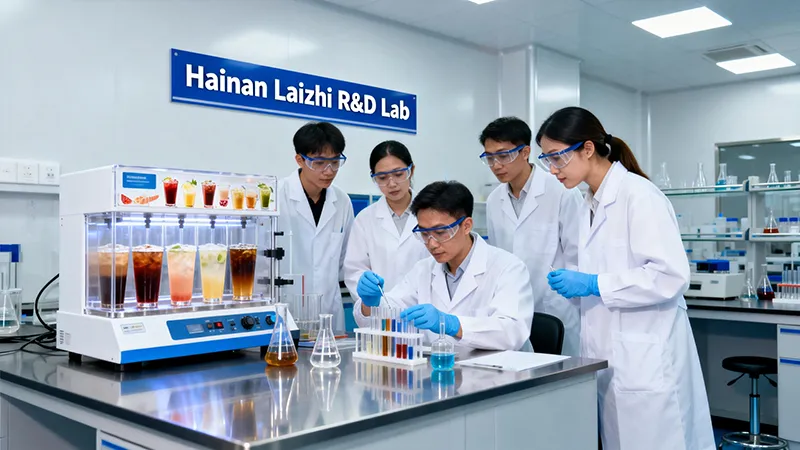
Once the concept is set, we source the finest raw materials. We create prototypes in our lab and send them to you for a "benchtop" tasting. We refine the sweetness, acidity, and mouthfeel until it perfectly matches your vision.
Step 3: Regulatory Review and Labeling
Every private label beverage must have a compliant label. This includes the nutrition facts panel, ingredient list, and any claims (like "Low Sugar" or "Natural Caffeine"). We help ensure your packaging meets all legal requirements for your target market.
Step 4: Full-Scale Production
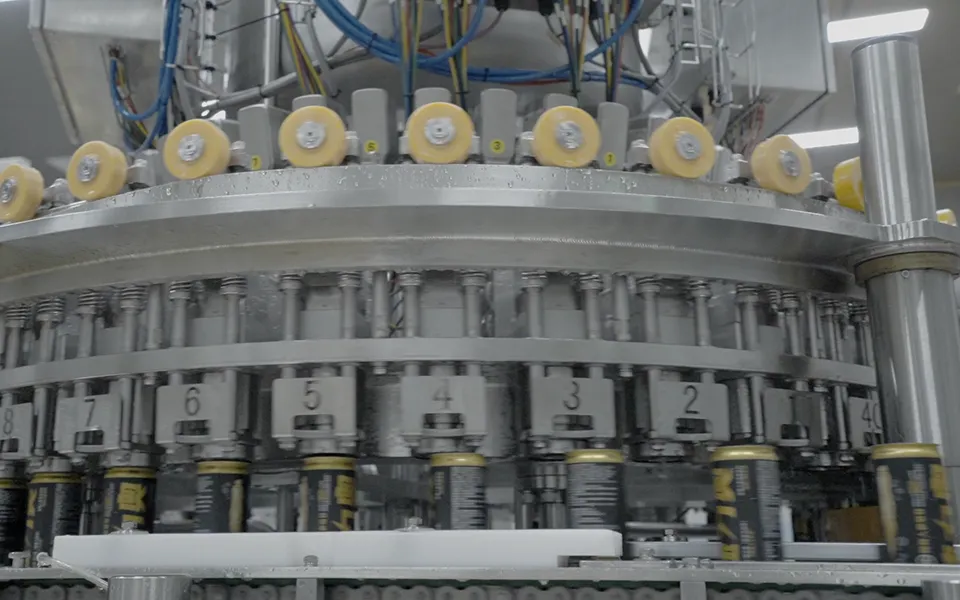
Once the pilot batch is approved, we move to the high-speed canning line. For carbonated drinks, we inject CO2 at precise pressures to ensure that signature "pop" when the consumer opens the can.
Specialized Niches: Private Label Energy Drink Manufacturing
The energy drink sector is no longer just about high sugar and synthetic caffeine. As a leader in private label energy drink manufacturing, LzBeverage helps brands tap into the "Clean Label" and "Functional" movements through three core ingredient strategies:
-
Clean Energy (Using Green Tea Extract or Guarana): Modern consumers are increasingly wary of the "jittery" feeling and subsequent "crash" associated with synthetic anhydrous caffeine. By utilizing green tea extract or guarana, we can provide a source of natural caffeine that offers a more sustained release of energy. Green tea extract is particularly valuable because it contains L-theanine, an amino acid that promotes relaxation without drowsiness, resulting in a "calm alertness" that is highly sought after by professionals and health-conscious students. Guarana, on the other hand, contains tannins that slow down the absorption of caffeine, providing a long-lasting energy boost that keeps the consumer fueled throughout the day without the sudden spike in heart rate often found in traditional energy drinks.
-
Nootropics (Ingredients for Brain Focus): The rise of "e-sports," remote work, and the "gig economy" has created a massive demand for beverages that enhance cognitive function, often referred to as nootropics. Formulating these drinks requires a delicate balance; ingredients like Alpha-GPC, Lion’s Mane mushroom, and L-Tyrosine are powerful for mental clarity and focus, but they often possess earthy or bitter flavor profiles that can be difficult to mask. Our R&D team excels at integrating these "smart ingredients" into delicious fruit-flavored bases. By offering a private label focus drink, your brand can target gamers, programmers, and students who need to maintain peak mental performance for hours at a time, providing them with a functional alternative to coffee that is both refreshing and effective.
-
B-Vitamins and Electrolytes (For Recovery and Health): Total body wellness is a key driver for the "all-day energy" category. B-Vitamins (such as B6 and B12) play a crucial role in cellular energy metabolism, helping the body convert the food we eat into usable fuel more efficiently. When combined with essential electrolytes like sodium, potassium, and magnesium, these beverages become powerful tools for both physical recovery and daily hydration. This is especially important for the "active lifestyle" demographic, who may use these drinks post-workout or during a busy commute. By including these micronutrients in your private label beverage, you shift the product's identity from a simple stimulant to a comprehensive health support tool, encouraging daily consumption habits and long-term brand loyalty.
How to Find a Private Label Beverage Manufacturer
Not all partners are created equal. When researching how to find a private label beverage manufacturer, use this checklist to ensure they can handle your brand's growth.
Check for Technical Versatility
Can the factory handle different can sizes? Do they offer carbonated and non-carbonated lines? A versatile manufacturer like LzBeverage allows you to expand your product line without switching partners.
Assess Their Quality Certifications
Ensure the facility is certified by global standards (such as ISO 22000 or HACCP). This is your primary insurance against product recalls and safety issues.
Transparency and Communication
A manufacturer should be a partner, not just a vendor. They should offer transparency in their pricing models and provide regular updates on production timelines. At LzBeverage, we believe in long-term relationships built on trust.
Conclusion: Build Your Beverage Empire Today
The barrier to entry for the beverage industry has never been lower, provided you have the right partner. Private label beverage manufacturing offers a low-risk, high-reward path to building a brand that resonates with consumers.
From the delicate balance of a White Peach & Oolong Flavored Fruit Tea to the functional power of a 330ml Pomegranate and Ginseng Tea, LzBeverage has the expertise, the technology, and the passion to bring your liquid dreams to life.
Are you ready to see your brand on the shelves? Contact Us today, and let’s start your journey from concept to market.
FAQ
Q1: What are the typical Minimum Order Quantities (MOQs) for private label beverages?
A: MOQs vary depending on the packaging and formulation. For aluminum cans, the industry standard is often around 30,000 to 50,000 units per run. However, we offer flexible solutions for emerging brands to help you get started with smaller test batches.
Q2: Can I provide my own ingredients for the production?
A: Yes, as a beverage contract manufacturer, we offer "toll manufacturing" where you provide the materials, or "turnkey" services where we source everything for you. Most clients prefer turnkey services for better cost-efficiency and easier logistics management.
Q3: How long is the shelf life of a canned private label beverage?
A: Thanks to the superior light and oxygen barrier of aluminum cans, combined with our precise pasteurization techniques, most beverages can achieve a shelf life of 12 to 18 months without the need for heavy preservatives, provided they are stored correctly.

