In the vegetable world, sweet peppers are often used as embellishments for dishes with their bright colors and crisp taste. In fact, sweet peppers have amazing nutritional strength. Now let's learn about the nutritional advantages of sweet peppers.
In the vegetable world, sweet peppers are often used as embellishments for dishes with their bright colors and crisp taste. In fact, sweet peppers have amazing nutritional strength. Now let's learn about the nutritional advantages of sweet peppers.
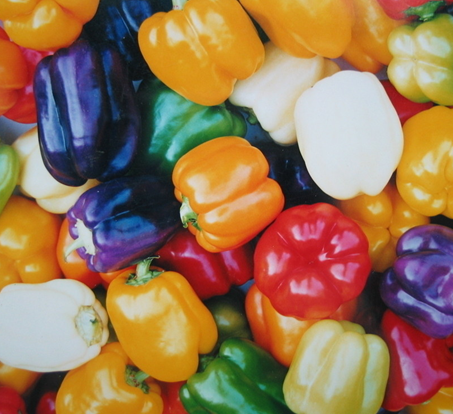
The underestimated "low-calorie vitamin C king"
Sweet peppers are also called bell peppers and lantern peppers. They have thick flesh and are sweet and delicious. Many times, people call common green sweet peppers green peppers, and red, yellow, and orange sweet peppers are called colored peppers.
Among common vegetables, the vitamin C content of sweet peppers ranks among the top. According to the data in the "Chinese Food Composition Table", the vitamin C content of green peppers is as high as 130 mg/100 g, which is almost 6 times that of lemons, nearly 4 times that of oranges, and nearly 10 times that of tomatoes.
The vitamin C content of bell peppers is better than that of green peppers. According to the USDA Food Nutrition Database, the vitamin C content of yellow bell peppers, orange bell peppers, and red bell peppers is 139 mg/100 g, 158 mg/100 g, and 142 mg/100 g, respectively.
This means that you only need to eat a medium-sized green pepper or half a bell pepper to meet the daily vitamin C needs of an adult (the recommended intake of vitamin C is 100 mg per day).
You don't have to worry about gaining weight by eating bell peppers to supplement vitamin C. The calories of bell peppers are about 30 kcal/100 g, and the calories of green peppers are even lower, only 18 kcal/100 g, which is lower than Chinese cabbage.
The glycemic index of bell peppers is only 15, which is a low GI food, and the carbohydrates are also low, generally below 7%. Even people who need to control blood sugar can enjoy it with confidence.
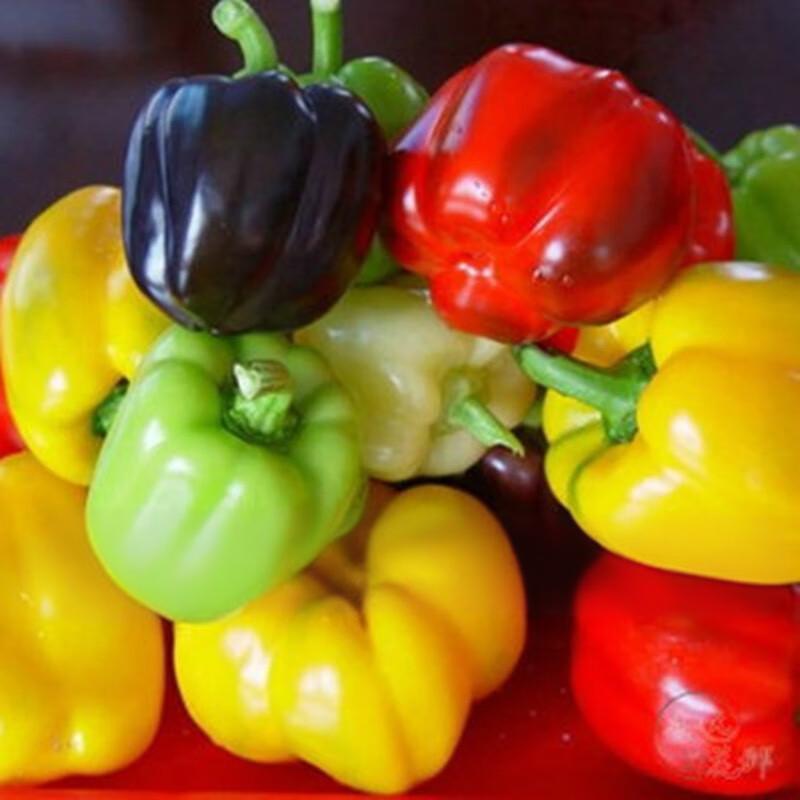
What is the difference between bell peppers of different colors?
All bell peppers are green at first, and the color of different mature fruits is determined by the type of carotenoids accumulated in the fruit and the relative content of the main carotenoids.
For example, the dominant pigments in red peppers are capsanthin and capsanthin; while yellow peppers lack capsanthin/capsanthin synthase, cannot synthesize capsanthin and capsanthin, and are rich in zeaxanthin, so they appear yellow.
The color change process of bell peppers is accompanied by significant changes in nutritional components, especially the gradual increase in carotene content. The total carotene content of green peppers is 134 micrograms/100 grams, that of yellow peppers is 196 micrograms/100 grams, and that of red peppers reaches 367 micrograms/100 grams, which is nearly 3 times that of green peppers.
In addition to carotene, bell peppers also have a good potassium content. Data show that the potassium content of green peppers is 163 mg/100 grams, the potassium content of yellow peppers is 197 mg/100 grams, and the potassium content of red peppers is as high as 213 mg/100 grams. Adding potassium-rich foods to the diet is not only beneficial for maintaining stable blood pressure, but also for maintaining normal muscle and heart function.
Bell peppers contain almost no capsaicin, but capsaicin esters, which have a similar chemical structure to capsaicin, but are less irritating to the mouth and other parts than capsaicin, so you can't taste the spicy taste. Capsaicin esters can play a physiological function similar to capsaicin, and have multiple physiological effects such as regulating sugar and lipid metabolism, anti-tumor, enhancing exercise endurance and anti-oxidation.
What are the benefits of bell peppers?
-
Assist in enhancing immunity: Bell peppers have a high content of vitamin C (about 80-190mg/100g), which can promote white blood cell activity and help resist pathogens. Its antioxidant components can also reduce the damage of free radicals to cells, and have a certain auxiliary support effect on those with weak immunity.
-
Protect eye health: Bell peppers contain β-carotene (about 200-600μg/100g) and lutein, which can slow down the damage of blue light to the retina. Moderate consumption by people who use their eyes for a long time may help relieve visual fatigue, but it cannot replace professional eye care treatment.
-
Promote digestion and metabolism: Dietary fiber (about 1.5-2.5g/100g) can increase intestinal peristalsis, and when combined with sufficient drinking water, it can relieve mild constipation to a certain extent. At the same time, the B vitamins in bell peppers can assist in carbohydrate metabolism and help maintain energy balance.
-
Assist in anti-oxidation and anti-aging: Bell peppers contain antioxidants such as flavonoids and capsanthin, which can neutralize free radicals and delay cell oxidation.
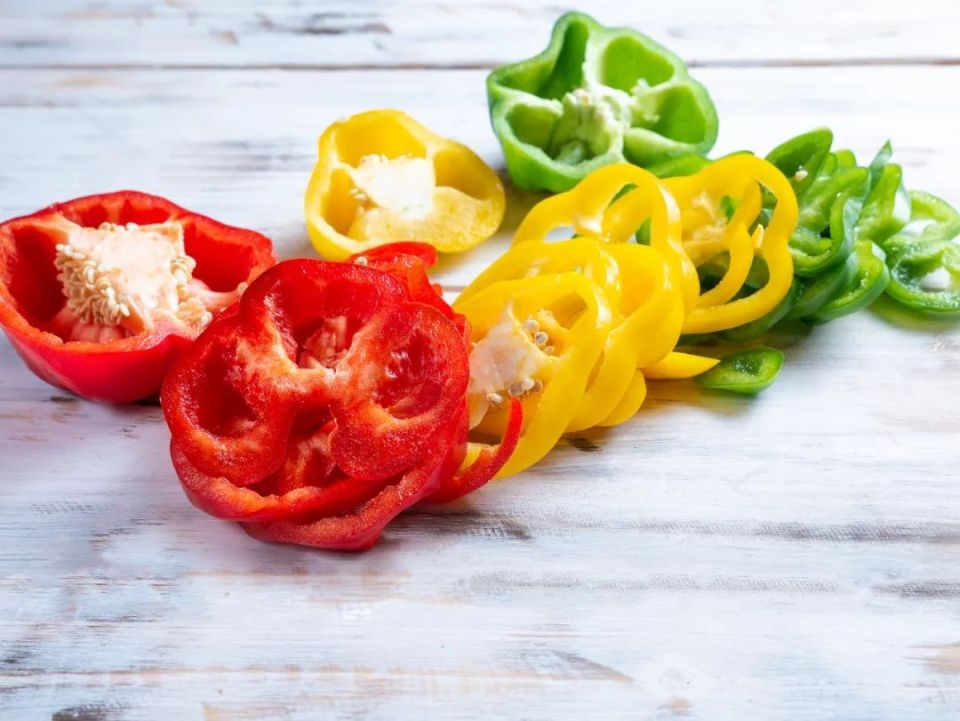
Selecting, eating and storing in this way can better "lock" vitamin C
When choosing bell peppers, you should pay attention to 5 points:
- Choose bell peppers with bright colors, no dark spots or wrinkles.
- The stems of fresh bell peppers are green and look fresh, not dry or brown.
- Full, firm, and elastic ones are fresher.
- Fresh bell peppers have a fresh fragrance, and if there is a fermented smell, it means they are not fresh.
- For bell peppers of the same size, heavier ones are usually more hydrated and fresher.
The cooking method will directly affect the nutritional value of bell peppers.
Wash and eat it raw or break it apart and mix it cold. It is crispy, sweet, delicious and juicy, and can retain the vitamin C of bell peppers to the greatest extent.
If you don't like the taste of eating bell peppers raw, you can also stir-fry it over high heat. Because the heating time is short, the nutritional loss is less; adding oil to cooking can also better promote the absorption and utilization of carotene. However, it is not recommended to stew at high temperature for a long time, otherwise it will cause a large loss of vitamin C.
It is generally believed that the best storage of bell peppers at 9~12℃, so you don't need to rush to put the bell peppers you buy into the refrigerator. You can store them in a cooler and ventilated place indoors and eat them early.
If you buy too much and worry that they will go bad if you can't finish them, you can also heat shock them and freeze them for storage: put the bell peppers in hot water at 35~55℃ for 5 minutes to kill or inhibit the activity of pathogens, induce the production of heat shock proteins, reduce the activity of enzymes in fruits and vegetables, and extend the storage time.

