"Women's wellness" is one of the most crowded shelves in beverage retail, and most products lean on vague promises. Pineapple is interesting precisely because its appeal rests on real, documentable nutrients — vitamin C, manganese and the enzyme bromelain — rather than marketing language. For a brand building a women-focused drink, that evidence base is an asset. It also sits inside a fast-growing wave: RTD functional fruit drinks are leading the move toward a near-$250 billion functional market by 2030.
Why we wrote this: Clients regularly ask us for a "women's health" fruit drink, and pineapple keeps surfacing — but the briefs often blur real nutrition with wishful claims. This guide separates what pineapple genuinely offers from what it doesn't, so you can build a women-focused product on defensible ground instead of risky promises.
Key Takeaways
- Pineapple's women-relevant pillars are vitamin C, manganese and bromelain — each backed by published nutrition or research.
- Vitamin C supports skin and iron absorption, useful angles for women's everyday wellness drinks.
- Claims must reference nutrients, not promise outcomes — especially on a wellness-positioned product.
What Pineapple Offers Women, Nutritionally
Vitamin C: skin, collagen and iron
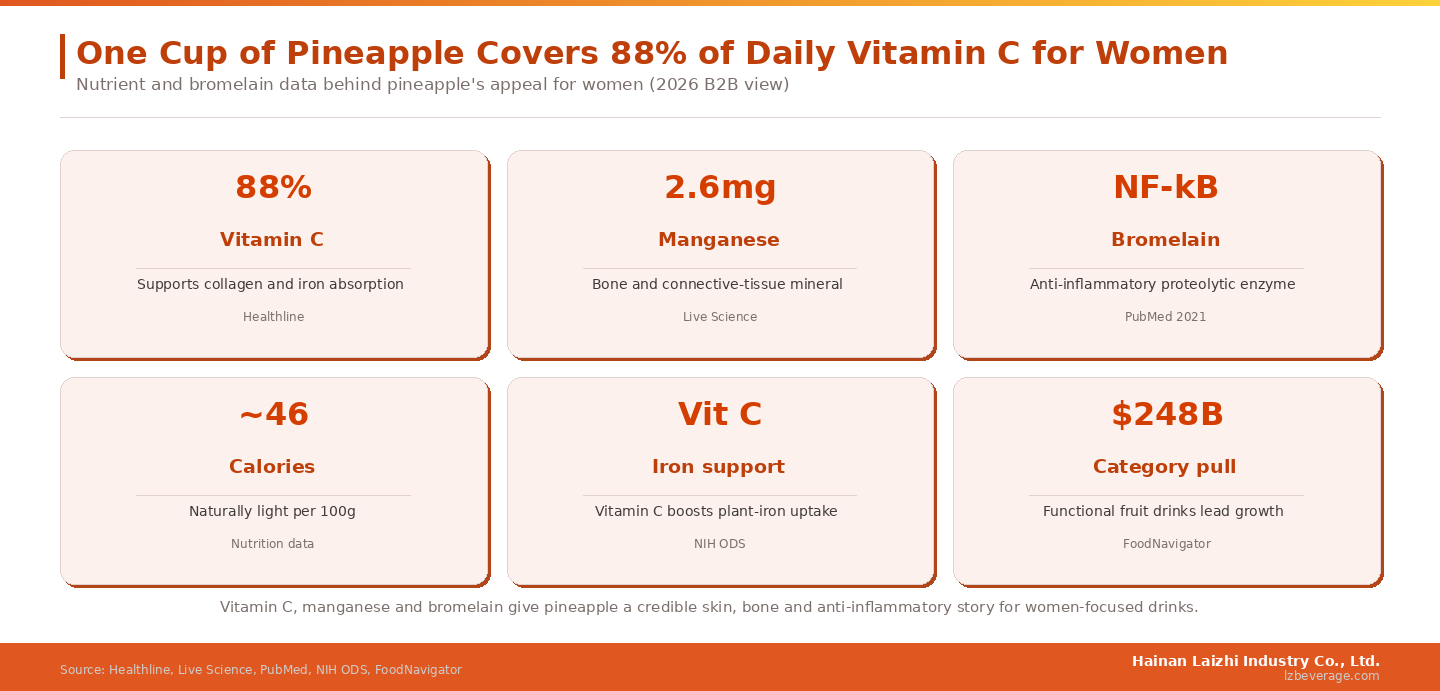
The standout is vitamin C. One cup of pineapple provides about 88% of the Daily Value for vitamin C, which supports collagen production and acts as an antioxidant for skin health. The benefit reaches further: according to the NIH Office of Dietary Supplements, vitamin C is required for collagen biosynthesis and improves the absorption of non-heme (plant) iron — relevant for women shifting toward plant-based diets.
Manganese and bromelain
Beyond vitamin C, pineapple is notably rich in manganese — about 2.6 mg per cup, a mineral important for bone and connective-tissue health. Its signature compound is bromelain, an enzyme with documented anti-inflammatory action: a laboratory study showed pineapple bromelain reduces pro-inflammatory mediators by downregulating the NF-κB signaling pathway, and a broader review describes bromelain as anti-inflammatory, anti-thrombotic and well-tolerated when taken orally.
Reading the NIH vitamin C guidance alongside the bromelain research clarifies the honest positioning: pineapple's strength for a women's drink is "everyday wellness" — skin support, iron-absorption help and gentle anti-inflammatory benefit — not disease treatment. For a brand, that means leading with the nutrient story (vitamin C, manganese, natural bromelain) and avoiding medical claims keeps the product both compelling and compliant.
Turning Pineapple Into a Women-Focused Drink
The category context is favorable. Functional, fruit-forward RTD products are exactly where growth is concentrating, and a clean, naturally vitamin-C-rich tropical fruit fits the "better-for-you" positioning women's wellness shoppers look for. Pineapple's bright flavor also makes it forgiving in low-sugar formats.
In practice, pineapple works as a standalone juice line, a sparkling variant, or blended with complementary tropical fruits. The key is protecting the vitamin C — which is heat-sensitive — through gentle processing.
From Nutrient Story to Product
Formulation and claims
Vitamin C degrades with heat and oxygen, so gentle pasteurization and oxygen-limiting packaging matter if "natural vitamin C" is part of your message. Claims should reference the nutrient or the published research, not promise outcomes like fertility or weight loss. A capable beverage manufacturing partner can balance taste, nutrient retention and compliant labeling for each target market.
Format and market fit
Decide early between still juice, sparkling, or a tropical blend, and confirm which wellness claims are permitted in your destination markets. As a starting point you can review ready-to-drink formats here to map where a pineapple line fits.
Next-step checklist
- This week: choose your angle — skin, everyday wellness, or hydration.
- This week: decide still, sparkling, or tropical blend, with a low-sugar target.
- This month: request a pineapple sample and spec sheet from an OEM partner.
- This month: confirm which vitamin C and wellness claims are allowed in your market.
FAQ
Is pineapple good for women's skin?
It can support skin indirectly. Pineapple is high in vitamin C, which is needed for collagen production and acts as an antioxidant. Claims should reference the nutrient rather than promise cosmetic results.
What is bromelain and why does it matter?
Bromelain is a proteolytic enzyme unique to pineapple, studied for anti-inflammatory and digestive properties. Research shows it can downregulate inflammatory signaling, though it should be presented as a nutrient feature, not a treatment.
Can a pineapple drink be low in sugar?
Yes. Pineapple's natural sweetness and bright acidity make it well suited to reduced-sugar formats. This article is general information, not medical advice — a flexible OEM/ODM partner can help tune sweetness and confirm claims for your market.


