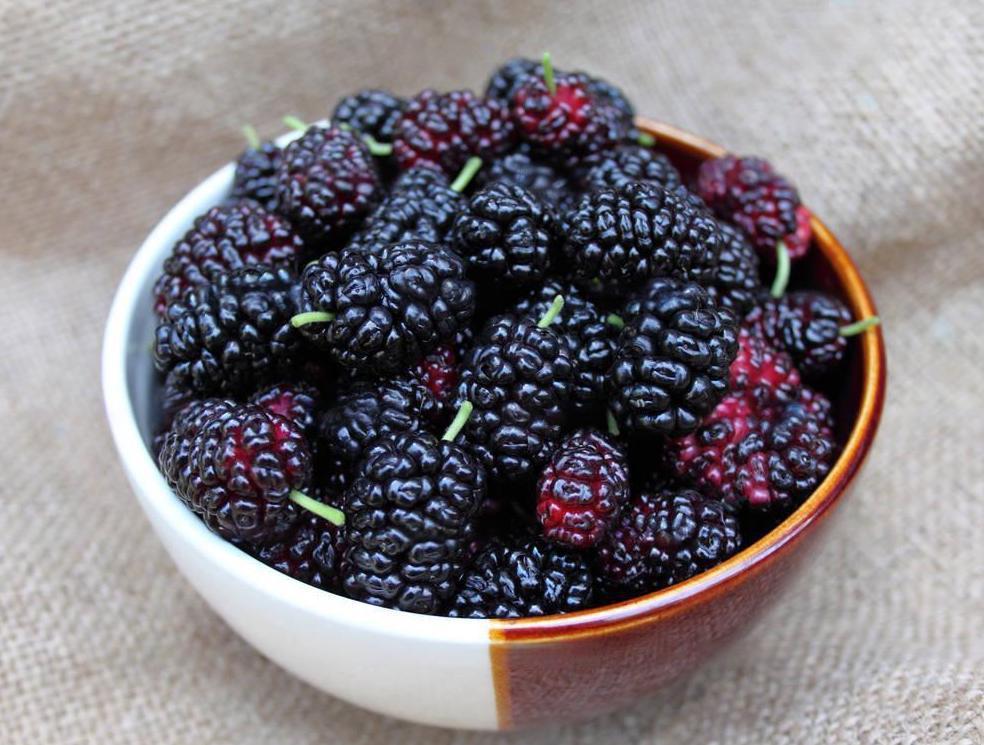
It's time to eat mulberries again. The purple and black small fruits are sweet and sour when ripe, plump and juicy, and there are many ways to eat them. You can wash them and eat them raw, or squeeze them into juice, mix them with yogurt, and soak them in wine... It's very versatile.
Do you know the 8 benefits of mulberries?
It's time to eat mulberries again. The purple and black small fruits are sweet and sour when ripe, plump and juicy, and there are many ways to eat them. You can wash them and eat them raw, or squeeze them into juice, mix them with yogurt, and soak them in wine... It's very versatile.
What are the benefits of mulberries?
1. Prevent constipation
Like most fruits and vegetables, mulberries may contain dietary fiber, and a single serving can meet 10% of your daily needs. Dietary fiber can help improve digestion by increasing stool, thereby speeding up the movement of food through the digestive tract, while also potentially reducing the occurrence of constipation, bloating, and cramps. In addition, fiber may help regulate cholesterol levels and may improve heart health when added to the diet regularly.
2. Promote blood circulation
The high iron content in mulberries may significantly promote the production of red blood cells. This means that the body may increase the distribution of oxygen to important tissues and organs, which may help promote metabolism and optimize the function of these systems.
3. Lowers Blood Pressure
Resveratrol is a very important flavonoid that can directly affect the function of certain mechanisms in blood vessels, primarily making them less susceptible to damage by angiotensin, which causes blood vessels to constrict. Resveratrol may increase the production of nitric oxide, which is a vasodilator. This means that it relaxes blood vessels and may reduce the chances of blood clots and subsequent heart problems, such as stroke or heart attack. Resveratrol is found in many dark berries, such as mulberries, including most grapes, which is why this beneficial antioxidant is also found in wine.
4. Improves Vision
One carotenoid found in mulberries is zeaxanthin, which may be directly linked to reducing oxidative stress in certain eye cells, including the macula of the retina. In addition, zeaxanthin can act as an antioxidant and prevent certain damage to the retina, including free radicals that can lead to macular degeneration and cataracts. In traditional Chinese medicine, mulberry tea is often used to improve vision.
5. Acts as an anti-inflammatory
Research suggests that mulberry leaves may have anti-inflammatory properties that can shut down the body's inflammatory response to chronic disease. Research suggests that mulberry tea can be used to reduce inflammatory pain.
6. Boost Immunity
Vitamin C is a powerful defensive weapon against any disease or foreign pathogen that the body's antioxidants can't address. One serving of mulberries may meet your entire vitamin C requirement for the day, but combine it with the minerals and vitamins in this fruit and you may have a real disease-fighting weapon. Try adding mulberries to smoothies and salads to boost immunity.
7. Maintain Bone Health
The vitamin K, calcium, and iron that mulberries may contain, as well as trace amounts of phosphorus and magnesium, are all beneficial for the formation and maintenance of bone tissue. As we age, maintaining strong bones, speeding up the healing process, and even reversing the damage of bone degeneration is important to prevent diseases such as osteoporosis or other age-related bone diseases.
8. Lower Cholesterol
Regular intake of mulberry leaf powder and mulberry leaf tea can significantly reduce triglyceride and LDL (bad) cholesterol levels. This may lead to the prevention of atherosclerosis, heart attacks, and strokes.
9. Anti-aging
Mulberries may also have high levels of vitamin A and vitamin E, as well as a range of carotenoid components such as lutein, beta-carotene, zeaxanthin and alpha-carotene. All of these elements can act as antioxidants, especially affecting the skin, tissues, hair and other parts of the body attacked by free radicals. Mulberries can help with skin care, reduce the appearance of blemishes and age spots, and keep hair shiny and healthy by preventing the oxidation of free radicals.
Mulberry Nutrition
Mulberries have an excellent dietary fiber content among fruits, with an insoluble dietary fiber content of up to 4.1 grams per 100 grams. Blueberries, which are also berries, have a total dietary fiber content of 2.4 grams per 100 grams.
Eating some mulberries properly can bring us a good sense of fullness, promote gastrointestinal motility, and are good for intestinal health. The key is that the calories of mulberries are not high, only 57 kcal/100 g, which is comparable to the calories of blueberries and apples, and is still very friendly to those who are losing weight.
The vitamin C content of mulberries is 36.4 mg/100 g, which is similar to that of oranges, much higher than that of blueberries, which are also berries, and nearly 4 times that of blueberries. It is a good choice to use mulberries as a daily source of vitamin C.
According to the data in the "Chinese Food Composition Table", mulberries are rich in selenium, which is 5.65 micrograms/100 g, which is higher than common fruits such as apples, peaches, pineapples, pears, and grapes, and 56.5 times that of blueberries.
Selenium is an essential trace element for the human body, which participates in regulating thyroid function, metabolism, blood circulation, and can also maintain normal immune function.
The anthocyanin content of mulberry is generally 14~347 mg/100 g, and the darker the color, the higher the content. Purple-black mulberry has the richest anthocyanin content, far exceeding blueberries, black rice, purple corn, grapes and other foods.
Anthocyanin is a polyphenol substance with antioxidant, anti-cancer, anti-allergic and other activities. Eating more foods rich in anthocyanin can help protect cardiovascular health and prevent cognitive decline. Anthocyanin can also protect eyesight, not only allowing vision to adapt to dark environments as quickly as possible, but also improving myopia and relieving blurred vision caused by visual fatigue.
Resveratrol is a natural polyphenol substance. Mulberries contain resveratrol, with a content of 6.854 mg/100 g.
Resveratrol can help us resist oxidation and has a good scavenging effect on free radicals. It is also very beneficial to cardiovascular health, helping to inhibit platelet aggregation, regulate lipid metabolism, and prevent the occurrence of thrombosis.

