In Sichuan's winter, a green vegetable that is indispensable on the table is pea tips. As the "top stream" on the table, how much do Sichuan people love it? Some people say: "Pea tips make Chengdu people take the initiative to order a simmered hot pot" and "Winter is coming when pea tips are hot." According to data previously obtained by "Chengdu Release" from the Chengdu Agricultural Products Center Wholesale Market, the average daily sales of pea tips in November 2023 was about 20 tons.
In Sichuan's winter, a green vegetable that is indispensable on the table is pea tips. As the "top stream" on the table, how much do Sichuan people love it?
Some people say: "Pea tips make Chengdu people take the initiative to order a simmered hot pot" and "Winter is coming when pea tips are hot." According to data previously obtained by "Chengdu Release" from the Chengdu Agricultural Products Center Wholesale Market, the average daily sales of pea tips in November 2023 was about 20 tons.
Now is the time when pea tips are fresh and plump. Today we will talk about why so many people like pea tips? How did pea tips occupy the hearts of Sichuan people in winter? What is unique about it?
What is the difference between pea tips and pea seedlings?
When it comes to pea tips, many people may be a little "confused" and think that pea tips are pea seedlings. In fact, they are different.
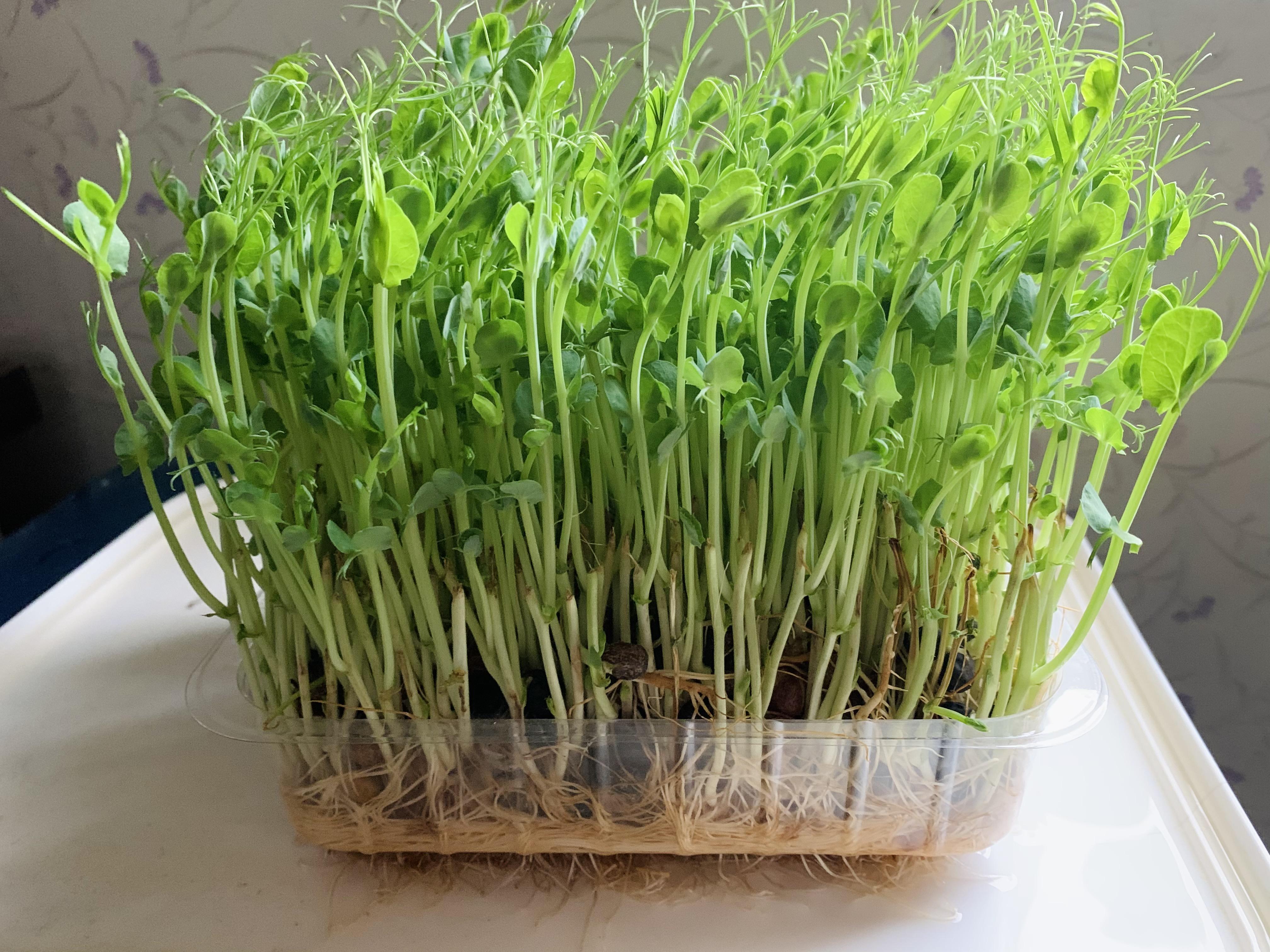
Pea seedlings are seedlings that sprout from peas through soilless cultivation, just like soybean sprouts and mung bean sprouts.
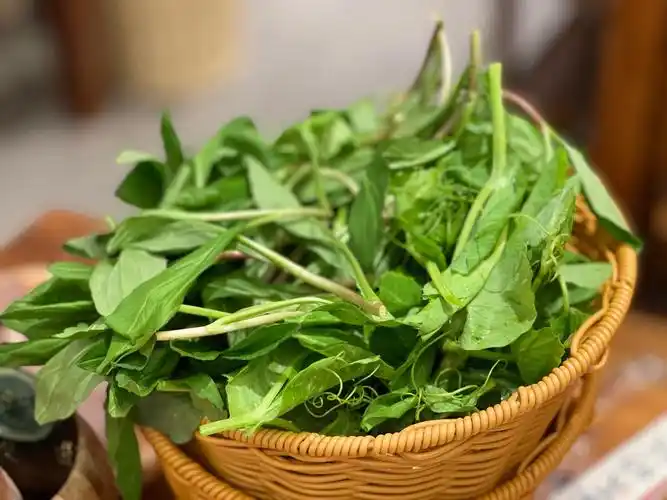
Pea tips generally refer to the topmost and tenderest leaves of pea plants during their growth process. When the stems and leaves reach a certain degree of maturity, they can continue to grow after being pinched off, a bit like Chinese toon sprouts. Pea tips can be made into soup or fried, with a fresh, delicious and refreshing taste, rich and fragrant.
Pea tips are grown in Sichuan, Chongqing, Yunnan, Guangdong and other places in my country. They are the favorite dishes of Sichuan people in winter, and the top dishes on the table. They are also called "pea tip", and "tip" means "tip part" in Sichuan dialect.
When picking pea tips, if you want to eat the freshest and tenderest part, you usually only "pinch" the tenderest tip at the top, about the length of a palm. If you pinch too long, the stem will be too old and affect the taste. The harvesting cycle of pea tips is short. They can be harvested 30 days after sowing, and then harvested once every 15 to 20 days. They can continue to grow after harvesting.
Good taste and "top" nutrition
The water content of fresh pea tips is as high as more than 90%, which is particularly tender. Not only is it delicious, but it is also nutritious! It is called "the excellent species in the vegetable circle".
1. Vitamin C is higher than oranges
In the vegetable family, it is rare to find a particularly rich content of vitamin C. Most sprouts are not rich in vitamin C, such as soybean sprouts, mung bean sprouts, pea seedlings, etc. Their vitamin C content is only between 4 and 8 mg/100 g, while the vitamin C content of pea tips is much higher than them.
A document has determined the nutritional components of 97 pea tips and found that the vitamin C content of different varieties of pea tips is between 34 and 76 mg/100 g; and the leaves> tendrils> stems, and some data show that the vitamin C content of pea tip leaves is as high as 166 mg/100 g.
It can be seen that the vitamin C content of pea tips is the best among sprouts, higher than that of oranges among fruits. Eating 100 grams of fresh pea tips (about a handful of hands) can replenish us with sufficient vitamin C.
2. Rich in antioxidant ingredients
Pea tips are also rich in antioxidant ingredients such as flavonoids, polyphenols, carotene, and proanthocyanidins. The content of these ingredients is also the richest in pea tip leaves, followed by tendrils, and the least in stems.
Therefore, the leaves of pea tips are the most antioxidant part.
3. Dietary fiber is not bad
Someone measured the main nutrients of 97 different varieties of pea tips and found that the dietary fiber content was high and low, ranging from 0.3% to 2.2%. The dietary fiber of pea tips of No. 8 and B-19 peas reached more than 2 grams/100 grams.
According to the data in the "Chinese Food Composition Table", the dietary fiber content of soybean sprouts and mung bean sprouts we usually eat is 1.5 grams/100 grams and 1.2 grams/100 grams respectively.
4. High protein
The protein content of vegetables is mostly not high. The cabbage, round cabbage, Chinese cabbage, loofah, rapeseed, celery, etc. that we usually eat do not exceed 2 grams/100 grams, while the protein of pea tips can reach 3.5 grams/100 grams, which can do a little to supplement protein in diet.
5. Low calories
As a fresh vegetable with high water content, pea tips do not have high calories.
The Department of Clinical Nutrition of West China Hospital of Sichuan University commissioned Chengdu Food and Drug Inspection Institute to collect samples of pea tips from 9 different regions in the Greater Chengdu area for testing, and found that the calories of pea tips were only 21.6 kcal/100 g. Eating 2 large handfuls would not consume as much calories as half an apple.
Carbohydrates are 1.3 g/100 g. Some researchers have also measured that the reducing sugar content of pea tips is very low. The reducing sugar content of tendrils, stems and leaves is only 0.58%, 0.42% and 0.3% respectively, which is really low.
So, even if you are losing weight or need to control blood sugar, you can enjoy the deliciousness of pea tips with confidence.
Try to eat pea tips like this,Nutrition is better preserved
The flower language of pea tips is-don't eat old ones. When eating pea tips, you must choose fresh and tender ones. Old pea tips are not delicious. And you should buy as much as you want to eat, and you should not buy more to stock up.
This is not only because long storage time will lead to nutrient loss, but also because pea tips are easy to lose water and become wilted. After being picked, pea tips will become soft and droopy as long as they are stored overnight, and the taste will also deteriorate.
In order to retain the deliciousness and nutritional value of pea tips, you must also pay attention to cooking.
1. Wash before picking
Don't rush to pick the pea tips you bought. It is best to wash them with clean water before picking them, and try to rinse them with running water, and don't soak them in water for a long time. This can avoid the loss of water-soluble vitamins and retain more nutrients to the greatest extent.
2. Quick cooking
Pea tips are rich in vitamin C and antioxidant ingredients, which are more afraid of heat. In order to minimize nutrient loss, you must cook quickly and try to shorten the heating time of pea tips.
For example, when frying pea tips, use a quick stir-fry method. It is best to wait until the pot boils before putting them in the soup. When eating noodles and rice noodles, just throw them into the pot before serving. When eating hot pot, just blanch them for about 10 seconds.
3. Do not heat repeatedly
Eat dishes as soon as they are ready, eat them immediately after cooking, and do not heat them repeatedly to avoid the loss of nutrients due to prolonged storage and repeated heating of the dishes.

