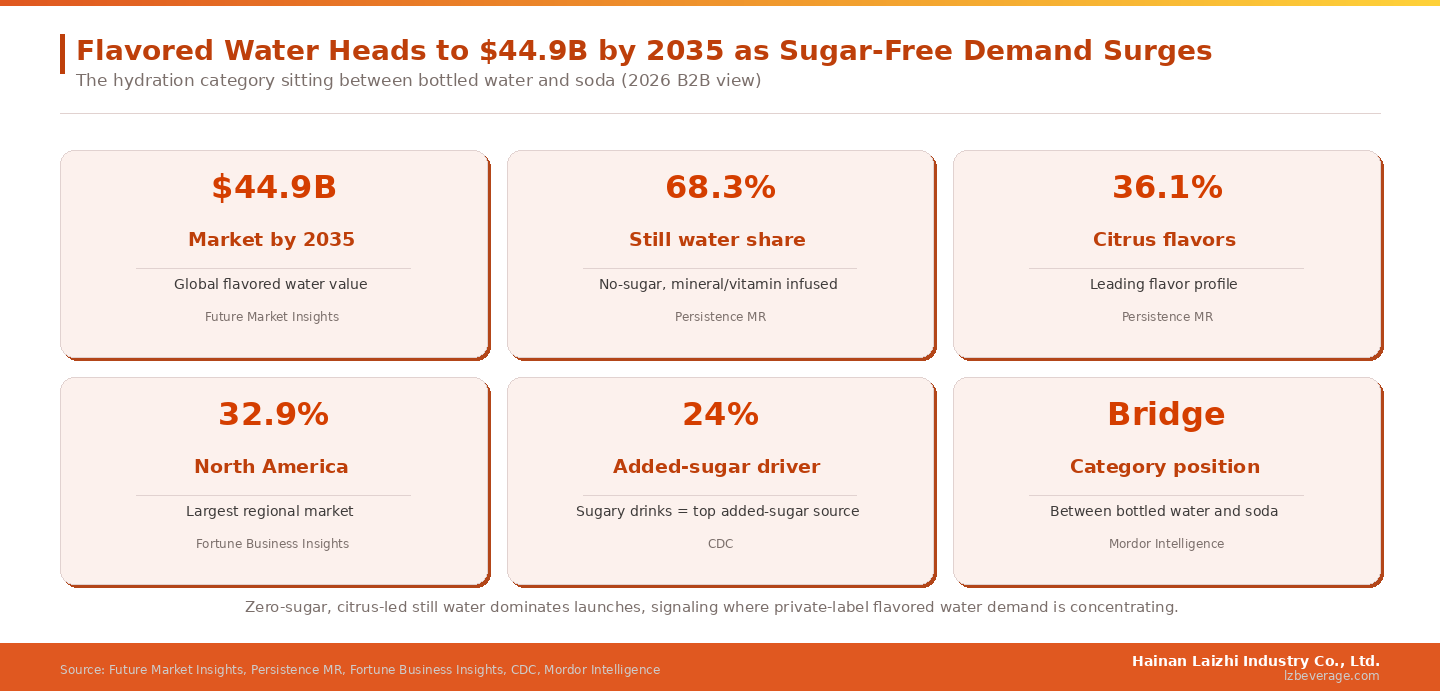
Flavored water used to be an afterthought — a splash of fruit essence in a plain bottle. Today it is one of the most strategically interesting categories in beverages, sitting deliberately between bottled water and soda. The pull is structural: health authorities are pushing consumers away from sugary drinks, and brands are filling that gap. The U.S. CDC reports that sugary drinks account for about 24% of Americans' added sugar intake and explicitly lists sugar-free flavored waters as a healthier swap. That endorsement is rocket fuel for the category.
Why we wrote this: We get more flavored-water briefs every quarter, and many start from a misconception — that it is "just water with flavor" and therefore simple to make. The reality is that taste, sweetener choice, functional add-ins and label claims all interact. This guide lays out what the category actually is and what it takes to build a flavored water that sells, so you don't underestimate the formulation work.
Key Takeaways
- Flavored water is a fast-growing bridge category between plain water and soft drinks, projected to roughly double by 2035.
- Still, zero-sugar, citrus-led products dominate — that is where most new launches and demand sit.
- The health tailwind is official: public-health guidance positions sugar-free flavored water as a recommended alternative to soda.
What Flavored Water Actually Is
Definition and sub-types
Flavored water is water enhanced with natural or artificial flavors, often fortified with vitamins, minerals, electrolytes or botanical extracts, and usually low- or zero-sugar. It splits into still and sparkling, and into plain-flavored versus "functional" versions with added benefits. In the U.S., still flavored water holds about 68% share because it is typically sugar-free and infused with minerals and vitamins, while citrus is the leading flavor at roughly 36%.
Why it is not "just water with flavor"
The simplicity is deceptive. Achieving clean taste at low or zero sugar, keeping added vitamins stable, and balancing acidity and mouthfeel all require real formulation work. This is exactly why the category rewards manufacturing expertise rather than a basic recipe.
Reading the CDC's sugar guidance alongside the market's flavor data points to one conclusion: the winning flavored water is defined by what it removes, not just what it adds. Consumers and regulators are aligned against sugar, so the product's credibility comes from a genuinely low- or zero-sugar profile with a clean, natural taste. For a brand, that means sweetener system and flavor quality — not gimmick ingredients — are where the launch is won or lost.
Why the Category Is Growing So Fast
The numbers are compelling. One analysis projects the global flavored water market rising from roughly $18 billion in 2025 to about $44.9 billion by 2035, a 9.6% CAGR driven by the shift away from carbonated soft drinks toward functional, low-sugar hydration, while another values the 2026 market near $27.9 billion as consumers seek options that balance taste and wellness. North America leads, holding about 33% of the market and positioning flavored water firmly between bottled water and soft drinks.
The broader functional pull reinforces this: RTD functional formats are leading the move toward a near-$250 billion functional market by 2030, and flavored and functional water sits squarely inside that wave.
Building a Flavored Water Product
Formulation priorities
Start with the sweetener strategy, since zero-sugar is the category default. Then layer the flavor and any functional ingredients — electrolytes for sport, vitamins for everyday wellness, botanicals for premium positioning. Still versus sparkling is both a taste and a packaging decision. An experienced beverage manufacturing partner can prototype several sweetener-and-flavor systems so you can taste-test before committing to a full run.
Format, packaging and claims
Flavored water competes on perception as much as taste, so packaging and claims matter. "Zero sugar," "no artificial colors," or "with electrolytes" should each be backed by the formulation and permitted in your target market. As a starting point you can review ready-to-drink formats here or explore the broader product range to see where a flavored water line fits.
Next-step checklist
- This week: decide still vs. sparkling and your sugar target (ideally zero).
- This week: pick a lead flavor — citrus is the proven category leader.
- This month: request sweetener-and-flavor samples from an OEM partner.
- This month: confirm which "zero sugar" or functional claims are allowed in your market.
FAQ
Is flavored water healthier than soda?
Sugar-free flavored water is widely positioned as a healthier choice. Public-health guidance lists sugar-free flavored waters among recommended alternatives to sugary drinks, which are a leading source of added sugar.
Does flavored water have to contain sugar?
No. The category is dominated by zero- and low-sugar products; still flavored water in particular is usually sugar-free and infused with minerals or vitamins instead.
What flavors sell best in flavored water?
Citrus leads by a wide margin, valued for its mild sweetness and refreshing profile. A flexible OEM/ODM partner can help you test citrus and other profiles to find the right fit for your market.


