In recent years, the multiple benefits of carotenoids in the field of health have gradually attracted attention. Researchers from West China Hospital of Sichuan University used large-scale population data to evaluate in detail the effects of dietary carotenoids on biological aging and found that higher carotenoid intake was associated with lower biological age acceleration.
In recent years, the multiple benefits of carotenoids in the field of health have gradually attracted attention. Researchers from West China Hospital of Sichuan University used large-scale population data to evaluate in detail the effects of dietary carotenoids on biological aging and found that higher carotenoid intake was associated with lower biological age acceleration. In addition, other research teams have revealed the relationship between carrot intake and reduced cancer risk and improved blood sugar regulation. This article will introduce these latest research results in detail.
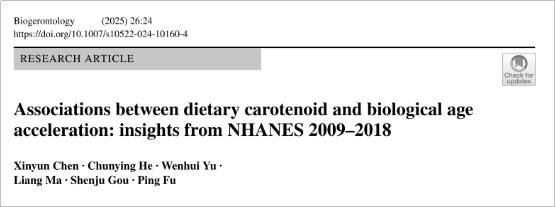
Researchers from West China Hospital of Sichuan University screened 19,280 participants based on five cycles of data from the National Health and Nutrition Examination Survey (NHANES) database from 2009 to 2018. Analysis of participant characteristics showed that participants in the higher tertile group of PhenoAgeAccel were older, had a higher proportion of men, and had worse health and socioeconomic status. The levels of various carotenoids generally showed a downward trend between tertiles, suggesting that the higher tertile group of PhenoAgeAccel may be associated with poorer carotenoid intake.
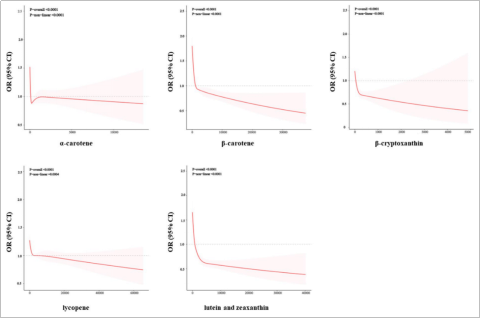
The main findings are as follows:
Linear and logistic regression analysis: higher carotenoid intake is significantly negatively correlated with lower phenotypic age acceleration rate.
Restricted cubic spline regression: there is a significant nonlinear relationship between carotenoid levels and physiological age acceleration, and emphasizes the importance of maintaining higher carotenoid levels to effectively slow down biological age acceleration.
Subgroup analysis: young participants, women, people with hypertension, diabetes, and people with higher dietary energy intake benefit more from higher carotenoid intake. Interaction analysis shows that carotenoids have significant interactions with age, gender, disease status, etc.
β-carotene and β-cryptoxanthin have the most significant effects. Although other carotenoids also have effects, their contribution to the overall evaluation is relatively small. This shows that maintaining adequate carotenoid levels through diet is particularly important for preventing aging, especially for people at higher risk of biological age acceleration.
The research team of the Newcastle University School of Medicine explored the association between carrot intake and cancer incidence through a systematic review and meta-analysis. The researchers searched multiple databases to screen for studies involving the relationship between human carrot intake and the incidence of any type of cancer, and provided risk estimates. Finally, 198 eligible studies were screened, involving 1,389,170 cancer cases and 4,707,643 participants.
Prospective study results: 50 prospective studies recorded 52,000 carrot intake data, and the results showed that carrot or α-carotene intake was significantly negatively correlated with cancer risk; 30 prospective studies reporting plasma α-carotene levels (9,331 cases in total) showed that plasma α-carotene levels were negatively correlated with cancer risk.
Dose-response relationship: Consuming one more serving of carrots per week reduces the risk of cancer by 4±2%; consuming 5 servings (400 grams, or 60 grams per day) of carrots per week reduces the risk of cancer by 20±10%. For every 50μg/L increase in plasma α-carotene levels, the total risk of cancer in the population decreases by 9±7%.
The α-carotene in carrots has powerful antioxidant and anti-inflammatory effects, which can help reduce cell damage, inhibit cancer cell growth, and regulate immune function, thereby reducing the risk of cancer.
Based on the above research results, the following suggestions may help improve overall health:
Increase carotenoid intake: Eat more foods rich in carotenoids, such as carrots, pumpkin, spinach, etc., to help delay biological aging.
Regular intake of carrots: At least 5 servings of carrots (about 400 grams) per week can help reduce the risk of cancer.
Optimize dietary structure: Adding carrots to your daily diet in moderation, especially for people with high-calorie diets, can help improve blood sugar regulation.
It is hoped that these research results can provide more scientific health guidance for the public and promote more research on carotenoids and their health benefits.
References
Chen, Xinyun, et al. "Associations between dietary carotenoid and biological age acceleration: insights from NHANES 2009–2018." Biogerontology 26.1 (2025): 1-19.

